
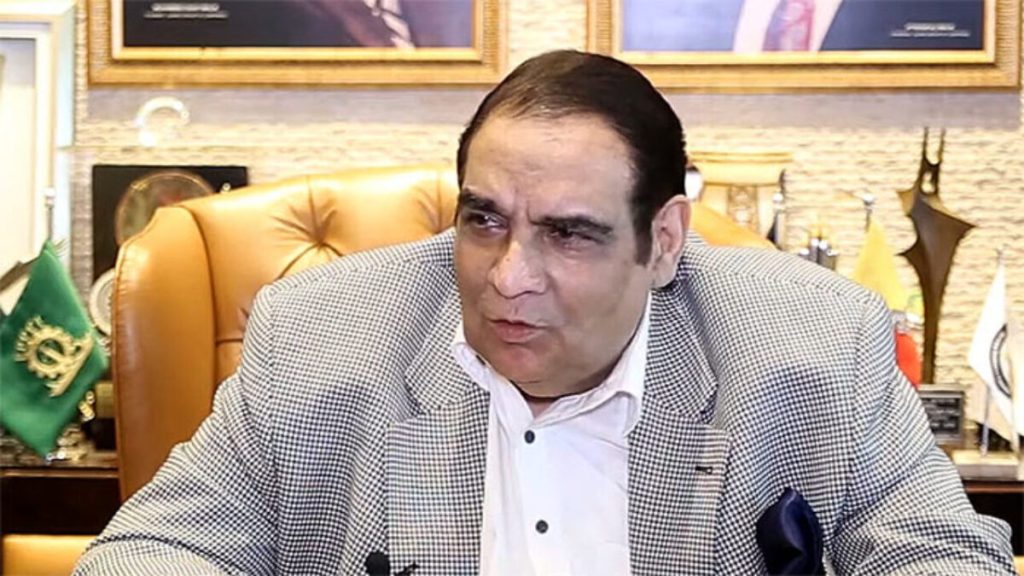
Lahore, January 11:
Former President of the SAARC Chamber of Commerce and Industry, Iftikhar Ali Malik, has said that Pakistan must fundamentally restructure its external economic relations to overcome the current economic crisis, with a strong focus on sustainable reforms, competitiveness, and innovation.
In a statement issued on Sunday, he emphasized that the time has come for Pakistan to move away from an aid-dependent economic model and transition toward a self-reliant, productive, and sovereign economy. He said that by adopting national-level reforms, good governance, accountability, and a long-term vision, Pakistan can emerge from economic instability and integrate into the global system on an equal footing.
Iftikhar Ali Malik stressed that national interest must take precedence over external pressures, and long-term economic stability and sustainability should be prioritized over short-term relief measures. He noted that decades of reliance on foreign aid have created structural weaknesses in Pakistan’s economy, undermining long-term planning and repeatedly pushing the country into economic crises.
However, he said that changing global dynamics, growing regional connectivity, and increasing interest in emerging markets present Pakistan with a rare opportunity to reassess its priorities and adopt a path of self-reliance and sustainable development.
Highlighting investment as a key driver of economic recovery, he said that in the current global environment, investment flows toward countries that offer stability, transparency, and clear growth prospects. Instead of focusing on short-term financial assistance or balance-of-payments-linked inflows, Pakistan should prioritize long-term foreign direct investment (FDI), which brings not only capital but also technology, managerial expertise, and access to global markets.
He emphasized that the effective and complete implementation of agreements is essential to build investor confidence, as it sends a clear message to the international community that Pakistan is a safe and reliable destination for serious business. Restoring the confidence of local investors and overseas Pakistanis to stimulate domestic investment is equally important, he added.
Iftikhar Ali Malik said that redefining external economic relations requires Pakistan to adopt a more balanced and credible diplomatic strategy. Trade agreements, regional connectivity initiatives, and economic diplomacy should be aligned with national competitiveness and long-term interests rather than short-term financial needs.
For equitable integration into the global system, he said Pakistan must diversify its export markets, reduce excessive dependence on a few countries, and play an active role in shaping regional economic rules and policies.
Terming innovation and technology as the most critical drivers of future growth, he said that digitalization, fintech, agri-tech, and renewable energy can help Pakistan overcome traditional barriers and become part of global value chains. Innovation-led growth, he added, not only reduces reliance on commodities but also creates quality and dignified employment opportunities for the country’s young population.
He further said that strategic partnerships with technologically advanced countries and multinational companies can accelerate Pakistan’s economic transformation, provided such partnerships are based on mutual benefit and national interest rather than dependency.
Iftikhar Ali Malik concluded that if coherent and well-directed measures are taken, the current period can lay the foundation for a new, sovereign, and sustainable economic future for Pakistan.