U.S.-Iran Memorandum of Understanding and Pakistan’s Diplomatic Triumph
 By Executive Editor
Published: 18 Jun 2026
Updated: 30 Jun 2026
6 min read
By Executive Editor
Published: 18 Jun 2026
Updated: 30 Jun 2026
6 min read
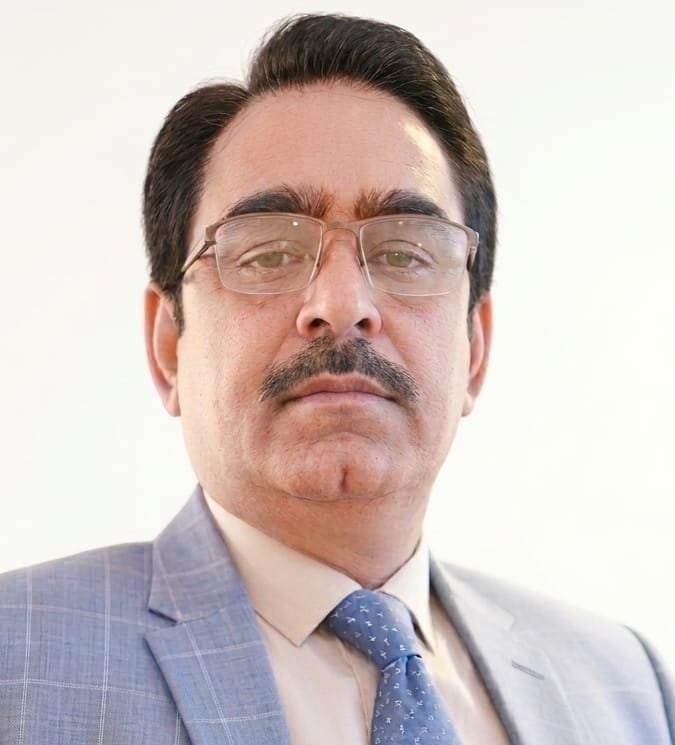
By Hanif Sabir
At a time when the world was bracing for a wider conflict in the Middle East, the signing of the U.S.-Iran Memorandum of Understanding (MoU) has emerged as one of the most significant diplomatic developments of recent years. The agreement has not only reduced the immediate risk of military escalation between two long-standing adversaries but has also highlighted the growing importance of regional diplomacy in resolving complex international disputes.
While much of the global attention has focused on Washington and Tehran, another important story has quietly unfolded in the background: Pakistan’s successful diplomatic engagement and its emergence as a credible bridge-builder in a highly polarized geopolitical environment.
The U.S.-Iran understanding comes after months of heightened tensions, military threats, economic uncertainty, and fears of a regional war that could have destabilized the entire Middle East. The agreement provides a framework for de-escalation, diplomatic engagement, and further negotiations on contentious issues, including regional security and Iran’s nuclear program. Although many details remain to be finalized, the very fact that dialogue has replaced confrontation represents a major diplomatic achievement.
For Pakistan, this development carries special significance.
For decades, Pakistan has occupied a unique geopolitical position. It maintains relations with the United States while also sharing deep historical, cultural, and geographic ties with Iran. Unlike many countries that have found themselves compelled to align with one side or another, Pakistan has consistently sought to maintain balanced relationships with competing regional and global powers.
This strategic balance enabled Islamabad to play a constructive role during a period when communication channels between Washington and Tehran were under immense strain. Through diplomatic engagement, quiet consultations, and efforts aimed at reducing misunderstandings, Pakistan contributed to creating an environment conducive to dialogue.
The success of these efforts demonstrates that diplomacy remains one of the most effective tools available to states seeking to prevent conflict. In an era increasingly defined by geopolitical competition and military posturing, Pakistan’s role serves as a reminder that engagement and communication can often achieve what coercion cannot.
A considerable share of the credit for this diplomatic achievement belongs to Prime Minister Shehbaz Sharif, whose government consistently advocated peaceful dialogue and regional stability. At a time when emotions and tensions were running high across the region, Pakistan’s political leadership maintained a measured and responsible approach.
Prime Minister Shehbaz Sharif has repeatedly emphasized the importance of diplomacy, economic cooperation, and peaceful conflict resolution in Pakistan’s foreign policy. His government’s efforts to maintain constructive engagement with all relevant stakeholders enhanced Islamabad’s credibility and strengthened its ability to facilitate dialogue. Rather than seeking political advantage from regional tensions, Pakistan projected itself as a force for stability and peace.
Equally significant has been the role of Field Marshal Asim Munir. In recent years, Pakistan’s military leadership has increasingly engaged with international partners on issues relating to regional security, stability, and counterterrorism. Field Marshal Asim Munir’s strategic outreach and interactions with regional and global leaders have helped reinforce Pakistan’s image as a responsible stakeholder committed to peace and stability.
His leadership during a period of heightened regional uncertainty contributed to building confidence among key international actors. The close coordination between Pakistan’s civilian and military leadership ensured that the country spoke with one voice on issues of regional peace and diplomatic engagement. Such institutional harmony strengthened Pakistan’s position and enhanced its effectiveness as a facilitator.
The episode offers an important lesson in statecraft. Diplomatic success is rarely the product of a single meeting or a single initiative. Rather, it is the result of sustained engagement, credibility, trust-building, and a clear understanding of national interests. Pakistan’s contribution to the current breakthrough reflects years of maintaining relations with diverse international partners while avoiding the pitfalls of excessive alignment with any single bloc.
The benefits of reduced U.S.-Iran tensions extend far beyond diplomatic prestige. Pakistan stands to gain directly from greater stability in the Persian Gulf and the wider Middle East. The region is vital for Pakistan’s energy supplies, trade routes, and economic interests. Any prolonged disruption in Gulf shipping lanes or energy markets inevitably affects Pakistan through higher import costs, inflationary pressures, and economic uncertainty.
A more stable regional environment also creates opportunities for expanded trade, investment, and connectivity projects linking South Asia, Central Asia, and the Middle East. Such opportunities align closely with Pakistan’s long-term vision of becoming a regional hub for commerce, transit, and economic cooperation.
Beyond economic considerations, Pakistan’s role in facilitating dialogue enhances its international standing. For many years, the global narrative surrounding Pakistan has often been dominated by discussions of security challenges and economic difficulties. The U.S.-Iran understanding offers an opportunity to showcase a different aspect of Pakistan’s national capacity: its ability to contribute positively to international peace and conflict resolution.
In contemporary international politics, influence is not determined solely by military strength or economic size. Nations that can build bridges, foster trust, and facilitate dialogue often exercise a form of influence that is equally valuable. Pakistan’s role in the current diplomatic process demonstrates that constructive engagement can be an important source of international relevance.
Nevertheless, caution remains necessary. The memorandum represents the beginning of a process rather than its conclusion. Important challenges remain unresolved, and the path toward a comprehensive and lasting settlement will not be easy. The history of U.S.-Iran relations is marked by periods of progress followed by setbacks. Sustained political commitment from all parties will therefore be essential.
Yet even at this preliminary stage, the agreement has already achieved something significant: it has reduced tensions, reopened channels of communication, and created hope for a more stable regional environment.
For Pakistan, the episode marks an important diplomatic milestone. It demonstrates the value of balanced foreign policy, responsible statecraft, and proactive engagement. It also highlights the effectiveness of coordinated efforts by the country’s political and military leadership in advancing national interests and contributing to international peace.
The U.S.-Iran Memorandum of Understanding may ultimately be remembered as a turning point in regional diplomacy. It may also be remembered as a moment when Pakistan successfully demonstrated its ability to serve as a bridge between competing powers and as a constructive force for peace. In an increasingly fragmented world, that achievement represents a valuable diplomatic asset and a source of national pride.