Pakistan Iconic Brands” launched in Islamabad, documenting history of 25 leading Pakistani brands
 By hanif sabir
Published: 11 Aug 2026
3 min read
By hanif sabir
Published: 11 Aug 2026
3 min read
“Pakistan Iconic Brands” launched in Islamabad, documenting history of 25 leading Pakistani brands
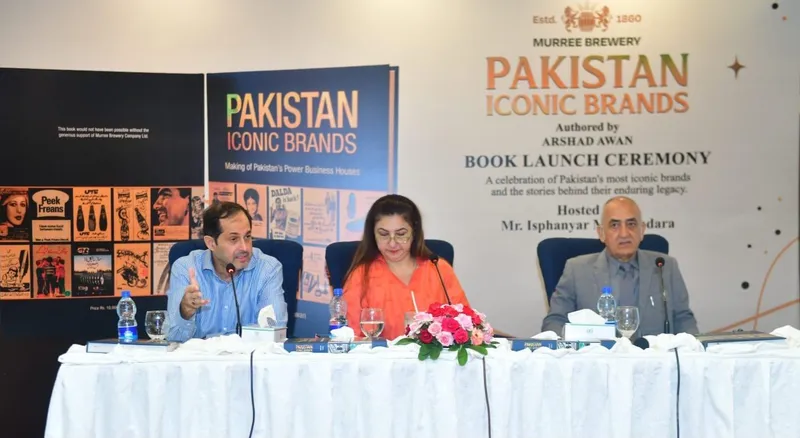
ISLAMABAD, August 11: A coffee-table book documenting the history and evolution of 25 prominent Pakistani brands and their contribution to the country’s economic, social and cultural life was launched at a ceremony held at the Islamabad Club.
Authored by renowned academic and Lahore School of Economics professor Arshad Awan, the book was published with financial support from Murree Brewery. It chronicles the journeys of businesses and brands that grew alongside Pakistan and eventually became part of the country’s collective memory and everyday life.
The book documents the histories and evolution of 25 brands, including Ahmed Foods, Bonanza, B.P. Sweets, Dalda, Deer Pencil, Eagle Pen, English Biscuits, Ferozsons, Habib Bank, Hamdard, Haico, K-2, Kohinoor Textile, Lawrencepur, Medora, Mitchell’s, Murree Brewery, Packages, PIA, General Tyres, Service Shoes, Sohrab Cycles, Millat Tractors, Tibet Snow and Treat.
The event was organised by Nilofar Qazi and attended by prominent business leaders, academics, writers, journalists, diplomats and members of Pakistan’s intellectual and cultural community.
Murree Brewery Chief Executive Officer Asfandyar M. Bhandara and the author, Professor Arshad Awan, addressed the gathering.
Speaking about the background of the book, Asfandyar M. Bhandara said an important part of Pakistan’s history was linked to the struggles and contributions of individuals and businesses that played a role in nation-building, created employment and established industries over the decades.
He said the history of a country was not limited to political events and governments, adding that the contributions of industrialists, entrepreneurs, workers and institutions were equally important to the country’s economic development.
Bhandara said the brands featured in the book were not merely business names but were connected with the memories and experiences of generations of Pakistanis.
He also stressed the need for greater unity and a stronger collective voice within the business community. He observed that traders, retailers and transporters had generally been more organised in raising their concerns, while the industrial and broader business community had not always demonstrated the same level of cohesion.
He said the government should create an environment conducive to business and industry where investment could grow, businesses could expand and employment opportunities could be generated.
“The government’s job is not to run businesses but to facilitate businesses,” he said.
Bhandara described a stable and predictable business environment as essential for Pakistan’s economic growth.
The ceremony was attended by the ambassadors of Ireland, the high commissioners of Sri Lanka and Mauritius, Nepal’s deputy head of mission, representatives of the United Nations Development Programme, spokesperson to the President Murtaza Solangi, Press Secretary Daniyal Gilani, Quaid-i-Azam University Vice Chancellor Professor Dr Zafar Nawaz Jaspal, as well as senior journalists, academics and leading members of the business community.
“Pakistan Iconic Brands” is an effort to document Pakistan’s history from the perspective of business and industry, preserving the journeys of institutions and brands that grew with the country after its creation and became part of the collective experience of Pakistani society.