Minister Qaiser Ahmed Sheikh Calls for Regional Trade Investment Reforms
 By hanif sabir
Published: 22 Oct 2026
3 min read
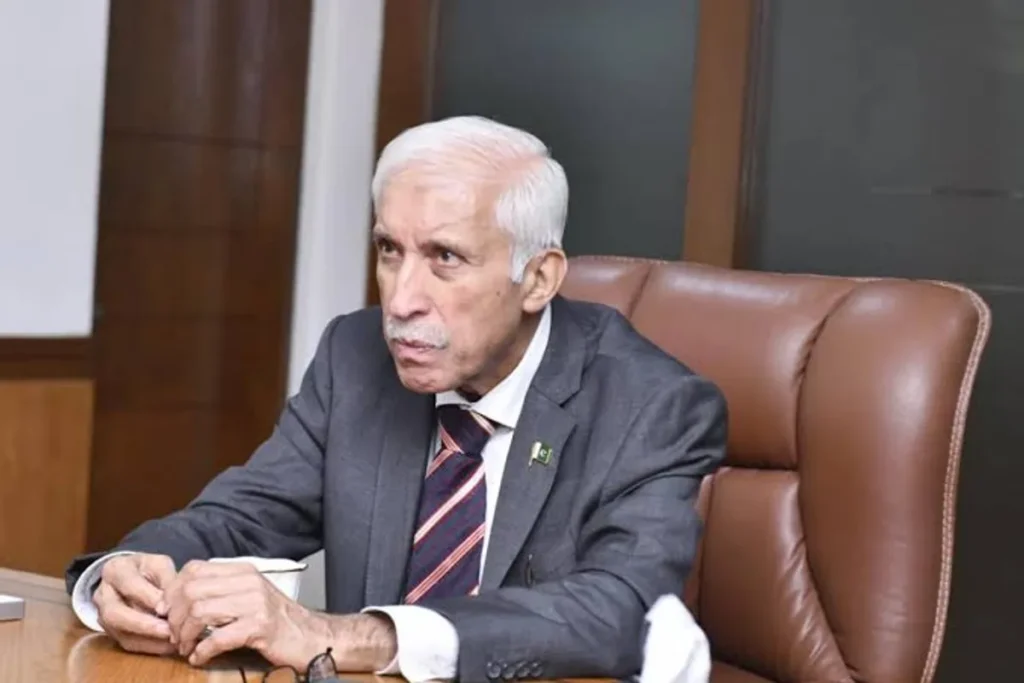
ISLAMABAD (Special Correspondent) – Federal Minister for Board of Investment, Qaiser Ahmed Sheikh, on Thursday stressed the urgent need for facilitating businesses, reforming regulations, and strengthening regional trade to attract investment, boost exports, and accelerate economic growth. The minister outlined that a comprehensive approach to economic reforms is essential for the nation’s progress.
Key Points
- Minister Qaiser Ahmed Sheikh called for simplified regulatory procedures to boost both domestic and foreign investment.
- Small and Medium Enterprises (SMEs) currently receive only seven percent of total bank lending.
- High interest rates of 40 to 50 percent from informal sources hinder the growth of small businesses.
- Regional connectivity is vital for growth, as Southeast Asia conducts 70 percent of trade within its region.
- Greater access to regional markets is necessary to increase Pakistan’s export figures beyond the current $30 billion.
Strategic Investment and Economic Planning
Addressing the CEO summit, the minister emphasized that Pakistan must improve its investment climate by simplifying regulatory procedures and adopting a facilitation-oriented approach. He noted that Pakistanis living abroad possess substantial financial resources, which could be effectively tapped by addressing regulatory concerns and fostering a business-friendly environment, a move often supported by initiatives like those highlighted in discussions regarding economic reforms and development.
Human Capital and SME Development
Drawing on the historical successes of China and South Korea, Qaiser Ahmed Sheikh asserted that human resource development, technology transfer, and effective economic planning remain cornerstones for sustainable growth. He highlighted a critical gap in the financial sector, noting that SMEs and the agriculture sector—which provide the majority of employment—remain underserved by traditional banking institutions.
Limited access to affordable credit forces many small businesses to rely on informal sources where interest rates reach as high as 40 to 50 percent. Such fiscal constraints severely limit their ability to scale operations and contribute to the national economy, reinforcing the need for the structured government support programs.
Regional Trade and Connectivity
Highlighting the importance of regional integration, the minister stated that sustained economic growth is difficult to achieve without robust regional trade. He contrasted this with Southeast Asia, where approximately 70 percent of trade occurs within the region. He observed that existing restrictions on trade with neighbouring countries have constrained Pakistan’s ability to leverage its geographical position as a gateway to Central Asia.
Minister Sheikh called for an open dialogue among stakeholders to dismantle trade barriers and facilitate cross-border business cooperation. By strengthening regional connectivity, he argued that Pakistan can expand its export markets and allow local industries to broaden their international footprint, ultimately helping to move exports beyond the current $30 billion threshold.
Frequently Asked Questions
How do high interest rates affect small businesses in Pakistan?
Limited access to affordable bank financing forces small businesses to borrow from informal sources at interest rates as high as 40 to 50 percent, which restricts their growth.
What is the importance of regional trade according to the minister?
The minister noted that regional trade is essential for sustained growth and pointed out that Southeast Asia conducts 70 percent of its trade within its own region.



Comments (4)