Sweden Imported 3.8 Million Tonnes of Garbage from Other Countries in a Single Year
 By hanif sabir
Published: 14 Aug 2026
2 min read
By hanif sabir
Published: 14 Aug 2026
2 min read
Sweden Imported 3.8 Million Tonnes of Garbage from Other Countries in a Single Year
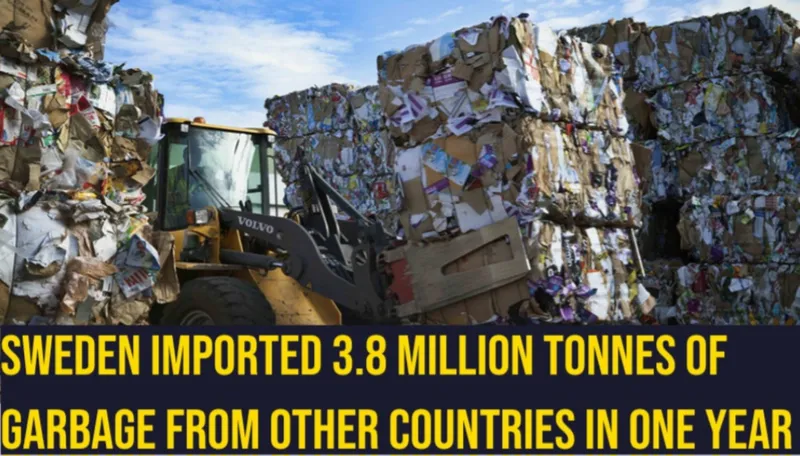
STOCKHOLM: Sweden imported around 3.8 million tonnes of waste from other countries in a single year, much of which was used in the country’s waste-to-energy system to generate electricity and heating.
Sweden has developed an extensive waste-to-energy infrastructure in which waste is treated as a potential source of energy rather than simply being sent to landfills. Imported waste is processed at waste-to-energy plants, where it is incinerated to produce heat that can be used for district heating and electricity generation.
The system allows Sweden to reduce the amount of waste sent to landfills while simultaneously recovering energy from waste. The country has operated waste-to-energy facilities for decades and has built a network of plants capable of processing large quantities of municipal and commercial waste.
One of the reasons Sweden has imported waste from other European countries is that those countries can use Swedish waste-to-energy facilities as an alternative to landfill disposal. Sweden, meanwhile, receives waste that can be used as fuel in its energy recovery facilities.
The process, however, also presents environmental challenges. Incinerating waste containing fossil-based plastics releases carbon dioxide and other greenhouse gases. Environmental experts therefore stress that waste-to-energy systems should be accompanied by greater recycling, waste reduction and efforts to recover materials before incineration.
Sweden has increasingly focused on developing a circular economy in addition to its waste-to-energy infrastructure. The broader objective is to reduce waste generation, increase recycling and make more efficient use of resources.
The Swedish model has attracted international attention because it combines waste management with energy recovery. However, its experience also highlights the need to balance energy production from waste with environmental protection, recycling and reductions in the use of fossil-based materials.