FPCCI Convenes High-Level Roundtable to Advance Pakistan’s Cashless Economy Transition
 By hanif sabir
Published: 25 Aug 2026
3 min read
By hanif sabir
Published: 25 Aug 2026
3 min read
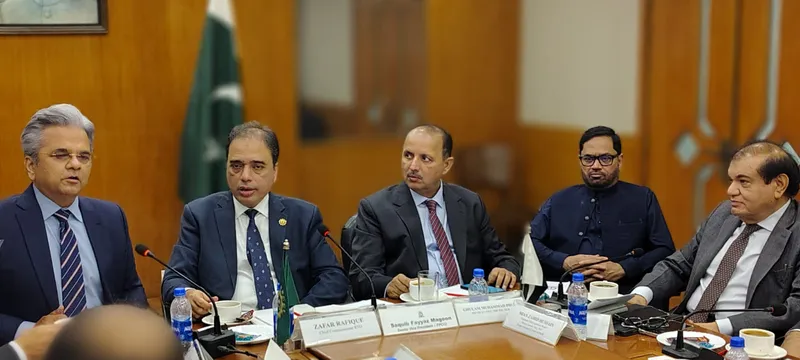
KARACHI (special crosspondent) – Mr. Atif Ikram Sheikh, President of the Federation of Pakistan Chambers of Commerce & Industry (FPCCI), has expressed his satisfaction following a well-attended and interactive roundtable session held today, which brought together high-profile stakeholders from major federal and provincial government institutions alongside multi-sectoral private-sector representatives. The session, hosted at the FPCCI Head Office at Federation House, Karachi, focused exclusively on the strategic transition toward a cashless economy.
Strategic Objectives for Digital Transition
The roundtable convened critical stakeholders, including representatives from the business community, the State Bank of Pakistan (SBP), the Federal Board of Revenue (FBR), and the Sindh Revenue Board (SRB). The primary objective was to develop a framework for coordinated incentives for digital payments, encompassing potential tax concessions, cashback programs, and consumer discounts. Mr. Atif Ikram Sheikh noted that these measures are intended to incentivize documented transactions, improve national tax compliance, and expand the formal economy. Similar initiatives align with the broader goals of government efforts to improve institutional systems. Mr. Sheikh remarked, “Embracing a cashless economy is no longer optional; it is an urgent imperative for Pakistan’s economic growth. Transitioning away from cash is the most effective way to ensure transparency, lower the cost of doing business, and integrate our markets globally.”
Regulatory Commitment to Digital Infrastructure
Mr. Ghulam Muhammad Phul, Head of the Financial Inclusion Support Department (FISD), emphasized the central bank’s commitment to facilitating a secure and robust digital payment infrastructure. “We support initiatives that allow FinTech companies to offer cost-effective solutions and consumer incentives, which are vital for widespread digital adoption,” he stated. Meanwhile, Mr. Zafar Rafique, Chief Commissioner of RTO, FBR, affirmed that the tax authority recognizes digitalization as a fundamental pillar for broadening the tax base. He added that the FBR is actively exploring viable tax incentives for digital transactions to reward documented businesses and foster long-term economic formalization.
Provincial and Sectoral Perspectives
Mr. Sajjad Akbar, Chief Commissioner of IR Hyderabad, FBR, stated that the government highly values the aggregated feedback provided by the business community through the FPCCI platform and promised that these suggestions would be incorporated into future policy frameworks. Representing the provincial government, Mr. Abdul Hameed Memon, Senior Member of the SRB, highlighted that the Sindh Government has already begun incentivizing digital payments within the hospitality sector, where transactions at restaurants are charged at a reduced sales tax rate of 8%, compared to 15% for cash payments.
Collaborative Path Forward
Mr. Saquib Fayyaz Magoon, SVP FPCCI, noted a strong consensus among all participants. He emphasized that bridging the gap between traditional practices and modern digital solutions requires a collaborative environment. “Incentivization is the key to adopting a cashless economy. It is a long-standing demand of the FPCCI that embracing documentation, digitalization, and the taxation system should be paired with facilitation to broaden the tax net, rather than relying on punitive measures,” he stated. Mian Zahid Hussain, Chairman of the Policy Advisory Board (PAB-FPCCI), concluded the session by highlighting that tangible incentives, such as targeted tax relief for digital merchants, are essential. He cautioned against increasing the burden on the formal sector, noting that “squeezing the already taxed and law-abiding businessmen will not enhance the tax-to-GDP ratio any further.”