FPCCI President Atif Ikram Sheikh Demands Industrial Tariff Below Nine Cents
 By hanif sabir
Published: 11 Oct 2026
2 min read

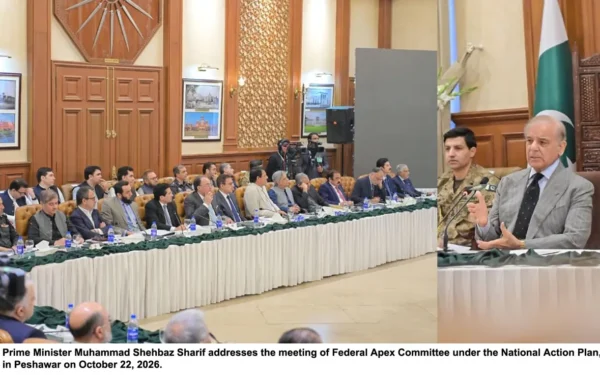
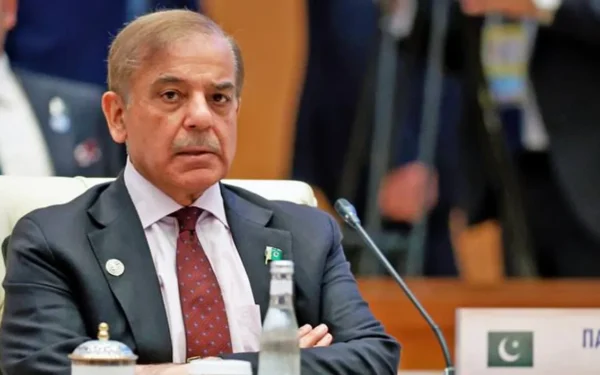
KARACHI (Special Correspondent) – Mr. Atif Ikram Sheikh, President of the Federation of Pakistan Chambers of Commerce & Industry (FPCCI), has formally acknowledged the government’s recent decision to reduce industrial electricity tariffs from 16 cents to 12 cents per unit. While welcoming this development, he emphasized that a further reduction to below 9 cents for all industrial sectors remains the only viable path to boost national exports and curtail import dependency. Mr. Sheikh cautioned that current measures are merely stop-gap solutions and called for a uniform tariff structure to support sustainable economic growth, noting that industrial growth and reform are essential for national stability. In his statement, Mr. Sheikh expressed appreciation for Prime Minister Muhammad Shehbaz Sharif and Federal Minister for Power Sardar Awais Ahmad Khan Leghari for their efforts to implement an Incremental Consumption Package and an Optional Two-Part Time-of-Use (ToU) Tariff. Regarding the Incremental Consumption Package, the FPCCI leadership noted that while it provides a concessional rate for additional units consumed above a historic baseline, it does not address the foundational cost burden. Discussing the Two-Part ToU Tariff, Mr. Sheikh explained that the industry has communicated its reservations to the Power Division over the past six months, arguing that the high fixed capacity charges and ongoing logistical disruptions make the current framework unworkable. He pointed out that industry has already optimized production around daylight hours, leaving minimal flexibility to shift demand further. Consequently, he noted that the proposed rates do not make grid energy competitive compared to private solar installations. The FPCCI President further underscored that B3 and B4 consumers continue to bear an unfair cross-subsidy, despite the lower cost associated with supplying high-voltage electricity to these sectors. He maintained that aligning their tariffs with the broader industry would benefit both the consumers and the overall energy system. Mr. Sheikh expressed confidence that the IMF would support such a reduction, given that increased industrial output directly correlates with higher exports and improved economic health. Concluding his remarks, he offered the RCCI delegation-style collaborative approach, stating that the FPCCI is prepared to leverage private-sector expertise to assist the government in developing a permanent, long-term energy policy that prioritizes increased total industrial output rather than merely redistributing costs across different sectors.