Emergency Rule in Khyber Pakhtunkhwa May Continue Indefinitely, Says Azam Nazeer Tarar
 By hanif sabir
Published: 13 Oct 2026
3 min read
Emergency Rule in Khyber Pakhtunkhwa May Continue Indefinitely, Says Azam Nazeer Tarar
ISLAMABAD: Federal Law Minister Azam Nazeer Tarar has said that Pakistan has been grappling with terrorism for decades, while terrorist incidents in Khyber Pakhtunkhwa have increased significantly. He said emergency measures were introduced in the province under Articles 232 and 234 of the Constitution in view of the deteriorating security situation.
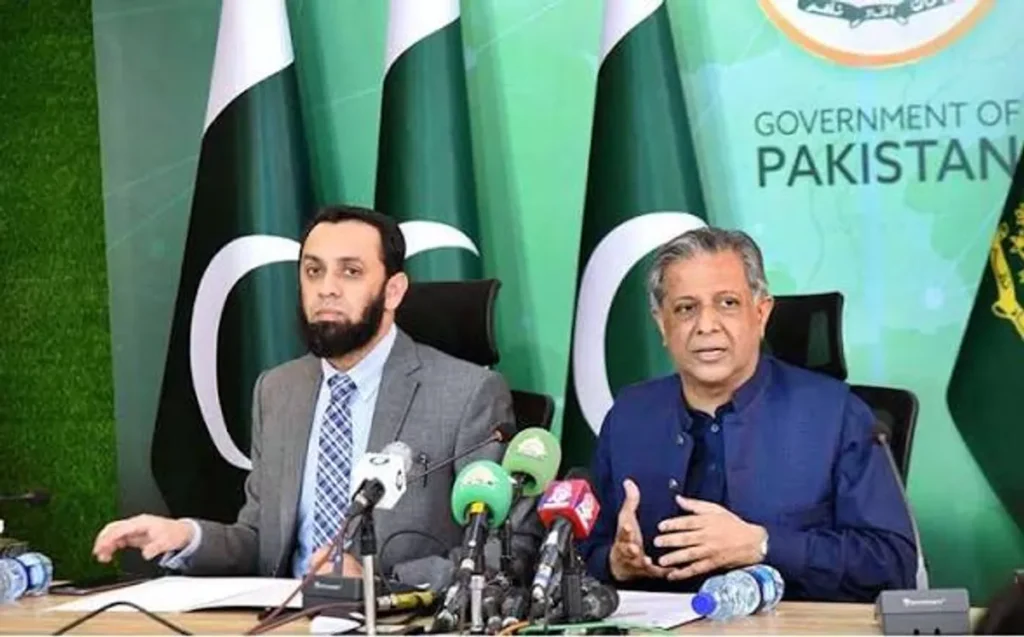
Briefing representatives of foreign media in Islamabad, Tarar explained that Article 232 provides for the imposition of an emergency, while Article 234 deals with constitutional measures in the event of a breakdown of the provincial government’s constitutional machinery. He said the Constitution provides specific procedures for dealing with extraordinary circumstances.
According to the law minister, an emergency under Article 232 has no predetermined time limit. However, he said the provincial assembly’s legislative powers under the constitutional framework associated with Article 234 would be restored after six months. He clarified that the restoration of the assembly’s legislative powers would not automatically reinstate the provincial government.
Tarar said the emergency could remain in place until the security situation improved, although the federal government did not intend to retain administrative control of the province indefinitely.
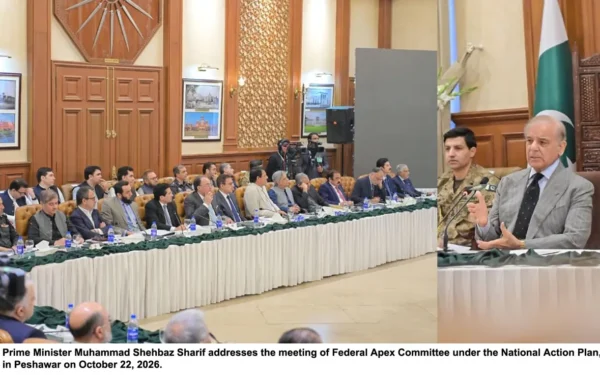
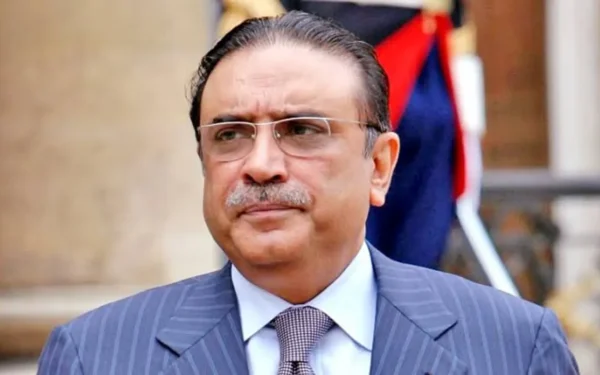
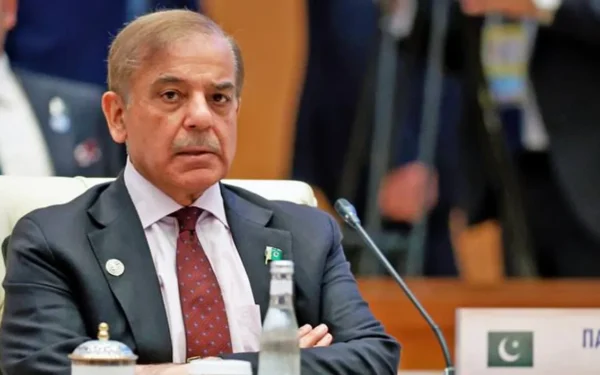
The law minister said President Asif Ali Zardari had acted on the advice of Prime Minister Shehbaz Sharif in connection with the emergency measures and the imposition of Governor’s Rule in Khyber Pakhtunkhwa. Under the arrangement, administrative authority previously exercised by the provincial government led by the chief minister was transferred to Governor Faisal Karim Kundi. An 11-member advisory council was also constituted to assist in running provincial affairs.
Tarar said a separate administrative arrangement had been established for 12 districts of the province. The federal government maintains that these districts have suffered disproportionately from militancy and require improved coordination among security agencies, administrative authorities and development departments.
Terrorist incidents rise sharply
During the briefing, Federal Information Minister Attaullah Tarar presented figures on terrorist incidents in Khyber Pakhtunkhwa. He claimed that 2,911 incidents were recorded in the province between 2021 and 2024, while the number increased to approximately 8,600 during the 2024–2026 period.
According to the figures presented by the information minister, this represented an increase of approximately 195 per cent.
Attaullah Tarar also cited figures of 3,774 terrorist incidents across Pakistan during 2025 and 2,857 incidents in September 2026. The figures require verification against the relevant official records, particularly regarding the reporting periods and the definitions used to classify terrorist incidents.
Azam Nazeer Tarar said an effective counterterrorism strategy required close coordination between federal and provincial institutions. He maintained that the federal government wanted a coordinated national approach to counterterrorism but alleged that differences had emerged between the federal and provincial governments over Afghanistan and militancy-related policies.
Pakistan’s sacrifices in the war against terrorism
The law minister said Pakistan had endured the consequences of regional conflicts and the Afghan war for decades, with the Pakistani nation making enormous sacrifices in the fight against terrorism.
He said counterterrorism operations were continuing and that the Pakistan Army was playing a role in maintaining internal security while defending the country’s borders.
Attaullah Tarar, meanwhile, criticised the previous provincial government, alleging that it had failed to provide adequate resources to the police, strengthen counterterrorism units and ensure effective coordination with federal institutions.
The information minister also alleged that the government possessed evidence of contacts between the Pakistan Tehreek-e-Insaf (PTI) and the proscribed Tehreek-e-Taliban Pakistan (TTP), adding that the evidence would be made public. The allegation has not been independently established in this report and should be distinguished from verified findings.