Staunch Opponent of New Water Reservoirs Sindh CM Murad Ali Shah Visits China’s Three Gorges Dam, Reviews Importance of Water Storage
 By hanif sabir
Published: 14 Oct 2026
4 min read
Staunch Opponent of New Water Reservoirs Sindh CM Murad Ali Shah Visits China’s Three Gorges Dam, Reviews Importance of Water Storage
*Islamabad (Hanif Sabir):* Sindh Chief Minister Syed Murad Ali Shah’s visit to China’s Three Gorges Dam, one of the world’s largest hydropower projects, has drawn attention in Pakistan, particularly because of his strong opposition to the proposed new canals from the Indus River. While the Sindh government has consistently opposed canal projects over concerns about the province’s water rights, the chief minister is now receiving briefings in China on water storage, flood control, hydropower generation and the effective management of river systems. The visit has opened up fresh debate on water resource management and Pakistan’s policy regarding the construction of dams and other water infrastructure.
Opposition to certain dam and canal projects has been a key position of the Pakistan Peoples Party (PPP) and its government in Sindh. In April 2025, Murad Ali Shah opposed the proposed construction of six new canals from the Indus River, declaring that the PPP would not accept the projects. He maintained that such initiatives required consensus among all concerned provinces and must not compromise Sindh’s share of water.
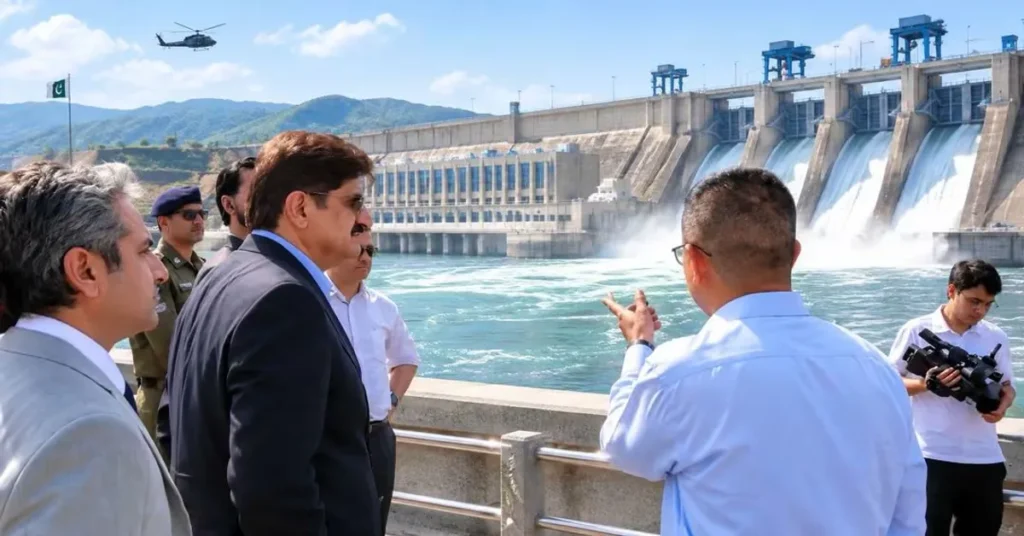
However, during his visit to the Three Gorges Dam on the Yangtze River in Hubei Province, China, on October 12, 2026, the Sindh chief minister showed interest in Chinese experience in water storage, floodwater management, hydropower generation and the efficient use of water resources. Chinese officials briefed the chief minister and his delegation on various aspects of the dam, including its planning, construction, operation and water management systems.
The significance of the Three Gorges Dam extends beyond electricity generation. With an installed capacity of 22,500 megawatts, the project also plays a role in regulating river flows, reducing flood risks and supporting inland water transportation. It demonstrates how large-scale water infrastructure can serve multiple purposes, including energy production, water management and economic development.
According to media reports, Murad Ali Shah also referred to Sindh’s challenges, including monsoon flooding and water shortages during the dry season. He stressed the need to improve water storage, flood forecasting and irrigation systems in the province. The Sindh government, he indicated, would explore opportunities to benefit from Chinese expertise, particularly in reservoir operations, water monitoring, sediment management and the conservation of freshwater resources.
The central question is this: if water storage, flood mitigation and the preservation of water for dry periods are important for Sindh, on what basis should Pakistan debate the construction of reservoirs and new canal projects?
The answer lies not simply in supporting or opposing dams, but in objectively assessing each project’s design, location, water availability, provincial allocations, environmental consequences and distribution of benefits. Diverting water from the Indus River through new canals and constructing dams to store water are technically distinct issues. Each project must be assessed independently because the volume of water stored, the manner in which it is used and the benefits received by different provinces can vary significantly. Sindh’s concerns regarding its water rights and share of the Indus River must also be taken into account.
During his visit to the Three Gorges Dam, Murad Ali Shah also emphasised the importance of protecting the ecological requirements of the Indus Delta, preventing seawater intrusion and safeguarding the interests of coastal communities when planning future water projects.
The broader question is whether Pakistan can address water scarcity, flood risks, agricultural requirements and energy challenges through scientific research, transparent data and consensus among all provinces, setting aside political differences.
China’s experience could provide Murad Ali Shah and the Sindh government with valuable insights into the planning and management of large-scale water infrastructure.
The visit offers an opportunity to move Pakistan’s debate over dams, reservoirs and canal projects beyond political slogans and towards evidence-based assessments, transparent planning and practical solutions that protect the interests of all provinces while addressing the country’s growing water and energy needs.