SBP Governor Highlights Significant Increase in SME Financing as Economic Priority
 By hanif sabir
Published: 31 Oct 2026
6 min read
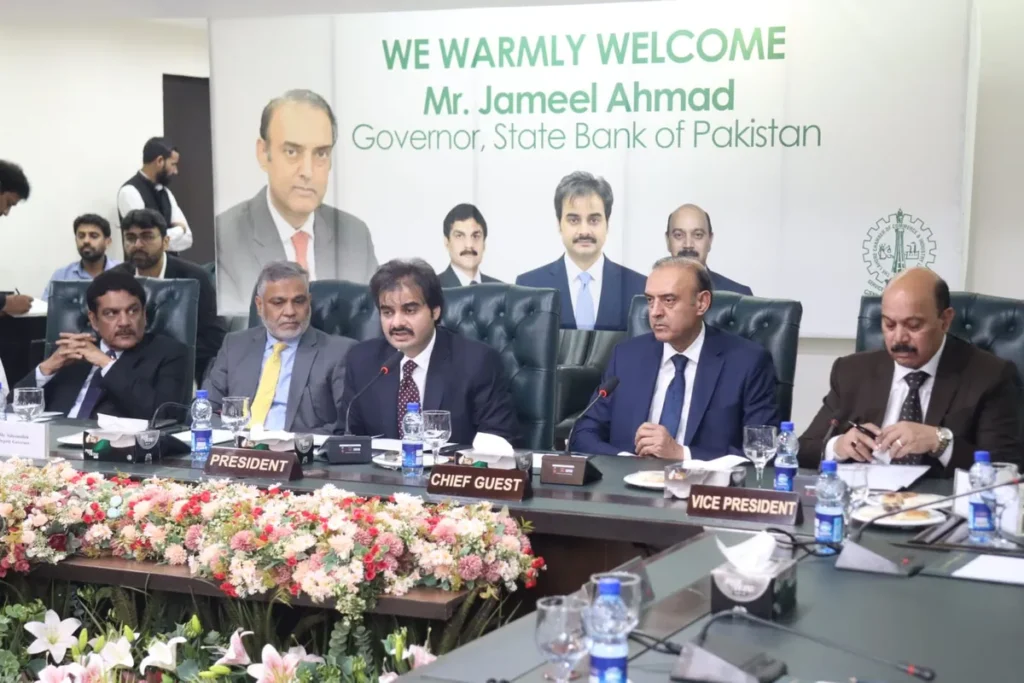
LAHORE (Special Correspondent) – Governor State Bank of Pakistan (SBP) Jameel Ahmad announced on October 30 that a significant increase in financing for small and medium enterprises (SMEs) is a top government economic priority, alongside agriculture, housing, and exports. He made these remarks while addressing the Lahore Chamber of Commerce and Industry (LCCI).
Key Points
- The limit for SME loans without collateral has been increased from Rs10 million to Rs50 million.
- The definition of SMEs has been revised, with annual turnover limits raised significantly for both small and medium enterprises.
- Outstanding SME financing rose to approximately Rs1,110 billion in June 2026, from Rs491 billion in June 2024.
- The SME Connect Portal is set to become operational on November 1, 2026, facilitating online loan applications.
- The Export Refinance Scheme limit has been increased to Rs1.5 trillion, with Rs300 billion specifically for SME exporters.
LCCI President Ali Hussam Asghar, Senior Vice President Sardar Usman Ghani, Vice President Chaudhry Khadim Hussain, SBP Deputy Governor Saleem Ullah, Executive Director Akhtar Javed, Chief Manager Ansar Iftikhar Butt, Senior Deputy Chief Manager Muhammad Tahir, and Export-Import Bank of Pakistan (EXIM Bank) Chief Executive Officer Shahbaz Hussain Syed also addressed the gathering.
SME Financing Enhancements and Revised Definitions
Governor Jameel Ahmad stated that the limit for SME loans without collateral had been significantly increased from Rs10 million to Rs50 million. He further noted that the definition of SMEs had been revised to expand eligibility. The annual turnover limit for small enterprises was raised from Rs150 million to Rs400 million, while for medium enterprises, it increased from Rs800 million to Rs2 billion. This revision means businesses with an annual turnover of up to Rs2 billion can now benefit from SME financing facilities.
Government Initiatives and Digital Platforms
The Governor highlighted that the government is actively implementing measures to tackle the challenges of the cost of doing business, taxation, and energy. He mentioned that the government’s housing finance scheme was revised in March 2026. Following this revision, banks approved financing of Rs521 billion for approximately 80,000 applicants within six to seven months, a significant increase from the Rs251 billion in outstanding housing finance prior to the revision. Furthermore, under the Prime Minister’s Youth Business and Agriculture Scheme, young entrepreneurs are receiving loans at competitive mark-up rates, ranging from zero to 7 per cent.
Jameel Ahmad also informed the participants that the SBP, in collaboration with the Small and Medium Enterprises Development Authority (SMEDA) and commercial banks, had simplified the SME loan application form, reducing it to a single page. He announced that the SME Connect Portal would become operational on November 1, 2026. This digital platform will enable entrepreneurs to submit loan applications online from their homes and monitor their progress at every stage of the process.
Growth in SME and Export Financing
Sharing key SME financing figures, Governor SBP Jameel Ahmad reported a robust increase in outstanding SME financing. This figure rose from Rs491 billion in June 2024 to Rs691 billion in June 2025, reaching approximately Rs1,110 billion in June 2026. Correspondingly, the number of SME borrowers also saw substantial growth, increasing from 177,000 in June 2024 to 275,000 in June 2025, and further to around 325,000 in June 2026.
Regarding export financing, he stated that the limit under the Export Refinance Scheme had been increased from Rs1 trillion to Rs1.5 trillion. Of this enhanced amount, Rs300 billion has been specifically allocated to support SME exporters. Additionally, the Cabinet has approved a 10-year long-term export financing scheme, designed to bolster export-oriented investment.
LCCI Proposals for SME Growth and Resolution
LCCI President Ali Hussam Asghar proposed a joint financing mechanism involving industry, the government, EXIM Bank, and commercial banks to accelerate SME growth. He suggested selecting 1,000 SMEs based on available data, identifying their obstacles in accessing finance, and developing a practical facilitation model. If successful, this model could be replicated nationwide.
Asghar urged the SBP to link its complaint centre with the LCCI complaint centre to assist importers and exporters facing difficulties with commercial banks, including delays in opening letters of credit (LCs) and other banking-related issues. He stressed the importance of establishing a clear timeline for resolving these complaints. He also pointed out that a significant portion of the economy operates outside the export sector, making it crucial to extend financing facilities to local industries and businesses. He proposed performance-based incentives for industries that increase employment, such as special financing for entrepreneurs who expand their workforce from 300 to 330 employees.
Leveraging Islamic Banking for SME Expansion
LCCI Senior Vice President Sardar Usman Ghani underscored the potential of Islamic banking in expanding SME financing. He noted that the total financing within Pakistan’s Islamic banking sector has reached Rs6 trillion, demonstrating an impressive annual growth of 48.9 per cent. While Islamic banking accounts for 39.1 per cent of total banking financing, its share in SME financing currently stands at only 15.9 per cent.
Sardar Usman Ghani proposed setting a minimum target of 5.9 per cent for SME financing by Islamic banks, aligning it with the overall banking sector average. He estimated that this measure could provide an additional Rs204 billion in financing to SMEs. He also highlighted that the bad-debt ratio in the SME portfolio of Islamic banks is only 2.2 per cent, significantly lower than the 5.5 per cent observed in the overall banking sector, which indicates a strong potential for expanding lending to this segment.
Commitment to Business Community Concerns
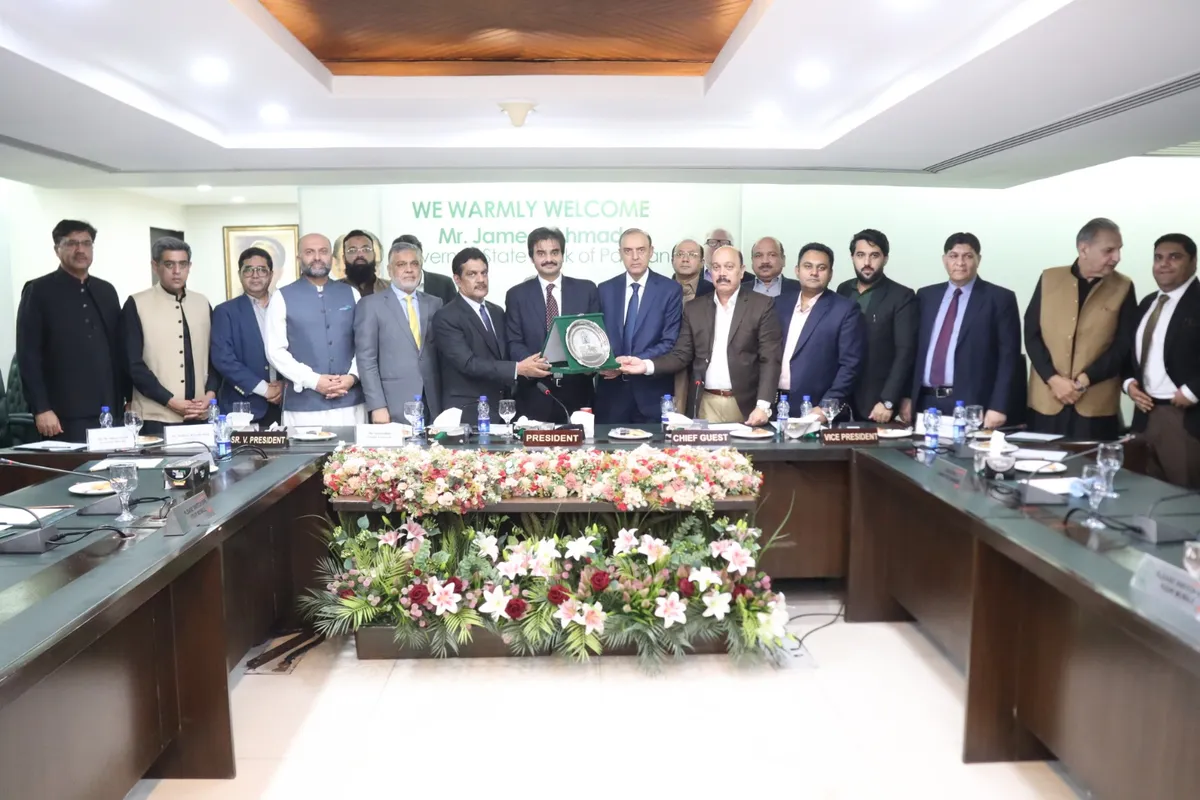
LCCI Vice President Chaudhry Khadim Hussain expressed gratitude to the SBP Governor and his team for visiting the Lahore Chamber and attentively listening to the concerns of the business community. He emphasised that proposals discussed during such meetings must be followed by practical actions to resolve business issues and enable SMEs to play a more effective role in national economic development.
Former LCCI Vice Presidents Mian Zahid Javed and Haris Atiq were also present at the meeting, alongside Executive Committee members Sheikh Muhammad Ibrahim, Chaudhry Fargham, Sahir Mushtaq, Adeel Babar Khan, Muhammad Ali, Shahzad Mahmood, Ali Raza, Chaudhry Zulfiqar Ali, Syed Yousaf Jamil Hussain Rizvi, Amir Ata Barry, Mardan Ali Zaidi, and Muhammad Yaseen.
Frequently Asked Questions
What new measures has SBP taken for SME financing?
The SBP has increased the collateral-free loan limit for SMEs from Rs10 million to Rs50 million, revised SME definitions, simplified loan application forms, and is launching the SME Connect Portal for online applications.
How has housing finance performed after the revised scheme?
After the revision in March 2026, banks approved Rs521 billion in housing finance for approximately 80,000 applicants within six to seven months, significantly increasing from the Rs251 billion outstanding before the scheme revision.
What are the LCCI’s key proposals for improving SME access to finance?
The LCCI proposes a joint financing mechanism, linking SBP and LCCI complaint centres, extending financing facilities to local industries beyond exports, and offering performance-based incentives for employment generation.
What is the potential role of Islamic banking in SME financing?
Islamic banking in Pakistan, with a bad-debt ratio of only 2.2% in its SME portfolio, has the potential to provide an additional Rs204 billion in financing if its SME financing share is increased to align with the overall banking sector average.

Comments (1)