From Oil Shock to Price Relief: Public Relief or Political Milage
 By Executive Editor
Published: 19 Jun 2026
Updated: 30 Jun 2026
5 min read
By Executive Editor
Published: 19 Jun 2026
Updated: 30 Jun 2026
5 min read

By: Hanif Sabir
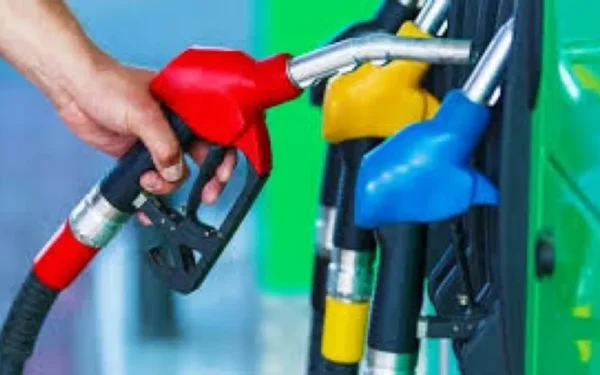
In Pakistan’s economic and political landscape, few policy decisions carry as immediate and far-reaching consequences as changes in petroleum prices. Fuel pricing is not merely a technical adjustment; it is a reflection of global geopolitics, domestic economic pressures, and the state’s attempt to balance fiscal stability with public relief. The recent sharp reduction in petrol and diesel prices—Rs 74 per litre and Rs 67 per litre respectively—has once again placed this balance under scrutiny.
The cut has brought petrol down to approximately Rs 299 per litre and diesel to around Rs 311 per litre. On the surface, this appears to be a straightforward relief measure for a population long burdened by inflation. However, beneath this announcement lies a complex chain of global and regional developments that shaped this outcome.
Over the past months, escalating tensions between Iran and the United States created a volatile environment in global energy markets. The Middle East, particularly the Strait of Hormuz—a critical maritime corridor for global oil shipments—once again became the focal point of geopolitical anxiety. Even the possibility of disruption in this region is enough to push crude oil prices upward, as markets react not only to events but to expectations of risk.
For oil-importing economies like Pakistan, such fluctuations translate almost immediately into domestic price pressure. As global crude oil surged during the period of heightened tensions, domestic fuel prices in Pakistan also climbed to historically high levels. Petrol reached near Rs 374 per litre, while diesel approached Rs 379 per litre. At that point, inflationary pressure intensified across transport, agriculture, and industrial supply chains, further squeezing household budgets already under strain.
The situation began to shift as diplomatic signals emerged indicating a possible de-escalation between Iran and the United States. As the risk premium in global oil markets started to decline, crude prices began to stabilize and gradually ease. International markets responded quickly, reflecting renewed confidence that a wider conflict—and therefore a major supply disruption—might be avoided.
Pakistan’s fuel price reduction is therefore best understood not as an isolated domestic decision, but as a response to this broader external correction in global oil markets. The government’s adjustment effectively passed on the benefit of falling international prices to consumers, offering immediate relief in a high-cost environment.
Economically, the implications of this reduction are significant. Fuel is not a standalone commodity in Pakistan; it is a foundational input for almost every sector of the economy. Diesel, in particular, underpins the logistics and transportation network that moves agricultural produce, manufactured goods, and essential commodities across the country. A reduction in diesel prices directly lowers transportation costs, which in turn has the potential to ease prices of essential goods over time.
The agricultural sector is also expected to benefit. Lower diesel costs reduce expenses for operating tractors, tube wells, and harvesting machinery. In a country where agriculture remains central to both employment and food security, even modest reductions in input costs can generate meaningful ripple effects across rural economies.
Industrial production may also experience some relief. Reduced energy and logistics costs can improve production margins, particularly for export-oriented industries competing in global markets. However, whether these gains translate into lower consumer prices depends heavily on market behavior and regulatory oversight.
This is where a familiar challenge emerges. Pakistan’s inflationary structure has long exhibited an asymmetric pattern: prices rise quickly when fuel becomes expensive, but fall slowly—if at all—when fuel becomes cheaper. This lag in downward adjustment raises important questions about market efficiency and regulatory enforcement. Without effective monitoring, the full benefit of this fuel price cut may not reach the end consumer.
Politically, the timing of this development is equally significant. Inflation has remained one of the most sensitive and politically consequential issues in Pakistan in recent years. Public dissatisfaction has often been closely linked to rising costs of living. In this context, a sharp reduction in fuel prices provides the government with an opportunity to reshape public sentiment and strengthen its economic narrative.
At the same time, the move also reflects the extent to which domestic policy remains tied to global volatility. Pakistan’s reliance on imported energy means that its economic stability is frequently influenced by external shocks—whether geopolitical tensions, supply disruptions, or global price cycles. This structural dependency limits policy autonomy and underscores the need for long-term energy diversification.
The broader question, however, goes beyond immediate relief or political advantage. It is whether such moments of price reduction can be transformed into lasting economic stability. Temporary relief, while politically and socially valuable, does not resolve the underlying vulnerabilities of an import-dependent energy system.
Sustained stability would require structural reforms: improved energy efficiency, investment in domestic resources, diversification into renewable energy, and stronger regulatory mechanisms to ensure fair price transmission across the economy. Without these measures, Pakistan risks remaining exposed to the same cycle of global shocks and domestic inflationary spikes.
For now, the public response is understandably one of relief. Lower fuel prices translate into reduced transport costs, eased household budgets, and improved short-term economic sentiment. But the durability of this relief will be determined not at fuel stations, but in markets, supply chains, and policy corridors.
Ultimately, the real question is not whether petrol has become cheaper today, but whether this moment marks a shift toward a more resilient economic structure—or simply another pause in an ongoing cycle of external dependence and internal inflation.
If managed effectively, this fuel price cut could be remembered as more than just a temporary reprieve. It could become a reference point in Pakistan’s broader struggle to stabilize its economy amid global uncertainty.