Saudi Crown Prince Blocked Trump’s Iran War Plan, NYT Reports
 By hanif sabir
Published: 02 Jul 2026
2 min read
By hanif sabir
Published: 02 Jul 2026
2 min read
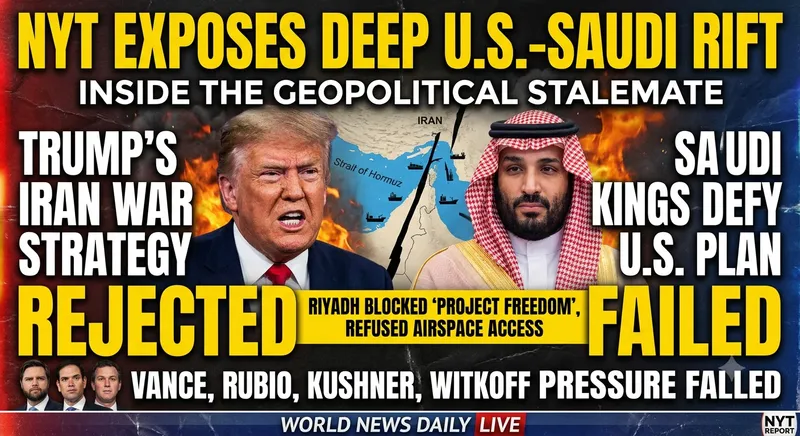
ISLAMABAD (special crosspondent) – A significant diplomatic rift has strained the long-standing U.S.-Saudi alliance, reaching an unprecedented level. A new report by *The New York Times* discloses that Saudi Crown Prince Mohammed bin Salman rejected a critical component of President Donald Trump’s regional military strategy, effectively thwarting a major American operation. The disagreement revolved around “Project Freedom,” a U.S.-led military initiative intended to safeguard vital shipping lanes in the Strait of Hormuz. According to *The New York Times*, Washington’s plans were obstructed when Riyadh refused to grant U.S. forces access to Saudi airspace and military bases, compelling the Trump administration to reconsider its tactical approach.
A Unified Front of Rejection
The report elaborates on intensive, multi-level diplomatic pressure exerted by Washington that ultimately failed to persuade the Saudi leadership. Phone calls from President Trump were complemented by visits from high-profile emissaries, including Vice President J.D. Vance, Secretary of State Marco Rubio, Special Envoy Steve Witkoff, and Jared Kushner. Despite this concerted effort, the Crown Prince maintained his stance, indicating a substantial alteration in how Riyadh evaluates its national interests in relation to U.S. demands.
The Shadow of 2019
Saudi Arabia’s reluctance is rooted in strategic calculations and lingering dissatisfaction. Riyadh expressed concerns that hosting U.S. offensive operations would make the Kingdom a target, potentially inviting retaliatory Iranian missile and drone strikes. *The New York Times* points out that Saudi confidence in American security assurances had not fully recovered since the 2019 attacks on Saudi Aramco oil facilities, an incident where the U.S. did not launch a military response. This past experience led Riyadh to prioritize self-preservation and regional stability over supporting an American military campaign. The report quotes an observation: “Riyadh is no longer content playing the junior partner in Washington’s regional playbook. The Kingdom is actively hedging its bets.”
Riyadh’s New Geopolitical Playbook
While Saudi officials have refuted claims of intentionally prolonging the conflict, *The New York Times* highlights a distinct and independent foreign policy now guiding the Kingdom. The report suggests a dual-track strategy, encompassing Western, Eastern, and Regional axes. Although defense and economic cooperation between the two nations persist due to mutual necessity, this recent conflict has underscored a new reality: the U.S. can no longer assume automatic access to Saudi airspace or guaranteed compliance from Riyadh.