Ahsan Iqbal Emphasizes Policy Continuity for Pakistan’s Sustainable Development Goals
 By hanif sabir
Published: 29 Jul 2026
3 min read
By hanif sabir
Published: 29 Jul 2026
3 min read
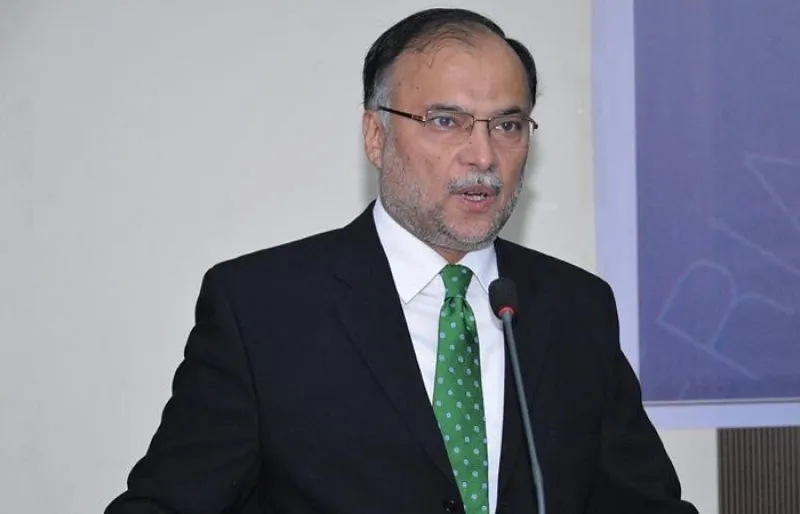
ISLAMABAD (special crosspondent) – Federal Minister for Planning, Development and Special Initiatives Professor Ahsan Iqbal on Wednesday underscored that policy continuity spanning at least 10 to 15 years is essential to achieving sustainable national development. He remarked that frequent policy reversals following government transitions have historically derailed Pakistan’s economic trajectory. Addressing the Strategic Dialogue and the launch ceremony of Development Advocate Pakistan, the minister noted that long-term national plans are futile if successive administrations prioritize replacing entire policy frameworks over ensuring consistent implementation.
The Impact of Policy Discontinuity on National Progress
The minister highlighted that past development roadmaps, such as Vision 2020 and Vision 2025, failed to meet their targets primarily due to a lack of sustained execution. Prime Minister Shehbaz Sharif prioritizes youth employment and digital training as part of a broader shift toward stable development, but Iqbal emphasized that even the most advanced programs remain ineffective without long-term commitment. He identified Pakistan’s fragmented socio-economic structure as a critical hurdle, asserting that economic growth must be paired with substantial improvements in education, healthcare, and population management to secure lasting prosperity.
Addressing Structural and Demographic Challenges
Under the ‘Uraan Pakistan’ initiative, the government is focusing on structural reforms. Iqbal highlighted the urgency of addressing a population that has reached approximately 260 million and is projected to climb to 380 million by 2050 without intervention. Climate change further complicates these risks, impacting both water and food security. The minister stressed the need for robust provincial coordination to manage population growth and public health crises. Notably, he pointed out that Pakistan currently holds the world’s highest number of Hepatitis C cases, affecting over 10 million people. The government has committed to making Islamabad a model, Hepatitis-free region, while expanding similar efforts to Gilgit-Baltistan and Azad Jammu and Kashmir.
Civic Responsibility and Future Reforms
Addressing the persistent threat of polio, Iqbal lamented that only Pakistan and Afghanistan have yet to eradicate the virus, condemning attacks on health workers as a significant national embarrassment. He advocated for a shift in public behavior, noting that 90 per cent of childhood mental development occurs by age five, making early childhood care a national priority. Furthermore, he noted that civic neglect, such as improper plastic waste disposal, exacerbates urban flooding, citing the removal of 4,500 tonnes of plastic from Lahore’s drainage systems. The minister called on the media to pivot from political discourse toward vital social issues like education, where the literacy rate remains at 60 per cent, and nutrition, where 40 per cent of children suffer from stunting. Iqbal concluded that prioritizing AI, modern technology, and long-term structural reforms remains the only viable path to enhancing national competitiveness.