FPCCI Raises Alarm Over FBR Tax Administration Split
 By hanif sabir
Published: 20 Nov 2026
4 min read

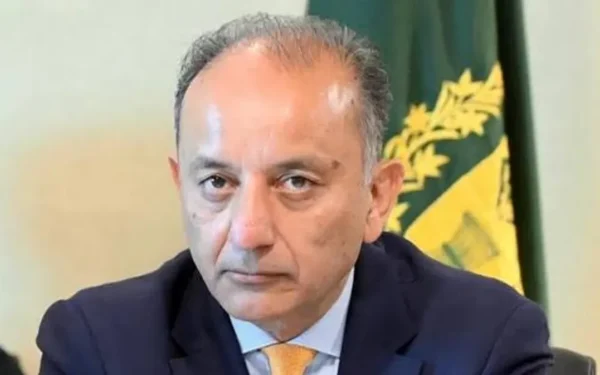
KARACHI (Special Correspondent) – Mr. Atif Ikram Sheikh, President of the Federation of Pakistan Chambers of Commerce and Industry (FPCCI), has expressed strong concern over the Federal Board of Revenue’s (FBR) decision on 20 November 2026 to reverse the unified Inland Revenue administration, warning the split of sales tax and income tax collection will widen the informal economy and burden compliant businesses. This move, he stated, threatens to weaken vital checks against tax evasion.
Key Points
- FPCCI warns FBR’s administrative split of sales and income tax will expand the informal economy.
- The decision reverses the 2009 unified Inland Revenue administration framework.
- President Atif Ikram Sheikh believes it breaks a crucial cross-verification link for tax evasion.
- Senior Vice President Saquib Fayyaz Magoon stated compliant businesses will face dual oversight.
- VP Abdul Mohamin Khan urged the Ministry of Finance and FBR to reconsider the bifurcation.
Mr. Atif Ikram Sheikh elaborated that separating the administration of sales tax and income tax dismantles a vital cross-verification mechanism. He explained that a business attempting to conceal turnover to evade sales tax simultaneously hides its actual income, and unified oversight previously allowed authorities to expose one discrepancy by cross-referencing it with the other.
Dismantling Unified Inland Revenue Framework
Mr. Sheikh further emphasised that abandoning the 2009 integration framework, despite years of institutional reforms and significant external financing, risks stalling Pakistan’s already sluggish domestic tax-to-GDP ratio, which currently stands at 10.3 percent. This reversal moves the country further away from the government’s ambitious 15 percent target, rather than helping to achieve it.
Mr. Saquib Fayyaz Magoon, Senior Vice President (SVP) of FPCCI, highlighted that instead of focusing on measures to bring unregistered sectors into the tax net, this administrative split will subject compliant manufacturers, importers, and distributors to a burdensome dual oversight. This entails separate notices and potentially conflicting interpretations of the exact same commercial transactions by two different commissioners, creating unnecessary complexity and inefficiency.
Concerns of Dual Oversight and Compliance Costs
Mr. Abdul Mohamin Khan, Vice President (VP) and Regional Chairman Sindh, FPCCI, strongly urged the Ministry of Finance and the Federal Board of Revenue to reconsider this bifurcation. He called upon the authorities to prioritise capacity building, the establishment of common transaction records, and the implementation of integrated data analytics over structural fragmentation, which he believes is counterproductive.
Mr. Khan stressed that duplicating administrative layers will inevitably escalate compliance costs and increase the potential for harassment for documented businesses across all provinces. Conversely, he noted, this approach leaves the informal sector largely unchecked. He called upon the authorities to engage in thorough consultation with the business community before implementing significant changes that could undermine both the ease of doing business and industrial competitiveness within the country.
Declining Domestic Sales Tax Collection
Mr. Asif Sakhi, Vice President (VP) of FPCCI, added a critical observation, pointing out the sharp contrast between a 1.7 percent decline in domestic sales tax collection and a 17 percent rise in import-stage collections. This disparity, he argued, clearly demonstrates that the existing tax machinery is primarily squeezing documented trade at the border and ports, while concurrently failing to broaden the domestic tax-base effectively.
Frequently Asked Questions
Why is FPCCI concerned about the FBR’s decision?
The FPCCI is concerned because the FBR’s decision to separate sales tax and income tax administration is believed to break a vital cross-verification link, expand the informal economy, and increase the burden on compliant businesses, thus weakening checks against tax evasion.
What is the impact of the administrative split on compliant businesses?
Compliant manufacturers, importers, and distributors will be subjected to dual oversight, separate notices, and potentially conflicting interpretations of commercial transactions by two different commissioners, escalating compliance costs and increasing the potential for harassment.
What is Pakistan’s current tax-to-GDP ratio and the government’s target?
Pakistan’s current domestic tax-to-GDP ratio is 10.3 percent, and the government’s target is to achieve a 15 percent ratio.