PIDE Advocates for Strategic AI and Fintech Integration in Pakistan
 By hanif sabir
Published: 04 Aug 2026
3 min read
By hanif sabir
Published: 04 Aug 2026
3 min read
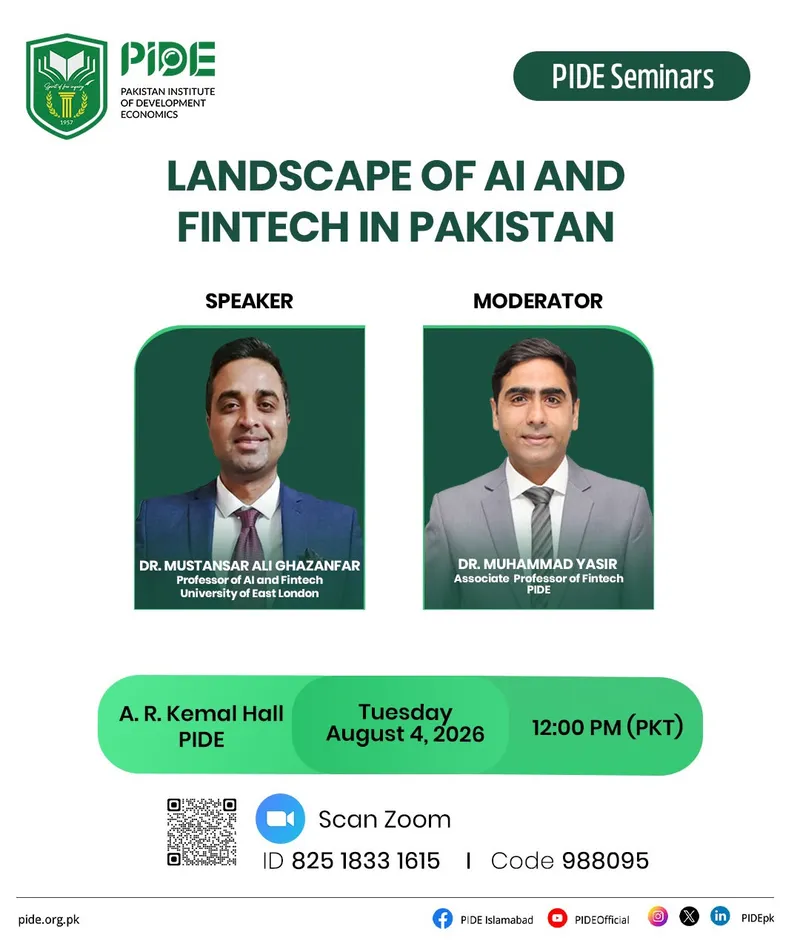
PIDE Evaluates Digital Future at AI and Fintech Seminar
ISLAMABAD (special crosspondent) – The Pakistan Institute of Development Economics (PIDE) hosted a pivotal seminar titled “Landscape of AI and Fintech in Pakistan,” where experts explored the integration of artificial intelligence, financial technology, and big-data analytics to bolster economic policymaking. The session emphasized the critical need for maintaining public trust, institutional accountability, and the protection of sensitive data in the digital age. As Pakistan continues to modernize its infrastructure, initiatives like Google’s AI Seekho 2026 reflect the growing momentum toward building a skilled generation of AI developers in the country.
Principles for Responsible AI Adoption
The seminar featured Dr Mustansar Ali Ghazanfar, Associate Professor of Artificial Intelligence at the University of East London, with PIDE’s Associate Professor of Fintech, Dr Muhammad Yasir, moderating. Dr Ghazanfar introduced three pillars for technological assessment: value, intelligence, and accountability. He cautioned that AI implementation must originate from institutional requirements rather than speculative tech acquisitions. According to Dr Ghazanfar, organizations must define the measurable value, data requirements, and accountability structures before deploying any AI systems. He further advised that the level of human oversight must scale proportionally with the autonomy of the AI tool and the sensitivity of the data involved.
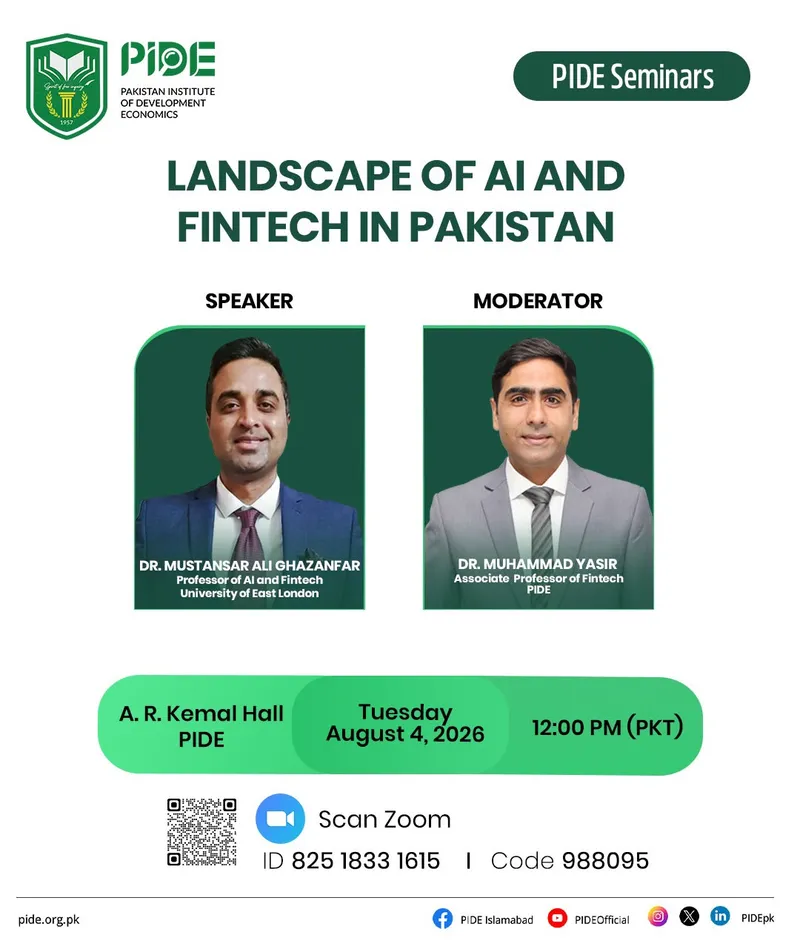
Expanding Financial Inclusion Beyond Infrastructure
Addressing Pakistan’s evolving fintech landscape, Dr Ghazanfar noted that while digital payment infrastructure is improving, growth in transaction volume does not automatically equate to true financial inclusion. Success should instead be measured by active user engagement, affordability, and consumer confidence. The expert highlighted that the challenges facing Pakistani freelancers and exporters extend beyond the absence of global platforms like PayPal, encompassing issues with foreign exchange costs, settlement delays, and restricted payment gateways. Addressing these systemic gaps is essential for the nation’s digital economy to flourish.
Institutional Strategy and Security
Dr Ghazanfar strongly warned institutions against inputting confidential research, internal documents, or personal data into public AI platforms. He proposed that PIDE initiate a 90-day pilot program to evaluate AI-assisted research workflows, emphasizing that technology should serve to enhance, not replace, human decision-making and verification. Ultimately, the seminar concluded that Pakistan’s digital path must prioritize measurable outcomes over visibility. By fostering stronger public-private partnerships, the government can leverage innovation effectively while mitigating risks. This approach aligns with broader efforts to improve national economic frameworks, similar to the strategies discussed in recent dialogues regarding bilateral trade expansion, which highlight the importance of coordinated institutional policy. Ensuring these advancements also permeate the public sector, such as modernizing recreational and public utility site management, remains a critical component of Pakistan’s overarching development strategy.