Chinese Woman Regains Visual Function After Brain-Computer Interface Implant
 By hanif sabir
Published: 08 Aug 2026
2 min read
By hanif sabir
Published: 08 Aug 2026
2 min read
Chinese Woman Regains Visual Function After Brain-Computer Interface Implant
SHANGHAI/HANGZHOU: A 40-year-old Chinese woman who had been almost completely blind for nearly 20 years has regained visual function after receiving a domestically developed high-resolution retina-based visual brain-computer interface (BCI) implant. The procedure is being described as China’s first clinical trial involving this type of high-resolution visual BCI implant.
The woman, identified by the pseudonym “Ling Ling” in reports, had retinitis pigmentosa, a degenerative eye disease that had severely damaged the light-sensitive layer of her retina. Before the procedure, she could detect only very faint light and was unable to recognize faces, shapes or shadows.
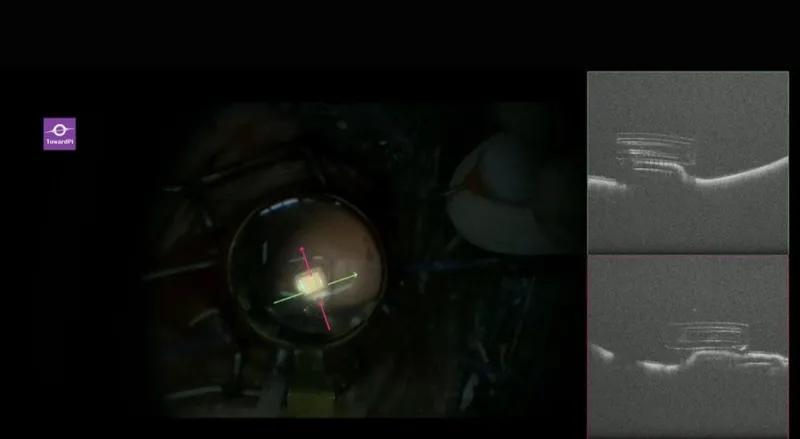
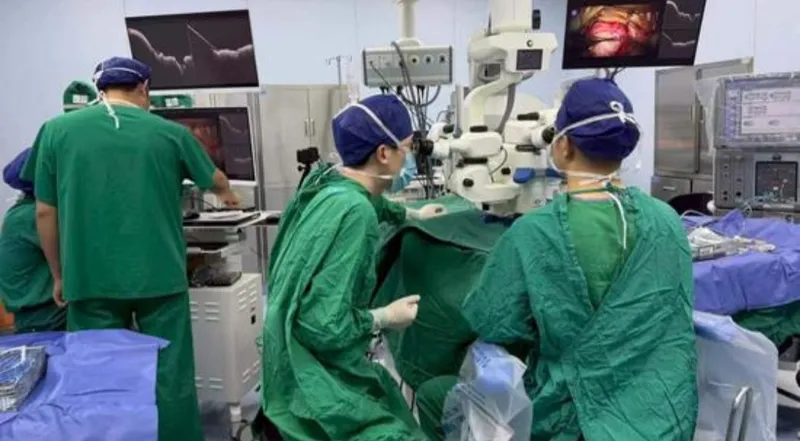
In May 2026, doctors at the Ophthalmology Center of Zhejiang Provincial People’s Hospital implanted a 320-resolution retina-path visual BCI device. The system was developed using Chinese technology and is designed to stimulate surviving retinal cells through a high-density electrode array implanted inside the eye.
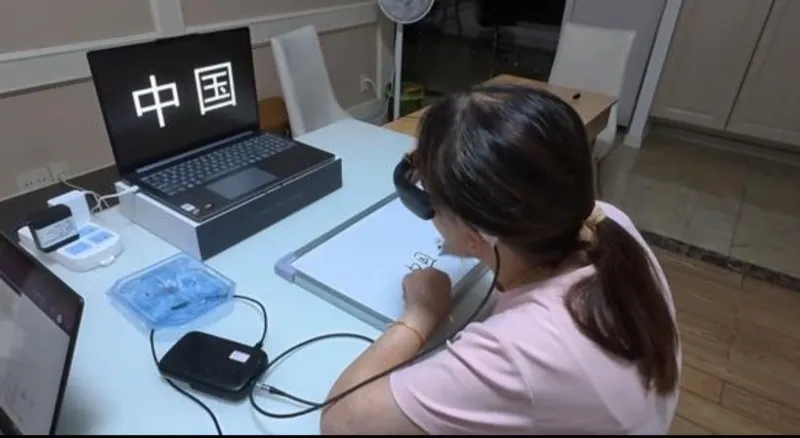
The system also uses smart glasses equipped with a camera. The camera captures images of objects and surroundings and converts the visual information into signals that are transmitted to the implanted device, which then electrically stimulates the remaining retinal cells.
More than two months of rehabilitation and training after the procedure have resulted in steady improvements in the woman’s visual abilities. She has learned to recognize several letters, including L, C, H and R, and is practicing writing Chinese characters.
She can also identify and pick up everyday objects such as a computer mouse and a bottle. In indoor environments, she is increasingly able to walk along a straight path and make right-angle turns, demonstrating growing confidence in using the artificial visual signals.
Doctors say artificial vision produced by the BCI is different from natural eyesight, and the brain needs time and continuous training to learn how to interpret the new signals. Long-term rehabilitation will therefore be required to further improve her visual abilities.
The development offers new hope for patients suffering from degenerative eye diseases such as retinitis pigmentosa and could contribute to the development of new approaches for restoring functional vision through brain-computer interface technology.