Haroon Akhtar Khan Announces New Tax Relief for Pakistani Industry
 By hanif sabir
Published: 29 Aug 2026
3 min read
By hanif sabir
Published: 29 Aug 2026
3 min read
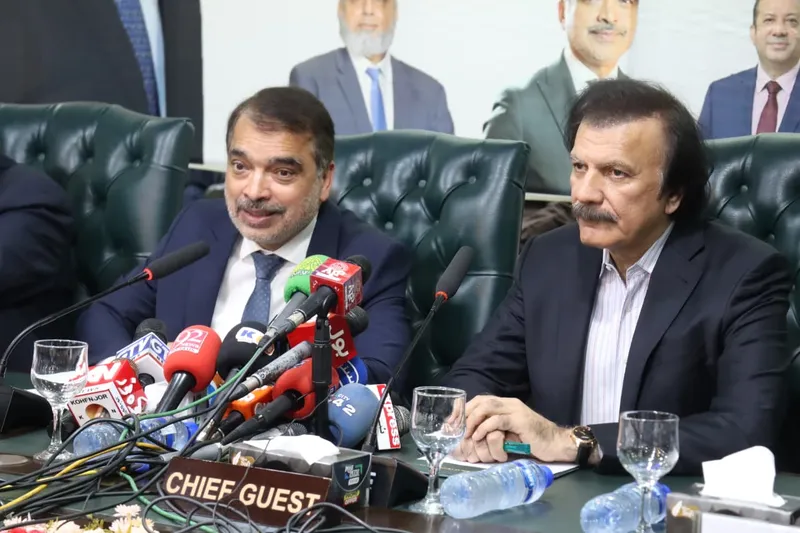
LAHORE (special crosspondent) – Special Assistant to the Prime Minister for Industries and Production Haroon Akhtar Khan has announced that the government has completely removed Super Tax on export businesses, while the rate of Super Tax on non-export businesses earning profits exceeding Rs500 million has been reduced from 10 percent to 8 percent. Speaking at the Lahore Chamber of Commerce and Industry (LCCI), Khan emphasized the government’s commitment to promoting industrialization, reviving sick industrial units, lowering the cost of doing business, and facilitating private sector financing.
Comprehensive Industrial Reforms
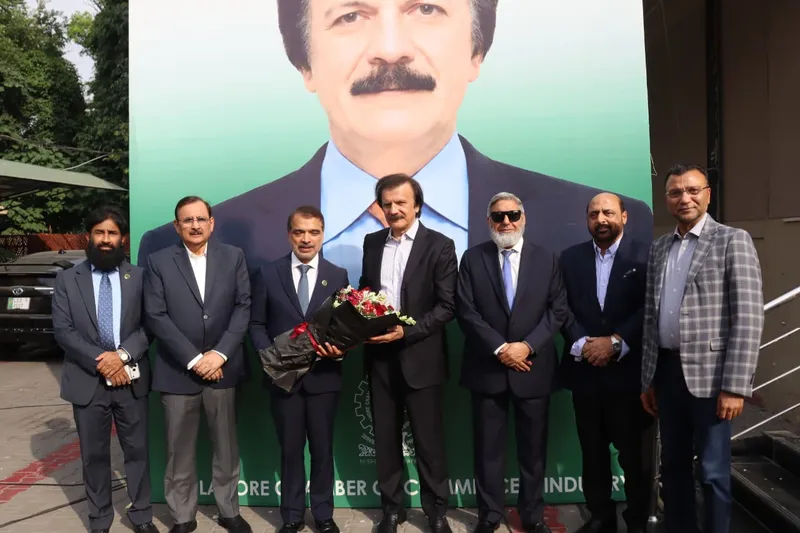
Khan revealed that the government is preparing new policies for Battery Energy Storage Systems, solar panels, mobile phone manufacturing, electric vehicles, agricultural machinery, fertilizers, and the automobile sector. The overarching goal is to bolster local manufacturing and reduce import dependence. Furthermore, he noted that a new Auto Policy is in its final stages, featuring special incentives for electric two, three, and four-wheel vehicles. Addressing the assembly of business leaders, LCCI President Faheem ur Rehman Saigol welcomed the Special Assistant, noting that parliamentary diplomacy and economic stability remain vital for national progress. Other notable attendees included Senior Vice President LCCI Tanveer Ahmad Sheikh, former LCCI and FPCCI President Mian Anjum Nisar, and Federal Secretary Industries Saif Anjum.
Economic Outlook and Challenges
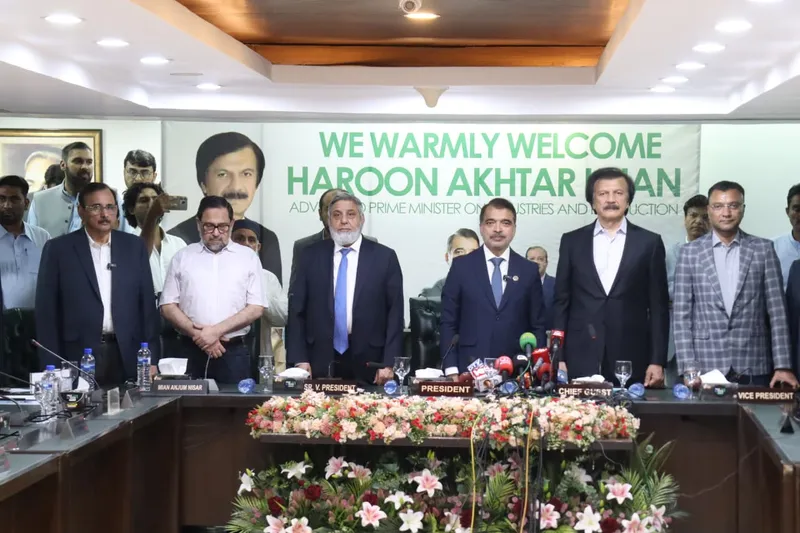
Faheem ur Rehman Saigol highlighted recent encouraging economic indicators, such as improvements in Moody’s credit rating and a robust stock market performance. However, he warned that high operational costs—driven by expensive electricity and borrowing rates—are rendering Pakistani industry uncompetitive globally. He cited an example of a major textile mill closing down and shifting to real estate, emphasizing that such de-industrialization trends threaten thousands of livelihoods. He urged the government to make industrial electricity tariffs regionally competitive and to streamline tax systems.
New Industrial Policy Vision
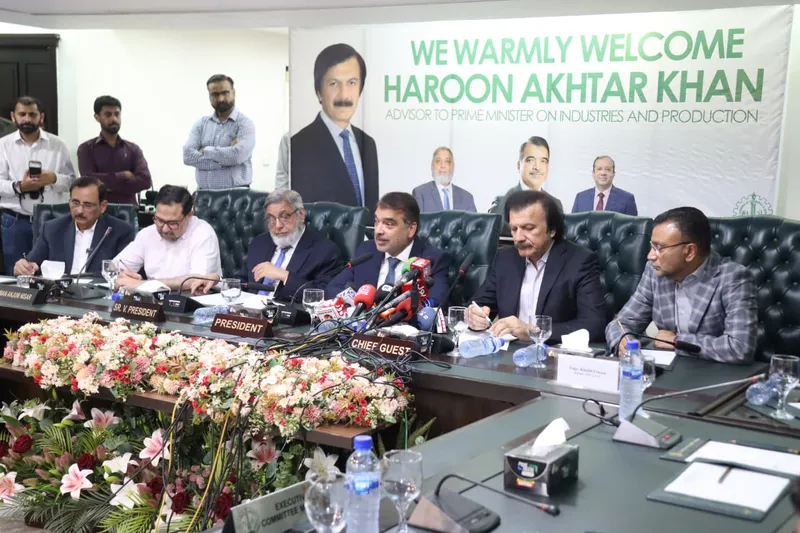
Khan stated that the new Industrial Policy, approved by the Prime Minister, focuses on reviving sick units and protecting businesses from unnecessary harassment. He emphasized that the government is introducing commercial courts and bankruptcy restructuring systems to resolve disputes efficiently. Reflecting on the broader economic landscape, Khan noted that inflation has declined significantly and the policy rate has been reduced to approximately 11.5 percent. He added that 6,400 acres of land belonging to Pakistan Steel Mills have been converted to a land-lease model to attract investors, similar to how sustainable land management models like Niger restores 12.4 million acres of land demonstrate successful economic recovery techniques.
Empowering SMEs and International Cooperation
The government is also prioritizing Small and Medium Enterprises (SMEs) through an active SMEDA, offering support for women entrepreneurs and microfinance. Khan mentioned that 600 joint projects with China are under consideration, with significant progress already visible. He also highlighted that the government is partnering with international firms to begin local production of vaccines and insulin to ensure the availability of essential medicines. Khan concluded by reaffirming that the private sector is the backbone of the economy, and the government’s role is to act as a facilitator to ensure sustainable growth.