Thank You, Jamaat-e-Islami
 By hanif sabir
Published: 08 Sep 2026
5 min read
By hanif sabir
Published: 08 Sep 2026
5 min read
Thank You, Jamaat-e-Islami! You Played a Big Role in Getting Petrol Prices Raised
By Hanif Sabir
There is something uniquely entertaining about Pakistani politics. Every few days, someone takes to the streets promising relief to the people, someone else sits at a negotiation table promising even more relief, and by the time the dust settles, the public discovers that the relief has somehow disappeared—while the petrol price has gone up.
On August 7, Jamaat-e-Islami staged nationwide protests against high petrol prices, inflation and the petroleum levy. At that time, petrol was selling at Rs329.82 per litre and high-speed diesel at Rs382.36. Exactly one month later, on September 8, petrol reached Rs358.77—a rise of Rs28.95 per litre, or roughly 8.8 percent.
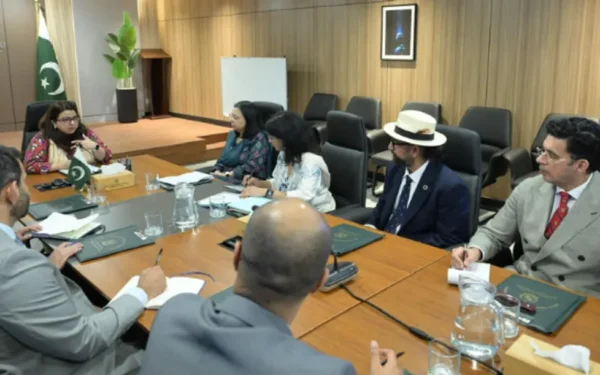
But the real irony came on September 7. Formal negotiations were finally held between the government and Jamaat-e-Islami. The JI delegation was led by Liaquat Baloch, while the government team was headed by Federal Minister for Planning Ahsan Iqbal. Jamaat-e-Islami presented six proposals, including measures aimed at reducing the burden of petroleum prices and providing relief to the public.
One might reasonably have expected that after such a meeting, the next morning would bring some good news for the people. Perhaps a reduction in petrol prices. Perhaps a cut in the petroleum levy. Perhaps, at the very least, a message that the government had heard the public.
Instead, the next morning brought another number—and it was higher.
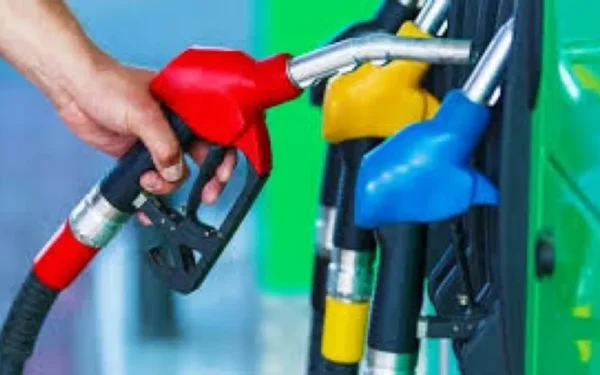
Petrol was increased by Rs12.90 per litre to Rs358.77, while high-speed diesel went up by Rs3.72 to Rs381.77.
Wow. What a successful round of negotiations.
At the negotiating table, relief was being sought for the people; at the petrol pump, the people’s pockets were being searched again.
The chronology makes the irony even sharper. Jamaat-e-Islami protested on August 7. On August 8, Ahsan Iqbal contacted Liaquat Baloch by telephone following the protests. After several rounds of contacts and efforts to bring the two sides to the table, formal negotiations finally took place on September 7. And the very next day, petrol became Rs12.90 more expensive.
So the question naturally arises: what exactly did the public get out of all this?
If the purpose of the protests and negotiations was to reduce the burden of petrol prices, lower the petroleum levy and provide relief to ordinary people, then what does a Rs12.90 increase immediately after the talks signify? Was the government saying one thing at the negotiating table and something entirely different at the petrol pump? Or have negotiations and actual economic decisions simply become two separate worlds?
Of course, the government has its standard explanations. International oil prices, exchange rates, petroleum levy, taxes, fiscal pressures and IMF commitments can all be presented as reasons for increasing fuel prices. These may be legitimate economic considerations. But there is one question for which the ordinary citizen has no complicated formula: when will petrol actually become cheaper?
Because petrol is not merely another commodity whose price appears on a notification. When petrol becomes expensive, transport becomes expensive, freight becomes expensive, production costs rise, food distribution becomes more costly and household budgets come under further pressure. Every increase at the fuel station eventually finds its way into the prices of things people buy every day.
This is precisely why the political test for Jamaat-e-Islami is not how many protests it holds, how many slogans are raised, how many meetings take place or how many proposals are presented. The real test is what the public sees in its pocket after all of that political activity.
To be fair, Jamaat-e-Islami does not set petrol prices. The authority to determine petroleum prices rests with the government. But politics is also about timing, expectations and results. When a party protests against expensive petrol, negotiates with the government for relief, and the very next morning the public receives another price increase, the sequence inevitably invites political satire.
The government can blame international markets. Jamaat-e-Islami can point to its protests and negotiations. Ministers can explain the technicalities. Economists can discuss global crude prices. But the person standing at the petrol station has a much simpler calculation: How much was petrol yesterday, and how much am I paying today?
That is where all political rhetoric eventually ends.
For weeks, the public hears about protests, negotiations, proposals, meetings and promises of relief. Yet when the final notification arrives, the bill once again lands on the citizen’s doorstep.
So, thank you, Jamaat-e-Islami. Your protest was held. Your negotiations were held. Your six proposals were presented. And, almost as if the entire episode had been scripted for irony, petrol went up again.
The protest was on the streets, the negotiations were at the table, the decisions were in government files—and the payment, as usual, was in the people’s pockets.
The real question is not whether another protest will be announced or another meeting will be held. The real question is much simpler:
If every protest and every negotiation ultimately leaves the public paying more, then who exactly is the relief for—and who is it that keeps paying the price?