Pakistan Economy Projected to Grow Over Four Percent This Year
 By hanif sabir
Published: 12 Oct 2026
3 min read
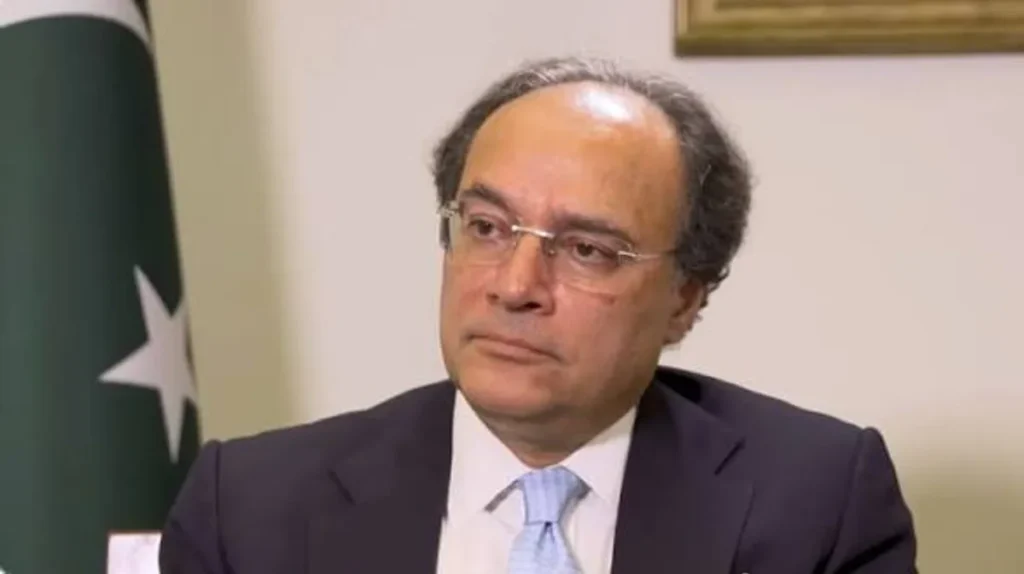
ISLAMABAD (Special Correspondent) – Federal Minister for Finance and Revenue Senator Muhammad Aurangzeb has expressed optimism regarding Pakistan’s economic trajectory, projecting a growth rate exceeding four percent for the current fiscal year. Despite the challenges posed by volatile global oil prices, the minister remains confident in the country’s path toward stability. His remarks, delivered during an interview with Reuters on the sidelines of the World Bank Group–IMF Annual Meetings 2026 in Bangkok, also highlighted the government’s robust privatization agenda, which seeks to divest from loss-making state-owned entities.
Economic Resilience and Strategic Growth
Addressing the current fiscal outlook, Senator Aurangzeb noted that the government has effectively managed to secure consistent fuel supplies, ensuring that vital sectors such as agriculture maintain operational continuity. “I am quite clear that we should clock north of 4 percent,” the minister stated. While he acknowledged that elevated international oil prices remain a significant concern due to their potential inflationary impact on commodity prices, he assured that the administration is actively monitoring the situation to mitigate negative consequences.
As the nation of 255 million continues its pursuit of fiscal discipline, it remains engaged with the International Monetary Fund (IMF) and other global financial partners. Following a recent staff-level agreement with the IMF that aims to unlock approximately $1.21 billion in financing through the Extended Fund Facility (EFF) and a dedicated climate program, the government is also engaged in high-level talks with the United States. These discussions concern a proposed $10 billion exchange stabilization facility, which would further bolster Pakistan’s economic position alongside existing dialogues with the Export-Import Bank of the United States (EXIM) and the US International Development Finance Corporation (DFC).
Privatization and Private-Sector Reforms
The government is moving forward with a major reform agenda following the successful sale of the national flag carrier, Pakistan International Airlines (PIA), last year. The Ministry of Finance has identified approximately a dozen state-owned entities slated for privatization or private-sector integration. Senator Aurangzeb emphasized, “I expect about five or six of these to go through during this fiscal year,” noting that these transactions are projected to generate over $1 billion in revenue.
This initiative is part of a broader shift toward a private-sector-led economic model. The government maintains that its primary responsibility is to foster an enabling environment that empowers businesses and encourages domestic and foreign investment. As policymakers look to replicate structural successes, experts frequently cite the need for comprehensive reforms to maximize efficiency, a sentiment often echoed in discussions regarding the need for Shenzhen-style reforms to unlock the full potential of CPEC. Furthermore, fostering cordial relations between employers and employees remains a pillar of the government’s strategy to enhance national productivity and business growth. By strengthening the overall economic ecosystem, the administration aims to ensure long-term, sustainable development for the country.