Arab States Must Take Greater Responsibility for Their Own Security, US Envoy Tom Barrack Says
 By hanif sabir
Published: 22 Oct 2026
3 min read
Arab States Must Take Greater Responsibility for Their Own Security, US Envoy Tom Barrack Says
*Doha, October 22, 2026*
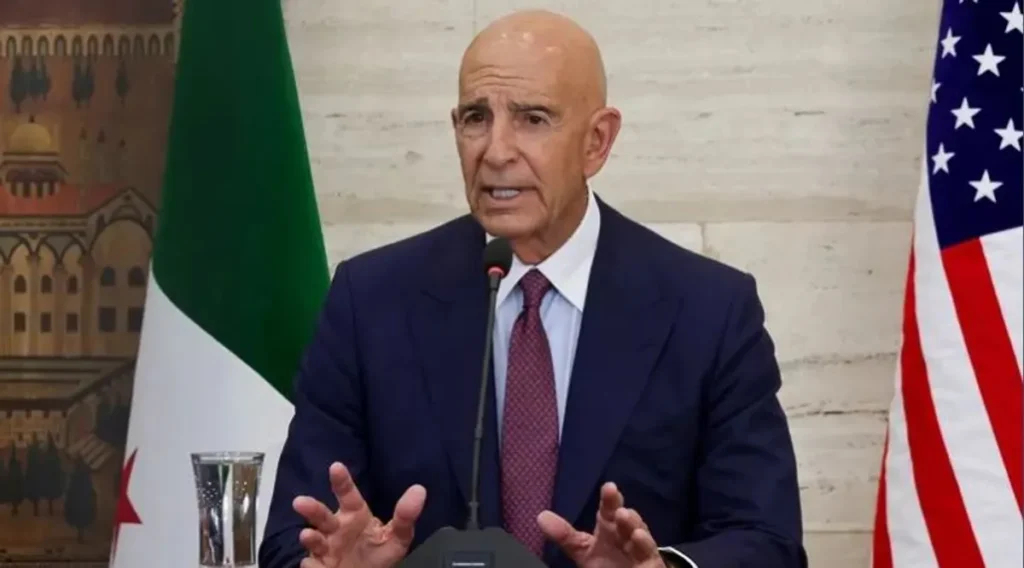
US President Donald Trump’s special envoy, Tom Barrack, has said that Middle Eastern countries can no longer rely on Washington to resolve all their problems and must assume greater responsibility for their own security by strengthening regional defence alliances.
Speaking at the eighth Global Security Forum in Doha, Qatar, Barrack said the United States was not withdrawing from the Middle East, but its role and security policy in the region were changing. He suggested that Washington was moving towards a more limited and supportive role rather than seeking to control regional affairs.
Barrack said the United States had been viewed as a guarantor of global security for nearly eight decades, but that perception was now changing. Countries in the region, he added, were increasingly recognising that they could not depend on Washington to resolve every challenge they faced.
Referring to past US military interventions in Iraq, Libya and Afghanistan, Barrack said efforts to intervene in other countries and change their governments had failed to deliver the expected results. He argued that attempts to change a country’s leadership or government through force had often proved counterproductive. US Support for Saudi Arabia, but Limits on Direct Military Intervention
Addressing tensions involving Yemen’s Houthi movement and Saudi Arabia’s security, Barrack said President Trump supported Saudi Arabia and that the United States would provide logistical assistance. However, he cautioned that direct American military involvement in another country’s ground war could prove ineffective.
Barrack said regional governments must take responsibility for addressing security challenges involving the Houthis, Hezbollah and other armed groups. He suggested that lasting solutions to regional conflicts could not be achieved through American military intervention alone. Regional Alliances and Defence Cooperation
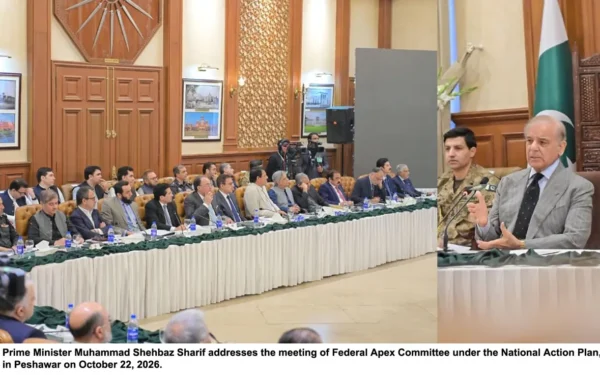
Barrack urged Middle Eastern countries to rely more heavily on regional partnerships to safeguard their security. The broader shift towards regional responsibility has also drawn attention to defence cooperation involving Saudi Arabia, Pakistan and Türkiye.
His remarks suggest that Washington expects its regional partners to play a more active role in their own security, while the United States seeks to retain diplomatic influence and provide assistance without becoming directly involved in every regional conflict.
Barrack stressed that the United States was not abandoning the Middle East but adapting its role to changing circumstances.
His comments come amid continuing tensions involving Iran, concerns over security in the Strait of Hormuz, and the threat posed by the Houthi movement in Yemen. These developments have intensified regional concerns over security, maritime trade and global energy supplies.