Iran–US War: Critical Infrastructure in Seven Gulf Countries Severely Damaged; Governments Accused of Concealing the Extent of Destruction: Reuters Investigation
 By hanif sabir
Published: 18 Oct 2026
4 min read
Iran–US War: Critical Infrastructure in Seven Gulf Countries Severely Damaged; Governments Accused of Concealing the Extent of Destruction: Reuters Investigation
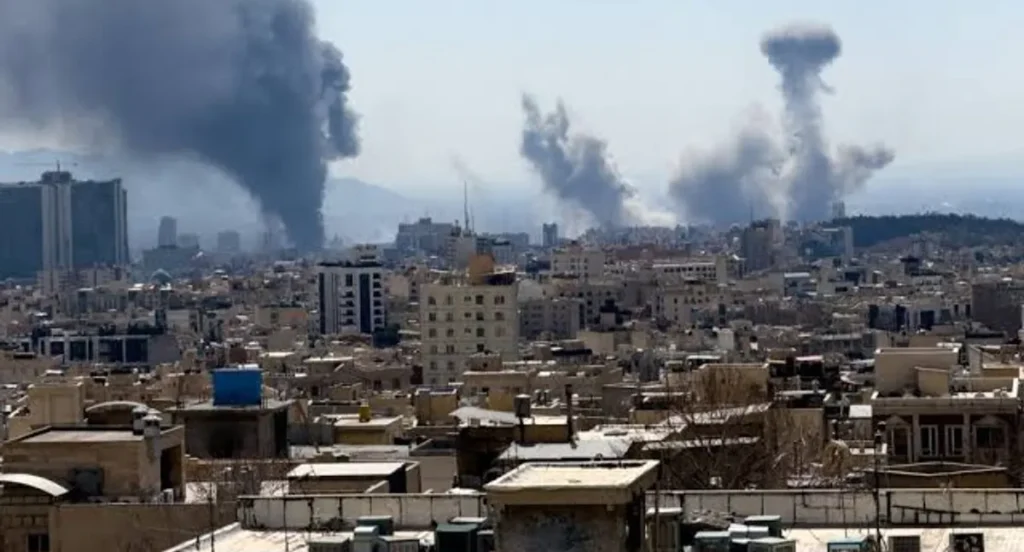
*Islamabad, October 18, 2026:* A detailed investigation by international news agency Reuters has revealed extensive damage to oil and gas facilities, ports, power plants, airports and other critical infrastructure across seven Gulf countries during the war involving Iran and the United States. According to the investigation, affected governments have provided limited accounts of the damage rather than fully disclosing its extent. At least 135 drone and missile attacks were recorded at 84 or more locations across the region from February 28 onward.
Reuters compiled the investigation using interviews with 36 people, photographs, videos, radar data and satellite imagery. The agency said the findings were also presented to relevant governments and companies before publication. The investigation examined damage to critical infrastructure in Saudi Arabia, the United Arab Emirates, Qatar, Kuwait, Bahrain, Oman and Iraq, as well as the implications for global energy supplies.
According to the report, the UAE’s Fujairah port was targeted at least 19 times. Fujairah is strategically important as an alternative route for oil shipments that can help reduce reliance on the Strait of Hormuz. The investigation found that attacks damaged infrastructure supporting oil transportation, raising concerns about the security of alternative export routes in the region.
Qatar’s Ras Laffan industrial complex also suffered significant damage. Two major units used to produce liquefied natural gas (LNG) were affected. Reuters reported that QatarEnergy chief executive Saad al-Kaabi estimated that repairs could take between three and five years. Ras Laffan is a major global centre for LNG production and exports, making the damage significant for international energy markets.
In Saudi Arabia, the Jazan oil refinery was attacked four times, with its output falling to zero following the strikes. According to the investigation, five of the country’s nine major refineries were affected. Saudi Arabia’s oil production had exceeded 10 million barrels per day before the war, but during the first six months of the conflict, production remained below 7 million barrels per day for most of the period, Reuters reported.
Kuwait also experienced substantial disruption to its energy and essential services infrastructure. According to Reuters, the country exported no crude oil in April, marking the first such occurrence since 1991. Four of Kuwait’s eight electricity and water desalination plants were targeted, while the country’s airport came under attack eight times.
At the UAE’s Barakah nuclear power plant, an attack on a substation forced one reactor to rely on emergency diesel generators. The incident highlighted concerns over the protection of critical energy infrastructure and security arrangements around nuclear facilities. However, the incident should not be interpreted as evidence of a nuclear accident or a radioactive release. Government Statements Under Scrutiny
One of the investigation’s key findings concerns official explanations for damage to infrastructure. Reuters identified at least 34 government statements attributing damage at various locations to falling debris from intercepted missiles or drones.
Experts consulted during the investigation questioned whether the specific damage observed at some industrial facilities could plausibly have resulted from falling debris alone. Their assessments raised concerns about the accuracy and completeness of some official explanations.
The report also highlighted the limited public disclosure of damage to critical energy infrastructure across Gulf states. This has complicated efforts to assess the full economic costs of the attacks, the time required to restore damaged facilities and the long-term consequences for energy supplies. Attacks Affect Alternative Routes for Oil Exports
Reuters identified Fujairah port and Saudi Arabia’s East-West Pipeline as important alternatives for transporting oil while reducing dependence on the Strait of Hormuz. Damage to infrastructure associated with these routes has raised further questions about the resilience of regional oil exports and contingency arrangements.
The investigation also examined movements in global oil prices during the conflict. Brent crude traded around $120 per barrel between March and May, while the report cited a closing price of $106 per barrel on October 14.
Overall, the Reuters investigation highlights the difficulty of fully protecting critical energy infrastructure despite advanced air defence systems. It also shows that the consequences of the war extended beyond military targets, affecting oil and gas production, export facilities, electricity generation, water supplies and international energy markets.
*Source: Reuters special investigation, October 15, 2026.*



Comments (1)