Iran’s International Air Network Hit by US Sanctions, but Flights to Pakistan and Far East Continue
 By hanif sabir
Published: 29 Sep 2026
3 min read
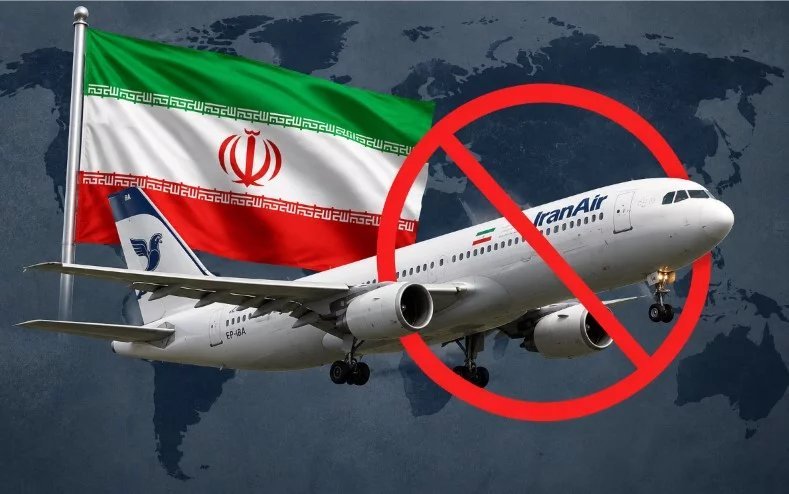
TEHRAN, September 29: Iran’s international aviation network has come under severe pressure following the latest US sanctions, but the country’s international flights have not been completely suspended. Several countries have restricted or suspended Iranian airlines’ access to airports, aviation fuel, ground-handling and other essential services, while air links with Pakistan and several destinations in East and Southeast Asia remain operational.
The latest phase of US sanctions affecting Iran’s aviation sector took effect on September 23. Since then, flights operated by Iranian airlines have been cancelled or suspended in a number of countries, including the United Arab Emirates, Oman, Georgia, Azerbaijan and Iraq. The restrictions are affecting not only airline operations but also access to aviation services required to operate international flights.
There are no direct scheduled passenger flights between Iran and the United States. The new sanctions have further complicated any prospect of restoring direct air links between the two countries.
Iran’s air links with Europe have also been significantly disrupted. Several major European airlines have suspended or reduced services to Iran amid security and operational concerns. Lufthansa and Austrian Airlines have suspended flights to Iran until October 24, while Turkish Airlines has reportedly extended its suspension of Iran services until at least March 2027. Qatar Airways has also suspended services to Iran, with a possible resumption date reported for November 29, although the date remains subject to operational and security conditions.
Iran’s direct aviation links with Africa are extremely limited. There are currently no significant scheduled direct passenger services connecting Tehran with major African destinations. Consequently, Africa represents one of the least-developed regions in Iran’s international air network rather than a major destination affected by the latest sanctions.
Central Asian connections have also been affected by the deteriorating operating environment. A Tehran-Dushanbe flight reportedly had to return to Iran after being denied permission to cross Turkmenistan’s airspace. While not all Central Asian routes have been suspended, the incident highlights the increasing uncertainty surrounding international operations involving Iranian carriers.
The situation is relatively different in the Far East and East Asia. Iranian authorities and airport officials have indicated that flights to China, Malaysia and Vietnam continue to operate. Reports have also referred to services linking Tehran with destinations including Shanghai, Bangkok and Phuket. These routes have become increasingly important as Iranian carriers face restrictions in Western, Gulf and some neighbouring markets.
Air links between Iran and Pakistan are also continuing. Iran’s Imam Khomeini International Airport has listed Pakistan among the destinations where Iranian airlines continue to operate following the latest sanctions. Recent flight information has shown Tehran-Islamabad services operating, although individual flights remain subject to schedule changes.
Iraq has seen a rapidly changing situation. Iranian flights to Baghdad, Najaf, Erbil and Sulaymaniyah were suspended amid the new restrictions, but flights between Iran and Najaf were subsequently resumed. The resumption followed arrangements allowing limited air connectivity, particularly for religious pilgrims.
Overall, Iran’s international aviation network has not been completely shut down, but it has contracted sharply. Direct links with the United States are absent, European services have been substantially reduced, several Gulf and neighbouring countries have suspended Iranian airline operations, while Pakistan and parts of East and Southeast Asia remain among the international markets where Iranian carriers continue to maintain air links.
The situation remains fluid, and individual flights can be cancelled, rerouted or rescheduled at short notice because of sanctions, airspace restrictions, access to aviation services and security conditions.