Lahore Chamber Celebrates National Minorities Day Highlighting Religious Harmony Goals
 By hanif sabir
Published: 11 Aug 2026
3 min read
By hanif sabir
Published: 11 Aug 2026
3 min read
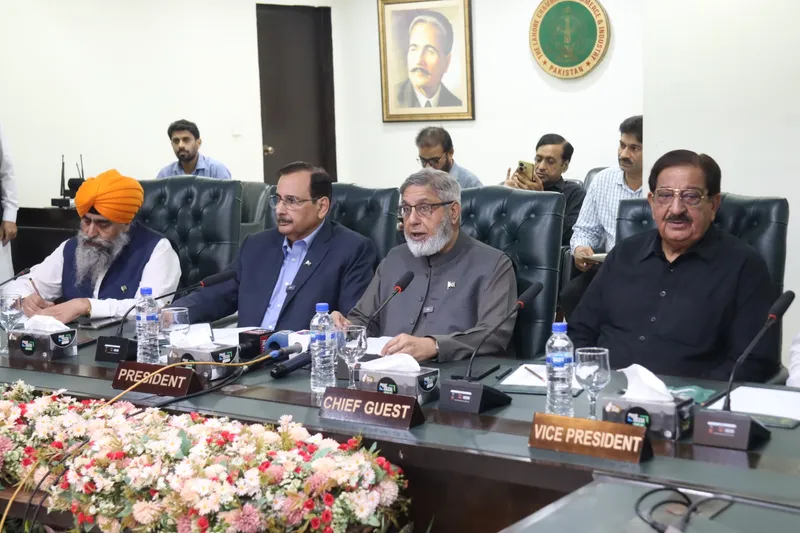
LAHORE (special crosspondent) – A ceremony to mark National Minorities Day was held at the Lahore Chamber of Commerce & Industry (LCCI) to celebrate the country’s diverse social fabric. The event was chaired by LCCI Acting President Tanveer Ahmed Sheikh and attended by former LCCI President Mian Anjum Nisar, Executive Committee Member Rana Nisar, and Convener of the Minorities Committee Sardar Bhishan Singh. Other notable attendees included Secretary General of Minhaj-ul-Quran Khurram Nawaz Gandapur, Shahzad Ahmed Khan, Sohail Ahmed Khan, Haji Ishaq, Dr. Mumpal Singh, Dr. Daran Jeet Singh, Dr. Manpal Singh, Pastor Asif Khokhar, Pandit Kashi Ram, Pandit Bhagat Lal, Allama Zubair Ahmed Zaheer, Maulana Asim Makhdoom, Allama Qasim Ali, and Syed Ghulam Abbas Shirazi. Representatives from the Sikh, Hindu, and Christian communities also participated in the proceedings.
LCCI Leadership Emphasizes Equality and Inclusion

Speaking on the occasion, LCCI Acting President Tanveer Ahmed Sheikh stated that National Minorities Day serves as a reminder of the vision of Quaid-e-Azam Muhammad Ali Jinnah, where every citizen enjoys equal rights regardless of religion, faith, or caste. He underscored that Pakistan should strive to become a global model for religious harmony, tolerance, and interfaith respect. Sheikh highlighted that the sacrifices and services provided by minority communities throughout the history of Pakistan are indelible. He called for the protection of the rights, dignity, and security of these communities throughout the year, rather than limiting focus to a single day.
Economic Progress Through Unity
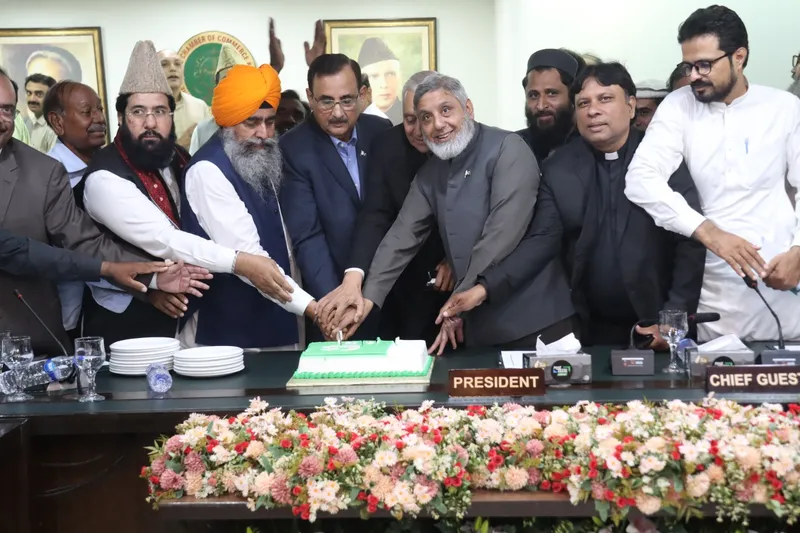
Former LCCI President and Patron-in-Chief of the Pakistan Industrial and Traders Associations Front (PIAF), Mian Anjum Nisar, lauded the Lahore Chamber for providing a platform for members of diverse religions to promote unity and brotherhood. He noted that a robust and developed Pakistan is attainable only when every citizen functions as an equal partner in the nation’s progress. Highlighting the role of the business community, Nisar explained that trade relations foster mutual trust and help bridge cultural divides. He further noted that minority communities are vital contributors across various sectors, including education, healthcare, textiles, food processing, and tourism, which significantly bolsters the country’s economic potential.
Shared Commitment to National Stability
Secretary General of Minhaj-ul-Quran Khurram Nawaz Gandapur congratulated the organizers for their efforts in bringing together different schools of thought. He remarked that Islam emphasizes peace, love, and respect for all, comparing different religions to a bouquet of flowers that creates beauty through its variety. Sardar Bhishan Singh, reflecting on the Sikh community’s connection to the land, stated that Pakistan is a sacred territory, especially given the historical significance of sites like Kartarpur and historic shrines in Lahore. He reiterated that all Pakistanis must work in unison for the country’s stability, taking pride in their national identity while respecting their individual religious heritage. The event concluded with a consensus among speakers that promoting equality and mutual respect is essential for the prosperity of the nation. As institutions like the LCCI continue to foster dialogue, their efforts align with broader national initiatives, much like the AIOU launches “Plant Trees, Transform Pakistan” monsoon plantation campaign, which encourages collective action for a better future. The ongoing commitment to unity remains a cornerstone for national development, similar to the focus on judicial integrity seen when Three new additional judges take oath at Islamabad High Court to serve the nation. Furthermore, the emphasis on national pride remains consistent with celebrations of heritage, such as when Pakistan Iconic Brands” launched in Islamabad, documenting history of 25 leading Pakistani brands, showcasing the richness of the country’s collective identity.