Millions of Africans Could Lose Schengen Free-Movement Access Amid Calls for Tighter Controls
 By hanif sabir
Published: 01 Aug 2026
Updated: 03 Aug 2026
2 min read
By hanif sabir
Published: 01 Aug 2026
Updated: 03 Aug 2026
2 min read
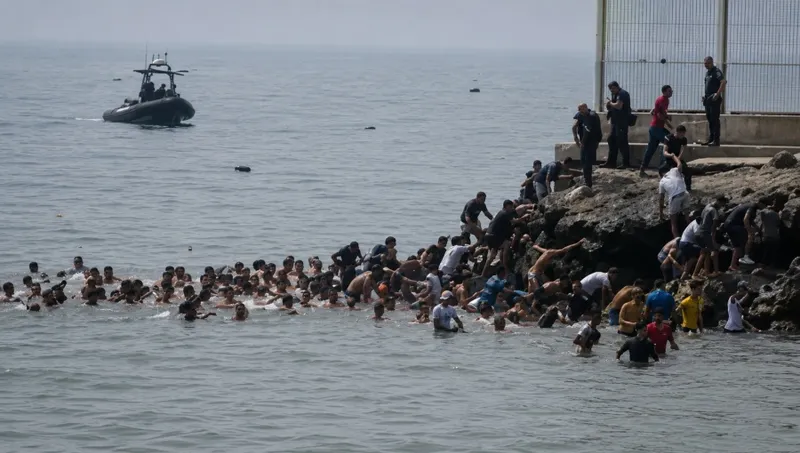
Millions of Africans Could Lose Schengen Free-Movement Access Amid Calls for Tighter Controls
PARIS/BRUSSELS: Growing concerns over irregular migration in Europe have intensified calls to restrict the Schengen area’s free-movement system for non-European citizens, potentially affecting millions of Africans legally living in European Union countries.
The debate has gained momentum following a major influx of irregular migrants into Spain. According to reports, around 49,000 migrants arrived in Spain from Morocco, prompting renewed calls for stronger border controls and tougher migration policies across Europe.
French presidential candidate Marine Le Pen has also called for France to immediately tighten its border controls. She has argued that free movement within the Schengen area should, in the future, be reserved exclusively for citizens of the European Union.
If such proposals were to gain broader support and become policy, they could affect millions of non-EU citizens legally residing in EU member states who currently travel within the Schengen area using residence permits, work permits, student status or other legal residency arrangements.
The Schengen Area allows citizens and residents to travel between participating European countries without routine internal border checks. However, access for non-EU nationals depends on their visa, residence and immigration status.
According to the report, African applicants already face some of the highest Schengen visa rejection rates in the world. In 2024, non-refundable fees paid for rejected Schengen visa applications from African applicants amounted to around €60 million.
Six African countries were among the 10 countries with the highest Schengen visa rejection rates. Comoros recorded a rejection rate of 61.3%, followed by Guinea-Bissau at 51%, Ghana at 47.5%, Mali at 46.1%, Sudan at 42.3% and Senegal at 41.2%.
Morocco submitted 591,401 Schengen visa applications in 2023, making it the fourth-largest source of applications worldwide. Algeria ranked sixth with 474,032 applications, while South Africa, Tunisia and Nigeria were also among the major African countries submitting Schengen visa applications.
The report said migration from Africa to Europe is expected to remain a major issue in the coming decades. Experts estimate that cross-border migration from Africa could reach 11 to 12 million people by 2050, driven by population growth, economic inequality, conflicts and governance challenges.
However, restricting Schengen free movement exclusively to EU citizens remains a political proposal rather than an official European Union policy. Nevertheless, the debate is raising concerns among African governments, businesses and African communities living in Europe.