Najam Mazari Calls for National Organic Board to Boost Exports
 By hanif sabir
Published: 02 Aug 2026
2 min read
By hanif sabir
Published: 02 Aug 2026
2 min read
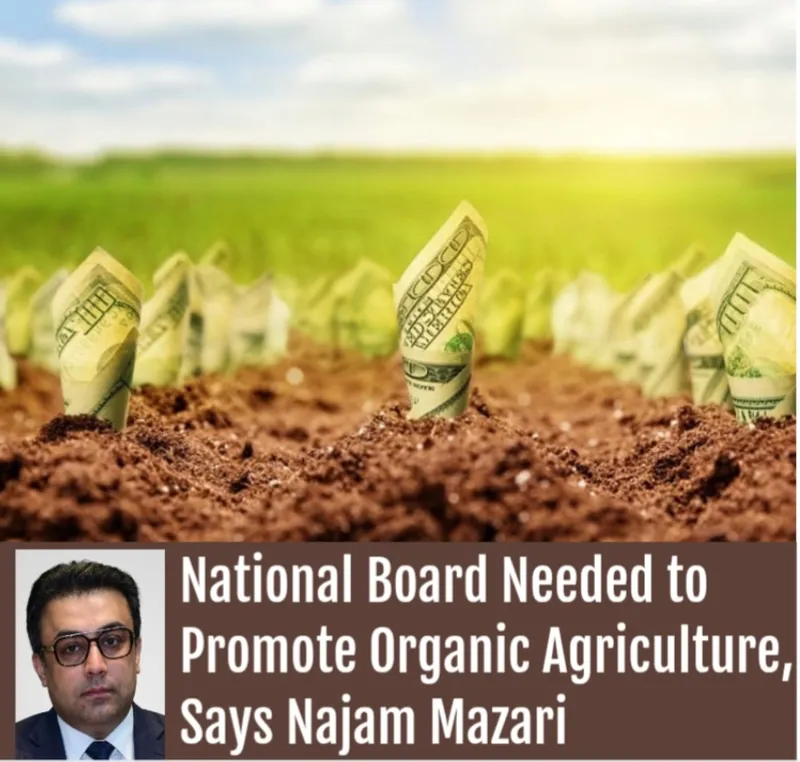
LAHORE (special crosspondent) – Najam Mazari, the lead of an organization dedicated to organic food and product research, has formally requested the establishment of a high-level National Organic Board. This proposed body, featuring representation from all four provinces, aims to formulate a comprehensive and coordinated strategy to accelerate the development of Pakistan’s organic agriculture sector.
Expanding Agricultural Horizons
In a recent statement, Mazari emphasized that Pakistan must move beyond traditional crop reliance. He advocated for a shift toward high-value commodities, such as saffron, chia seeds, tea, and various spices, noting their significant export potential and ability to provide farmers with improved financial returns. Much like the Inc. Magazine Identifies Ten Lucrative Small Business Ideas for Entrepreneurs, Mazari believes diversifying agricultural output is essential for economic growth.
Policy Stagnation and Farmer Concerns
Mazari expressed frustration regarding the current policy landscape, noting that repeated proposals regarding the organic sector have been submitted to both federal and provincial governments. Despite these efforts, he pointed out that a lack of meaningful progress continues to discourage local farmers from transitioning to organic practices. He asserted that Pakistan possesses the capability to generate billions of dollars in export revenue if it prioritizes internationally recognized certification and stringent traceability standards for its agricultural products.
Addressing the Youth Deficit in Farming
Addressing the growing trend of younger generations moving away from agriculture, Mazari warned of a looming shortage of skilled manpower. To mitigate this, he proposed that government-owned agricultural lands be leased to individuals up to age 40 on favorable terms. Furthermore, he suggested the provision of interest-free loans to incentivize youth participation. Similar to CDA Board Eases Parking Requirements for Commercial Buildings in Islamabad, institutional policy reform is necessary to simplify industry participation. Mazari concluded by stressing that modern training, financial incentives, and timely government intervention are critical to ensuring national food security and bolstering the country’s economic stability in the coming years.