Pakistani Students Score Low in Math and Science National Study
 By hanif sabir
Published: 26 Nov 2026
4 min read
KARACHI (Special Correspondent) – Pakistani students scored an average of 38 percent in mathematics and 47 percent in science nationwide, according to findings revealed in a comprehensive study. The final conference of the Data and Research in Education – Research Consortium (DARE-RC) was held at the Aga Khan University (AKU) in Karachi on 26 November 2026, highlighting the urgent need to improve classroom teaching quality and expand professional teacher training across the country.
Key Points
- Pakistani school students achieved an average score of 38 percent in mathematics and 47 percent in science.
- The findings were presented at the DARE-RC closing event hosted at the Aga Khan University in Karachi.
- The 3.5-year national research program was financially supported by UK International Development.
- A newly established Deans Forum will continue evidence-based educational policy dialogue across Pakistani universities.
Details of the DARE-RC Research Program
The study on science and mathematics teaching and learning outcomes was presented by the Aga Khan University’s Institute for Educational Development (IED) alongside its research partners at the DARE-RC closing session. This three-and-a-half-year national research program operated with financial backing from UK International Development. During the event, 44 other research and preliminary review papers were presented, addressing critical concerns such as the denial of educational opportunities to religious minority students, barriers faced by children with disabilities in mainstream schools, strengthening foundational teaching practices, and the quality and opportunities generated by public-private partnerships in education.
It is important to note that these test results reflect the academic performance of children currently enrolled in schools. According to the Pakistan Education Statistics Report 2023-24 released by the Federal Ministry of Education in April 2025, approximately 25 million children remain completely out of school in Pakistan.
Perspectives from Academic Leadership
Dr. Farid Panjwani, Dean of the Aga Khan University’s Institute for Educational Development (IED), stated that DARE-RC was a unique project that encouraged researchers to propose their own topics and ideas for research, which stands as one of the major strengths of the initiative that hopefully will be adopted widely. He further added that the establishment of the Deans Forum with the conclusion of the consortium provides a pathway to align academic research with national reform priorities and help set their future direction.
The event drew policymakers, researchers, educational leaders, and development partners. Attendees reviewed the consortium’s activities and discussed how research findings can be integrated into policy formulation and everyday classroom teaching practices.
Formation of the National Deans Forum
To sustain this research work following the conclusion of the consortium, a national platform named the Deans Forum has been established. This forum will bring together deans and heads of education departments from universities across Pakistan to maintain evidence-based policy dialogue, foster mutual collaboration, and advance shared goals for educational reforms.
Led by Oxford Policy Management in partnership with the Aga Khan University’s Institute for Educational Development (IED) and Sightsavers International, DARE-RC united national and international researchers to discover context-specific effective solutions, encourage local policymakers, and contribute to global educational policy debates through academic publications. The program also incorporated two cross-cutting themes, ‘Effective Use of Information’ and ‘Scalable Solutions’, aimed at ensuring quality, inclusivity, and impactful results across all four priority research areas.
Panel Discussions and Research Gallery Walk
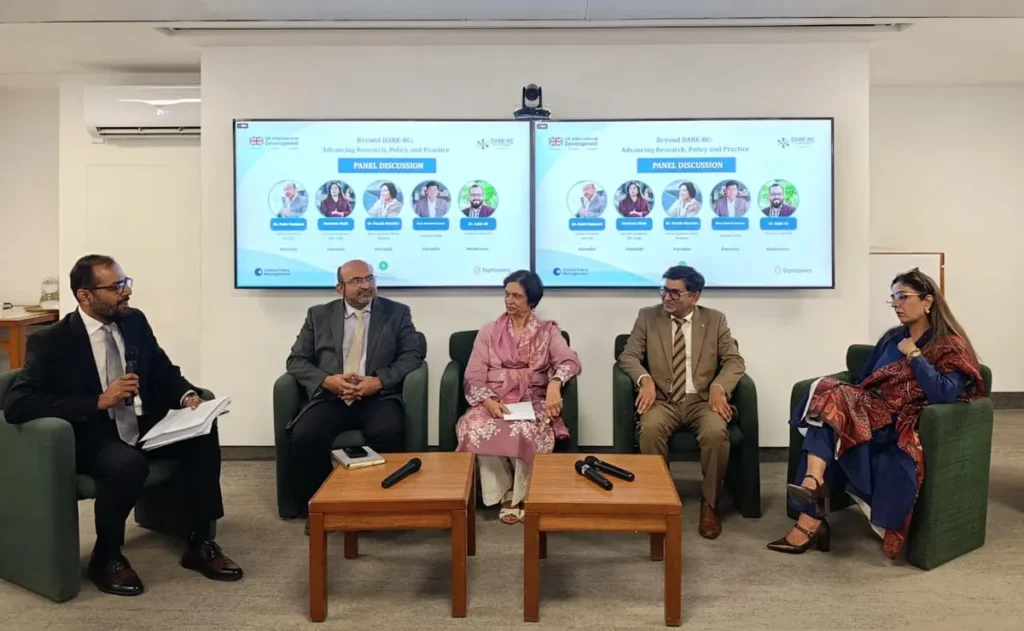
A panel discussion titled ‘Sustaining Research Impacts Post-DARE-RC’ was also held, moderated by Dr. Sajid Ali. Panelists included Dr. Farid Panjwani and Dr. Dilshad Ashraf from the Aga Khan University’s IED, Prem Sagar from the Ministry of Education, Maimona Shah from the Sindh Higher Education Commission, and Dr. Fauzia Shamim from Durbeen. Panelists discussed methods to swiftly integrate research findings into policymaking, strengthen institutional accountability and inclusion, and secure the long-term continuity of research-driven reforms.
Throughout the event, a Research Gallery Walk showcased various studies conducted under DARE-RC, featuring research on the preparedness of educational institutions to address the impacts of climate change, educational management information systems, and established standards for foundational teaching quality.
Frequently Asked Questions
What were the average scores of students in math and science?
Pakistani students scored an average of 38 percent in mathematics and 47 percent in science nationwide.
Which organization hosted the DARE-RC closing conference?
The Aga Khan University (AKU) hosted the closing conference in Karachi on 26 November 2026.