United States Imposes Four-Year Visa Limit for International Students
 By hanif sabir
Published: 17 Jul 2026
3 min read
By hanif sabir
Published: 17 Jul 2026
3 min read
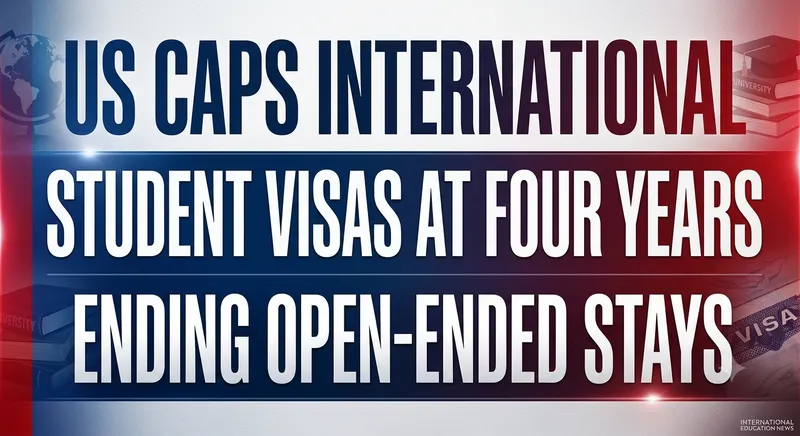
WASHINGTON, D.C (special crosspondent) – In a major policy shift set to reshape the landscape of international education, the United States Department of Homeland Security has finalized a rule eliminating the long-standing “Duration of Status” framework for foreign students, exchange visitors, and media representatives. Scheduled for official publication on July 17, 2026, the final rule will replace the open-ended stay policy with a strict, fixed-admission period, effective September 15, 2026.
This fundamental change alters legal stay requirements for F-1, J-1, and I visa holders, ending a system that had governed international student entry for nearly fifty years. Previously, international students were permitted to remain in the U.S. indefinitely, provided they maintained full-time enrollment. The new regulations cap admission for degree programs at either the length of the program or four years, whichever is shorter.
Impact on Graduate Research and Visa Extensions
Students whose programs exceed the four-year threshold, including doctoral candidates and medical students, must now formally apply for an Extension of Stay through U.S. Citizenship and Immigration Services. This requirement involves filing Form I-539, paying fees between $420 and $470, and undergoing federal biometrics and background checks. This administrative burden mirrors the regulatory rigor often discussed in bilateral cooperation, similar to how Ambassador Khalil Hashmi Reviews Pakistan-China Economic Ties with Finance Minister in a different global context. The shift is expected to heavily impact research-intensive sectors, as many doctoral programs typically require five to eight years to complete.
Restricted Mobility and Grace Periods
The new directive imposes stricter limits on student transitions. The grace period for departing the country, transferring schools, or moving to Optional Practical Training has been halved from sixty to thirty days. English language training is now subject to a lifetime cap of twenty-four months. Furthermore, undergraduate students are barred from changing majors or transferring institutions within their first academic year. These changes come at a time when many nations are refining their international engagement strategies, including efforts where Pakistan Invites Chinese Investment to Boost Meat Exports to China to broaden its economic footprint.
Academic and National Security Outlook
The government justifies the regulation as a necessary measure to close national security loopholes and ensure stricter immigration oversight. Meanwhile, university advocacy groups have criticized the move, warning that the increased bureaucracy may diminish the competitiveness of U.S. higher education institutions. This environment of heightened scrutiny reflects broader trends in international policy, such as when Pakistan Advocates for Equitable Global Artificial Intelligence Governance at UN to ensure standard-setting remains transparent. Compliance officers are now bracing for an extensive administrative transition period ahead of the September implementation date.