Pakistan Advocates for Equitable Global Artificial Intelligence Governance at UN
 By hanif sabir
Published: 16 Jul 2026
3 min read
By hanif sabir
Published: 16 Jul 2026
3 min read
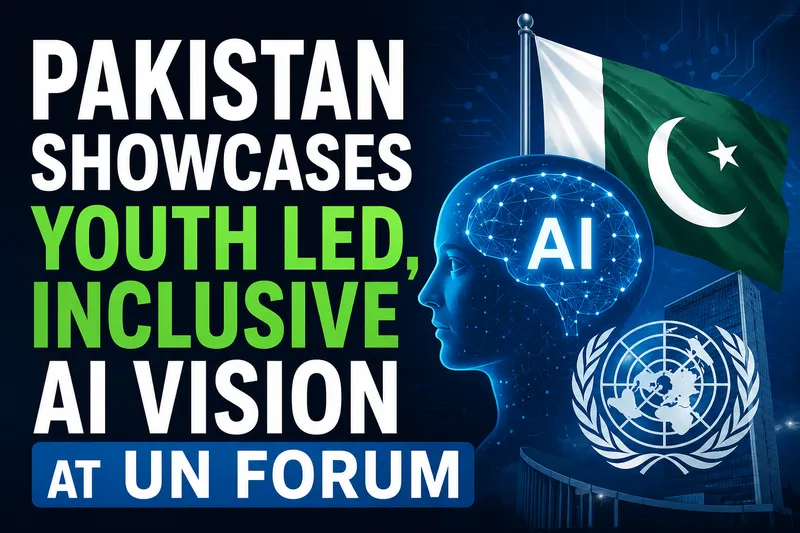
ISLAMABAD (special crosspondent) – Pakistan has officially called for a more inclusive, human-centered, and equitable approach to global artificial intelligence governance during a high-level discussion held at the United Nations Headquarters. The event, which took place this Thursday, was jointly organised by the Permanent Missions of Pakistan and Tajikistan in collaboration with the Prime Minister’s Youth Programme. The session convened diplomats, senior UN officials, technology experts, academics, and youth representatives to deliberate on how artificial intelligence can effectively advance sustainable development while ensuring technological resilience.
Global Inequalities and Digital Infrastructure
Speakers at the forum expressed grave concern regarding the widening global divide. They highlighted that unequal access to essential digital infrastructure, international financing, and skilled human resources risks exacerbating existing socio-economic disparities, particularly within developing nations. The consensus among the participants was that artificial intelligence must be utilized as a tool for collective progress. This necessitates a strategic focus on expanding technological access, prioritizing capacity building, and positioning the younger generation at the core of future developmental frameworks, much like the digital infrastructure improvements witnessed in Pakistan’s own technological sector.
Pakistan’s Youth-Led Vision for AI
Rana Mashhood Ahmad Khan, Chairman of the Prime Minister’s Youth Programme, detailed Pakistan’s comprehensive strategy to equip its youth for an AI-driven landscape. He confirmed that the government has allocated Rs 40.58 billion to the Youth Programme for the 2026-27 fiscal year, underscoring a deep commitment to digital empowerment. Key performance indicators shared included the distribution of over 600,000 laptops and the successful training of 73,000 individuals in high-growth fields such as artificial intelligence, blockchain technology, and data science. Furthermore, over 217,000 technical skills scholarships have been disbursed across 8,000 diverse courses. The Digital Youth Hub, a flagship initiative, has reportedly registered over 804,000 users, facilitated 114,000 employment opportunities, and established strategic partnerships with more than 3,180 organisations.
National Policy and International Cooperation
Mashhood emphasized that Pakistan’s National Artificial Intelligence Policy is specifically designed to cultivate a workforce of one million AI professionals and 10,000 trainers by 2030. He advocated for robust international cooperation to dismantle the global AI divide, citing the need for increased investment in infrastructure and the promotion of responsible AI deployment. This focus on long-term development echoes the national efforts currently being overseen by government officials in various sectors, similar to the infrastructure development oversight conducted by federal authorities.
Regional Perspectives and Future Governance
Abdurahmon Abdurahmonzoda, the Minister of Economic Development and Trade for Tajikistan, outlined his country’s own advancements, including the adoption of Central Asia’s inaugural National Artificial Intelligence Strategy through 2040. Tajikistan has also established a Regional Artificial Intelligence Centre to foster regional digital literacy. The forum, which featured insights from UNDP representative Jennifer Louie, Google expert Hashim Syed, and youth delegate Bisma Qamar, concluded that governance frameworks must remain agile to counter cybersecurity threats. The panel stressed that the youth should be empowered as active decision-makers rather than passive consumers of technology.
Closing Remarks on Ethical AI
Pakistan’s Permanent Representative to the United Nations, Ambassador Asim Iftikhar Ahmad, delivered the closing remarks, asserting that humanity must remain in control of the trajectory of artificial intelligence. He articulated four primary pillars for global engagement: bridging the technological divide, ensuring equitable development outcomes, promoting youth leadership, and fostering transparent, safe, and accountable systems. Ambassador Asim noted that Pakistan’s commitment to these values serves as a model for international cooperation, a standard of diplomacy consistently seen in bilateral economic and strategic discussions held by the nation’s high-ranking diplomats.