Ambassador Khalil Hashmi Reviews Pakistan-China Economic Ties with Finance Minister
 By hanif sabir
Published: 15 Jul 2026
3 min read
By hanif sabir
Published: 15 Jul 2026
3 min read
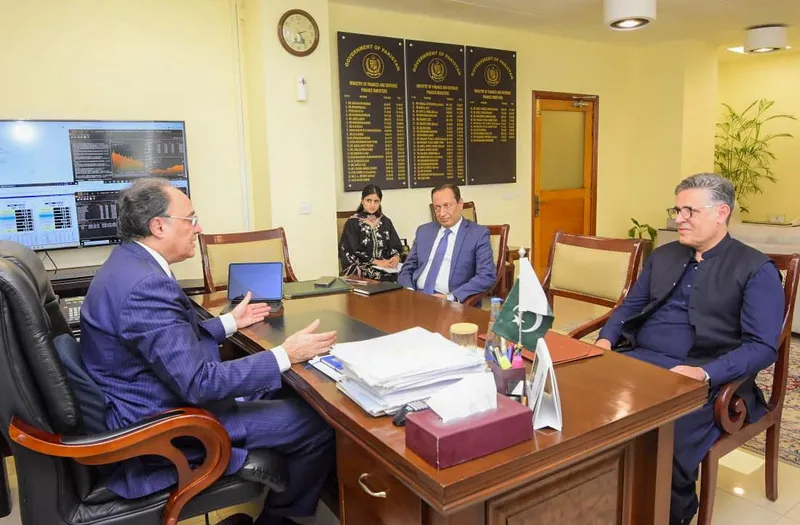
ISLAMABAD (special crosspondent) – Pakistan’s Ambassador to the People’s Republic of China, Mr. Khalil Hashmi, held a high-level meeting with the Federal Minister for Finance and Revenue, Senator Muhammad Aurangzeb, to evaluate the trajectory of Pakistan-China economic cooperation, strategies for investment promotion, and the advancement of bilateral financial relations. The meeting, reflecting the deepening strategic partnership, served as a platform to align diplomatic efforts with the government’s broader economic objectives, similar to the government’s ongoing focus on reforms such as the recent milestone in national debt retirement.
Advancing Economic Diplomacy and Investment
Finance Minister Senator Muhammad Aurangzeb lauded Ambassador Hashmi’s contributions toward enhancing Pakistan’s economic diplomacy in Beijing. Acknowledging the Embassy’s proactive stance in bridging the gap between Pakistani and Chinese enterprises, the Minister reiterated that the government’s economic agenda prioritizes the attraction of high-quality foreign investment, the expansion of the country’s export base, and the fostering of private sector synergy.
Progress on Investment Facilitation and Agreements
Ambassador Hashmi provided a detailed briefing on the investment facilitation framework currently operational at the Embassy in Beijing. He reported that Memoranda of Understanding (MoUs) exceeding US$20 billion have been established between Pakistani and Chinese entities. Importantly, a dedicated monitoring mechanism is in place to ensure these commitments materialize into tangible agreements and commercial ventures. This development underscores a shift in national priorities, echoing the strategic focus seen in other major initiatives like the strengthening of ties with international partners.
Sectoral Growth and Future Outlook
The discussion highlighted a surge in interest from the Chinese private sector across diverse domains, including manufacturing, logistics, pharmaceuticals, biotechnology, and textiles. The Ambassador noted that nine agreements have been finalized within the pharmaceutical and biotechnology sectors alone, while over 150 Chinese companies are actively engaged via the Embassy’s facilitation platform. Furthermore, the two leaders reviewed the status of major industrial and export-oriented textile projects currently underway in Pakistan.
Collaboration on Financial Innovation and Capital Markets
The dialogue expanded to include cooperation in capital markets and emerging financial innovations. Ambassador Hashmi outlined ongoing interactions with prominent Chinese financial institutions and development partners. The meeting touched upon upcoming investment roadshows and opportunities to leverage institutions such as the Asian Infrastructure Investment Bank (AIIB) and the Silk Road Fund to bolster infrastructure financing.
Workforce Development and Institutional Coordination
Recognizing the necessity of human capital, Ambassador Hashmi detailed efforts to align technical and vocational training programs with the requirements of new Chinese industrial investments. Senator Aurangzeb emphasized the imperative of effective inter-institutional coordination to ensure project execution remains on track. The Minister underscored that maintaining investor confidence is critical for the success of these long-term partnerships, just as the government continues to streamline the business environment for local and international stakeholders. The meeting concluded with a mutual commitment to deepening economic cooperation under the China-Pakistan Free Trade Agreement (CPFTA), with a shared goal of enhancing market access and promoting sustainable industrial growth.