Central Asia Seeks Trade Corridors to Pakistani Ports Amid Challenges
 By hanif sabir
Published: 29 Jul 2026
2 min read
By hanif sabir
Published: 29 Jul 2026
2 min read
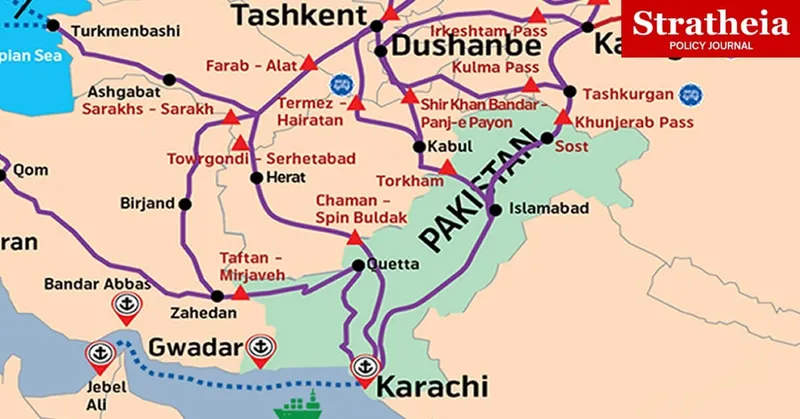
ISLAMABAD (special crosspondent) – Central Asian nations are intensifying efforts to establish a robust trade corridor connecting the landlocked region to Pakistan’s major seaports, viewing access to the Arabian Sea as a critical requirement for scaling exports and lowering logistics costs. Despite the clear economic incentives, the project faces significant hurdles due to the ongoing deterioration of bilateral relations between Pakistan and Afghanistan.
The Strategic Necessity of a Trans-Afghan Trade Route
A recent analysis by OilPrice highlights that a trans-Afghan trade corridor represents the most efficient and cost-effective pathway for Central Asian republics—specifically Kazakhstan, Uzbekistan, Kyrgyzstan, Tajikistan, and Turkmenistan—to reach key Pakistani maritime hubs such as Karachi, Port Qasim, and Gwadar. Access to these ports is viewed as a vital gateway to international shipping lanes, offering a more direct route to global markets compared to existing northern corridors traversing Russia or routes through Iran.
Impact of Regional Geopolitical Tensions
The report underscores that plans for this connectivity are currently hampered by political friction between Islamabad and Kabul. The recent closure of major border crossings has significantly disrupted transit trade, creating a climate of uncertainty for long-term logistics planning. Amid such instability, Central Asian states are increasingly exploring diversified transport options, though they remain committed to the goal of achieving reliable transit through Pakistan, similar to the broader regional focus on infrastructure development and connectivity.
Gwadar and Future Economic Integration
Pakistan’s ports are positioned as pivotal strategic assets. Gwadar Port, in particular, is attracting attention for its proximity to global shipping routes and its inherent integration with the China-Pakistan Economic Corridor (CPEC). While analysts suggest that stable transit through Afghanistan is the most logical long-term solution, the prevailing security and political climate has forced regional players to pursue a multi-modal strategy to mitigate supply chain risks. Successful implementation of these routes, however, remains contingent upon sustained regional cooperation, improved security frameworks, and the rigid enforcement of cross-border transport agreements.