LCCI Urges Industry-Academia Alliance to Revitalize Lahore’s Economic Landscape
 By hanif sabir
Published: 20 Nov 2026
3 min read
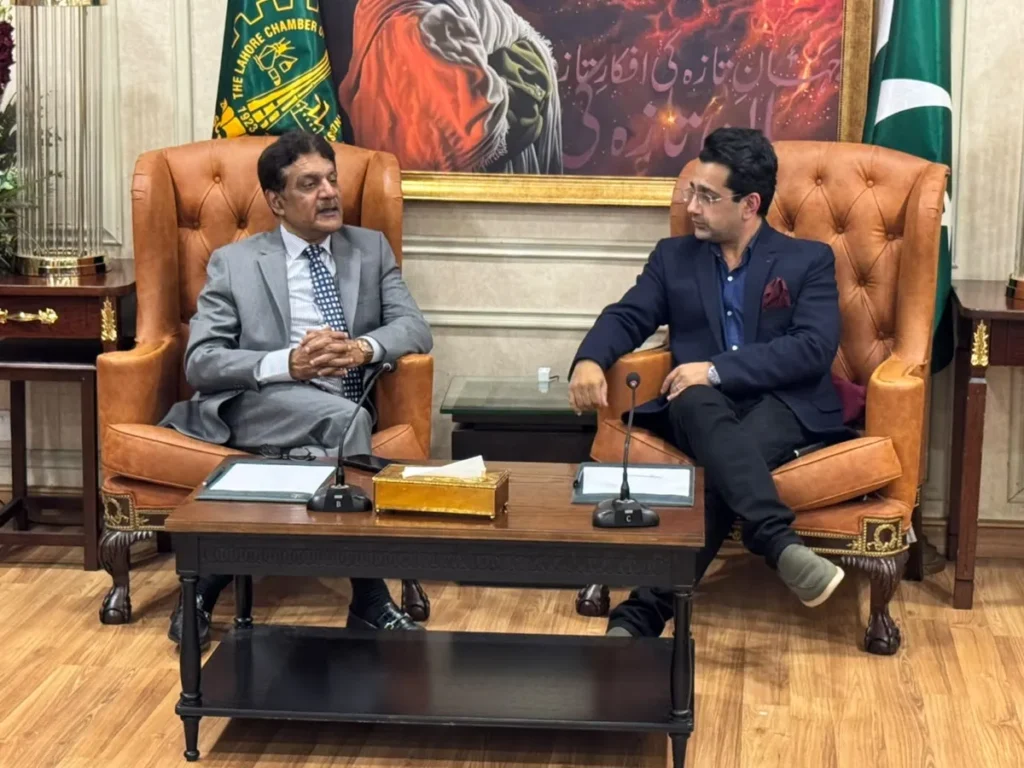
LAHORE (Special Correspondent) – In a significant push to revitalize the provincial capital’s economic landscape, Sardar Usman Ghani, Senior Vice President of the Lahore Chamber of Commerce & Industry (LCCI), has said that stronger collaboration between industry and academia is essential for upgrading small industries, modernizing their technology, and helping them compete more effectively in export markets. The initiative focuses on fostering a robust Industry-Academia Alliance to ensure sustainable economic growth and technological advancement for local businesses across the region.
Key Points
- Sardar Usman Ghani emphasized that small industries require urgent technological upgrades and institutional support to remain competitive.
- The LCCI Senior Vice President stressed that academic institutions possess the research capacity and innovation infrastructure to improve industrial productivity.
- Farhan Riaz, Head of Incubation at UET Lahore, highlighted that incubation programs help connect young innovators with practical industrial sector challenges.
- Both parties agreed that collaboration must move beyond symbolic meetings to concrete, result-oriented projects delivering measurable economic benefits.
Strengthening Lahore’s Economic Landscape
The call for closer cooperation came during a high-level meeting between the LCCI Senior Vice President and Farhan Riaz, Head of Incubation at the University of Engineering and Technology (UET) Lahore, held at the chamber’s headquarters on 20 November 2026. Matters including the need for practical, result-oriented linkages between the business community and academic institutions to address the challenges facing Lahore’s economy and to support sustainable development came under discussion.
Speaking on the occasion, Sardar Usman Ghani noted that while Lahore has long been a vital engine of Pakistan’s economy, many enterprises continue to rely on outdated machinery and traditional production methods. He stated that academic institutions such as UET Lahore possess the technical expertise that can help local industries adopt modern technologies. “Stronger links between industry and academia can help small industries upgrade their technology and compete more effectively in export markets,” he added, noting that similar initiatives could support the broader economic reforms required for small and medium-sized enterprises (SMEs).
Bridging the Research-Industry Gap
Sardar Usman Ghani argued that Lahore’s economic challenges cannot be addressed in isolation and require a coordinated approach involving the chamber, universities, incubators, and policymakers. He emphasized that bridging the gap between universities and industry would not only help businesses modernize but also enable them to improve product quality, reduce production costs, and explore new export opportunities.
During the meeting, Farhan Riaz briefed participants on the university’s incubation programs. He highlighted the role of university-led incubation centers in supporting startups and connecting young innovators with the industrial sector. Mr. Farhan Riaz explained that the UET Lahore incubation ecosystem is specifically designed to bridge the gap between academic research and practical industrial needs, providing affordable technological solutions for SMEs facing real-world operational problems.
Frequently Asked Questions
Why is an industry-academia alliance important for Lahore?
Such an alliance is necessary to help small and medium-sized industries upgrade their outdated machinery, improve product quality, and reduce production costs to compete in international markets.
What role does UET Lahore play in this economic initiative?
UET Lahore provides the research capacity and innovation infrastructure through its incubation programs, which connect young innovators and startups with local industries to solve real-world technical problems.