Government Withdraws EV Policy Draft Following Pressure from Local Automakers
 By hanif sabir
Published: 02 Aug 2026
2 min read
By hanif sabir
Published: 02 Aug 2026
2 min read
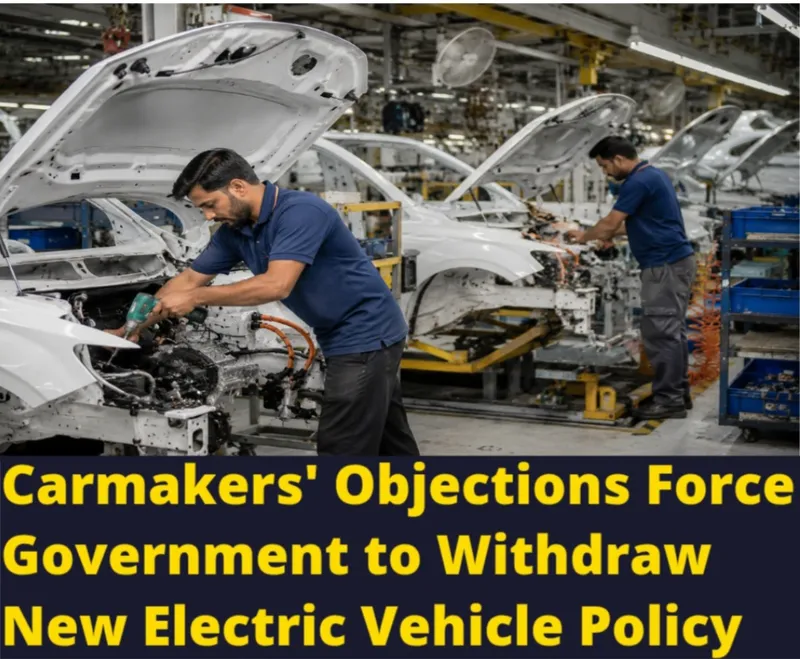
ISLAMABAD (special crosspondent) – The federal government has formally decided to withdraw the current draft of its proposed Electric Vehicle (EV) policy following significant opposition and concerns raised by the domestic automotive industry. Prime Minister Shehbaz Sharif has subsequently entrusted Deputy Prime Minister Ishaq Dar with the responsibility of overseeing the development of a comprehensive and revised Auto Policy for the 2026–31 period.
Industry Concerns Over Competitive Disadvantage
According to reports, local car manufacturers expressed strong reservations, arguing that while the push for sustainable mobility is essential, the proposed fiscal framework would have created a disproportionately uneven tax structure. Industry representatives warned that such measures would severely disadvantage the conventional automotive sector. Consequently, manufacturers have urged the government to pursue a phased, gradual transition toward electric mobility, emphasizing the need for continued institutional support for local manufacturing, the local auto parts sector, and the acceleration of technology transfer protocols.
Policy Uncertainty and Market Impact
The situation intensified following the expiration of the Auto Industry Development and Export Policy 2021–26. A notable delay in the introduction of a successor framework resulted in the General Sales Tax (GST) on hybrid and plug-in hybrid vehicles reverting to 25 percent effective July 1, 2026. This legislative gap triggered immediate market instability; several leading automakers were forced to increase vehicle prices, while others opted to temporarily suspend invoicing and vehicle deliveries to mitigate risks associated with the prevailing policy uncertainty. Similar to how the CDA Board Eases Parking Requirements for Commercial Buildings in Islamabad to support industry needs, stakeholders are pushing for more collaborative policy-making.
Calls for Stakeholder Consultation
The Pakistan Association of Automotive Parts and Accessories Manufacturers (PAAPAM), alongside other key industry stakeholders, has formally requested that the government structure the forthcoming EV policy only after a period of extensive, transparent consultation. The industry is advocating for the maintenance of a balanced and predictable tax regime, particularly for hybrid vehicles, until Pakistan can establish a robust domestic EV charging infrastructure and a sustainable local manufacturing ecosystem for electric components. As the nation navigates technological shifts, the government remains under pressure to balance innovation with economic stability, mirroring the strategic focus seen in other sectors, such as the PMSA Signs Historic Contract to Install Vessel Monitoring System or initiatives related to advanced technology adoption.