Pakistan, 11 Other Countries Oppose New Permanent UN Security Council Seats, Call for End to Veto Power
 By hanif sabir
Published: 25 Sep 2026
2 min read
By hanif sabir
Published: 25 Sep 2026
2 min read
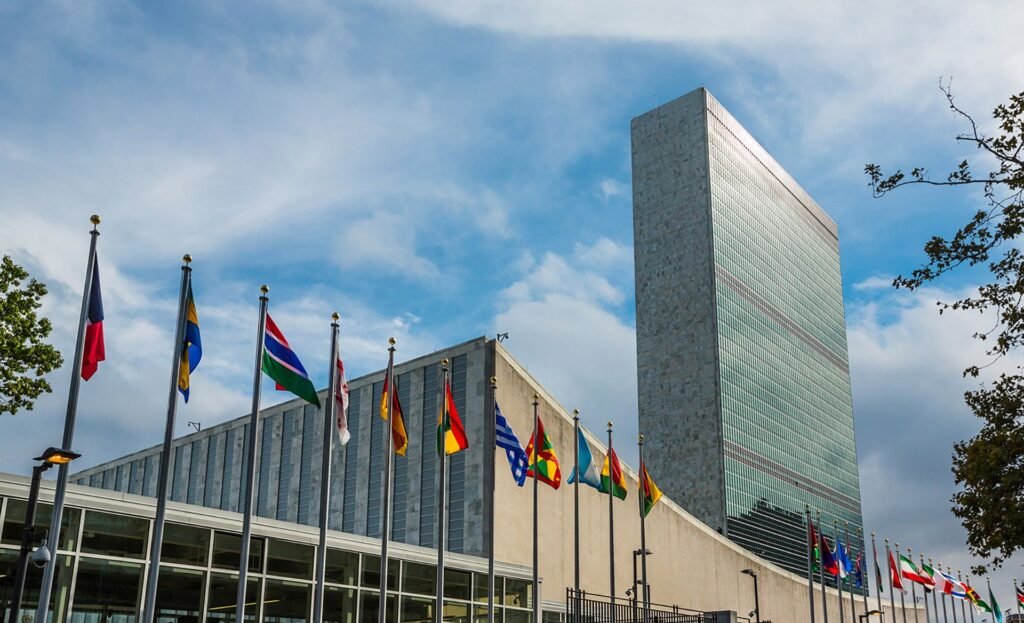
ISLAMABAD: Pakistan and 11 other countries have opposed proposals to create new permanent seats on the United Nations Security Council, while supporting an increase in the number of elected members and the introduction of longer-term, regionally based elected seats.
According to Anadolu Agency, Pakistan, Argentina, Canada, Colombia, Costa Rica, Italy, Malta, Mexico, South Korea, San Marino, Spain and Türkiye, members of the “Uniting for Consensus” group, issued a joint statement during the high-level week of the 81st session of the UN General Assembly.
The statement said the group supports reforms aimed at creating a Security Council that is more representative, democratic, transparent, accountable and effective, with greater capacity to address current global challenges.
The group argued that increasing the number of elected members would provide different regions with greater representation while preserving the principle of the sovereign equality of all countries.
The statement also called for addressing Africa’s historical underrepresentation on the Security Council and supported greater representation for the Asia-Pacific, Latin American and Caribbean regions.
The “Uniting for Consensus” group reiterated its opposition to the creation of new permanent seats on the Security Council, saying that the ongoing intergovernmental negotiations remain the comprehensive and legitimate forum for discussions on Council reform.
The group also called for the abolition of the veto power held by the permanent members of the Security Council. In the interim, it urged measures to restrict the use of the veto, particularly in situations involving mass atrocities and war crimes.
Pakistan has consistently opposed the creation of additional permanent seats on the Security Council while supporting an expansion of elected membership. Islamabad has argued that adding more permanent members would not address concerns related to democracy, accountability and transparency, while increasing elected membership could strengthen regional representation on the Council.