Pakistan and Canada Sign Bilateral Phytosanitary Protocol for Canola Trade
 By hanif sabir
Published: 20 Jul 2026
2 min read
By hanif sabir
Published: 20 Jul 2026
2 min read
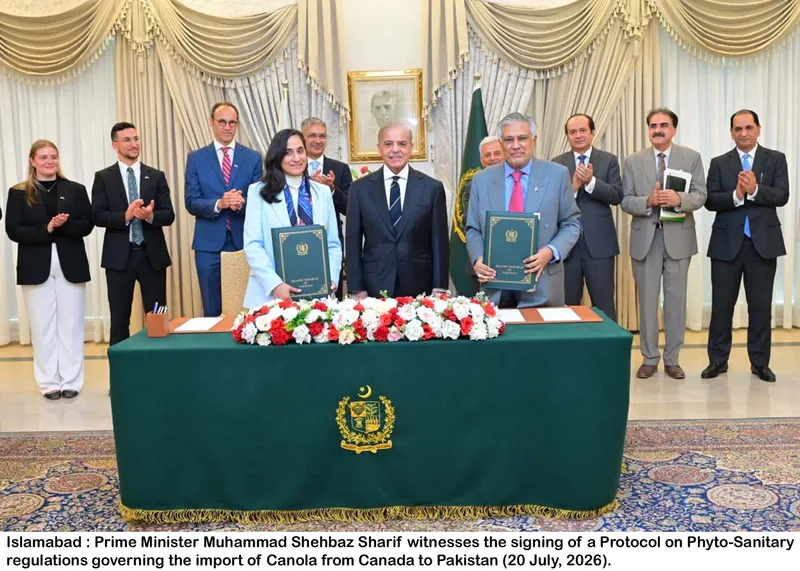
ISLAMABAD (special crosspondent) – Pakistan and Canada on Monday signed a phytosanitary protocol governing the import of genetically modified (GM) canola from Canada for food, feed, and processing purposes. This landmark agreement aims to streamline bilateral trade and reinforces international diplomatic relations, much like the high-level engagement seen when the Canadian Foreign Minister Anita Anand Meets Army Chief Syed Asim Munir.
Official Signing Ceremony
The protocol was formally signed at the Prime Minister’s Office by Deputy Prime Minister and Foreign Minister Senator Mohammad Ishaq Dar and Canadian Minister of Foreign Affairs Anita Anand. The ceremony was conducted in the presence of Prime Minister Muhammad Shehbaz Sharif, signaling the significance both nations place on this agricultural partnership.
Regulatory Framework and Biosecurity
According to the Foreign Office, the protocol sets out the specific phytosanitary import requirements for genetically modified canola imported from Canada. This framework ensures full compliance with stringent plant health and biosecurity standards. The development of such structured regulatory environments is part of a broader government push for modernization and efficiency, mirroring recent efforts such as when PM Shehbaz Reviews Pakistan Railways Transformation Plan and Key Projects.
Future Cooperation and Economic Impact
The agreement reflects the shared commitment of Pakistan and Canada to further strengthen bilateral cooperation in the fields of agriculture, trade, and food security. Officials stated that the protocol is expected to facilitate smoother agricultural trade between the two nations. This initiative aligns with ongoing efforts to prioritize infrastructure and sustainability, similar to the recent initiative where the Agriculture Minister Kirmani Inaugurates Solarization Project at PMAS-AAUR in Rawalpindi. By establishing a clear regulatory pathway, the deal is set to bolster market stability and improve the supply chain for essential commodities.