Strait of Hormuz Shipping Congestion Threatens Global Marine Biodiversity
 By hanif sabir
Published: 25 Jul 2026
2 min read
By hanif sabir
Published: 25 Jul 2026
2 min read
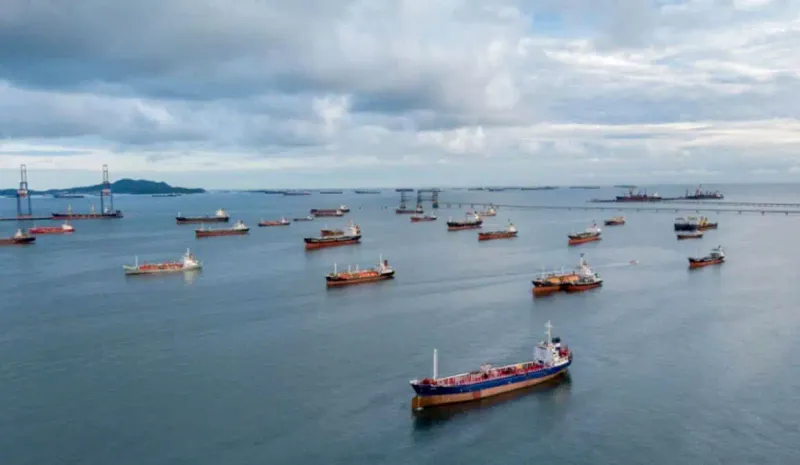
WASHINGTON (special crosspondent) – Thousands of commercial vessels and oil tankers, currently anchored for extended periods near the Strait of Hormuz, may trigger a significant environmental crisis by transporting invasive marine species to international ports, according to a recent scientific study. This research, led by the University of Maryland Center for Environmental Science (UMCES) and published in the journal Biological Invasions, suggests that the prolonged inactivity of these vessels in the Gulf region has created optimal conditions for the rapid accumulation of marine organisms on ship hulls.
Emerging Risks to Marine Ecosystems
Data indicates that more than 1,500 commercial vessels are currently stationed in the Persian Gulf, while hundreds of additional ships remain anchored in the Gulf of Oman due to ongoing maritime traffic disruptions. Researchers observe that when ships remain stationary for months, their submerged surfaces quickly become encrusted with algae, barnacles, mussels, and various molluscs. As these vessels eventually resume international trade, they risk acting as vectors for bioinvasion, carrying these organisms to distant coastlines where they could destabilize local ecosystems.
Bioinvasion and Global Trade Implications
The study characterizes this massive vessel congestion as a potential “bioinvasion super-spreader event,” emphasizing that the scale of the current backlog is unprecedented. The introduction of non-native species threatens to undermine global biodiversity, endanger native fish stocks, and severely disrupt commercial fisheries. Furthermore, the economic burden on ports and coastal infrastructure could be substantial, as established invasive species often prove nearly impossible to eradicate. In the context of broader economic stability, international trade corridors remain critical, much like the efforts seen in strategic expansion of fruit export initiatives, yet environmental oversight must now parallel these commercial interests.
Urgent Calls for Improved Biofouling Management
To mitigate these risks, researchers are calling upon international governments, port authorities, and the global shipping industry to mandate more rigorous biofouling management protocols. Recommended actions include enhanced inspections of vessel hulls and improved monitoring at ecologically sensitive ports to detect and prevent the accidental transfer of non-native organisms. Ultimately, scientists conclude that the situation at the Strait of Hormuz is not solely a matter of energy security—an issue as significant as the rising fuel costs managed by the government—but also an acute environmental challenge that requires immediate, coordinated global intervention to safeguard the long-term health of our oceans.