UAE Develops Two New Ports Outside The Strait of Hormuz
 By hanif sabir
Published: 25 Jul 2026
2 min read
By hanif sabir
Published: 25 Jul 2026
2 min read
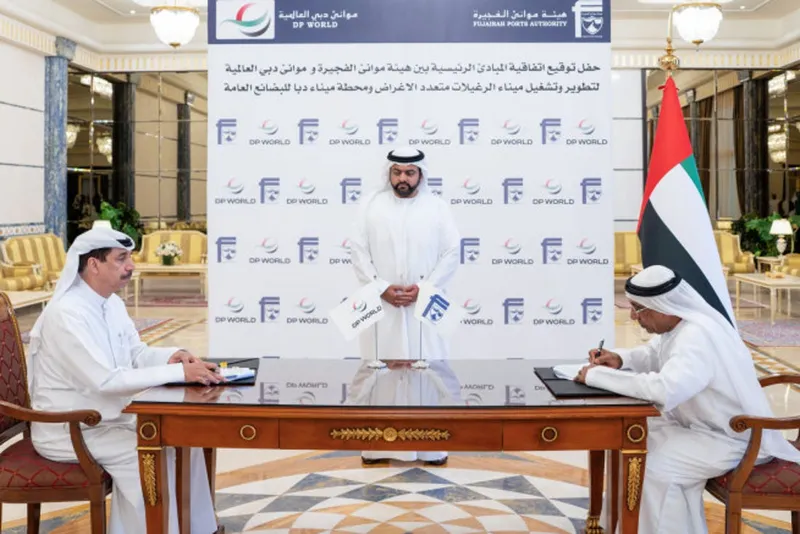
DUBAI (special crosspondent) – The United Arab Emirates has launched an ambitious plan to develop two new commercial ports on its eastern coastline outside the Strait of Hormuz, a move designed to enhance regional trade security and reduce dependence on one of the world’s most strategically sensitive maritime corridors.
Strategic Maritime Infrastructure Expansion
Global logistics giant DP World has confirmed that it has signed a 50-year concession agreement with the Fujairah Ports Authority to build the Al Rugaylat Container and Multi-Purpose Terminal and the Dibba General Cargo Terminal on the Gulf of Oman. The agreement marks one of the UAE’s most significant maritime infrastructure investments in recent years, reflecting a broader regional focus on supply chain security similar to recent strategic expansion of trade initiatives seen elsewhere.
Enhancing Regional Trade Resilience
The new terminals are intended to provide shipping lines with direct access to international waters without passing through the Strait of Hormuz, where rising geopolitical tensions have increased concerns over the security of global shipping and energy supplies. Once completed, the Al Rugaylat Terminal will be capable of handling approximately 2.5 million TEUs annually, in addition to 1.7 million tonnes of general cargo and around 190,000 vehicles each year. The nearby Dibba Terminal will provide capacity for 3.6 million tonnes of general cargo annually, significantly expanding the UAE’s maritime handling capabilities.
The expansion will increase DP World’s overall container-handling capacity across the UAE from 19.4 million TEUs to nearly 22 million TEUs, reinforcing the country’s position as one of the world’s leading logistics, shipping and transshipment hubs. Construction will be carried out in multiple phases over the next two to three years, with the new facilities expected to integrate closely with Jebel Ali Port and Jebel Ali Free Zone (JAFZA), creating a seamless logistics network linking the UAE’s western and eastern coasts.
Global Logistics Integration
Industry experts say the project is part of the UAE’s long-term strategy to improve supply chain resilience and ensure uninterrupted cargo movement during periods of regional instability. Fujairah’s location on the Gulf of Oman enables vessels to avoid the Strait of Hormuz entirely, making it an increasingly valuable gateway for international shipping. Maritime analysts believe the new ports will complement rather than compete with Jebel Ali, offering shipping companies greater operational flexibility while strengthening the UAE’s role as a key trade and logistics bridge connecting Asia, Africa and Europe.