US Businesses Warn Trump’s TPS Rollback Could Deepen Labour Shortages
 By hanif sabir
Published: 27 Jul 2026
2 min read
By hanif sabir
Published: 27 Jul 2026
2 min read
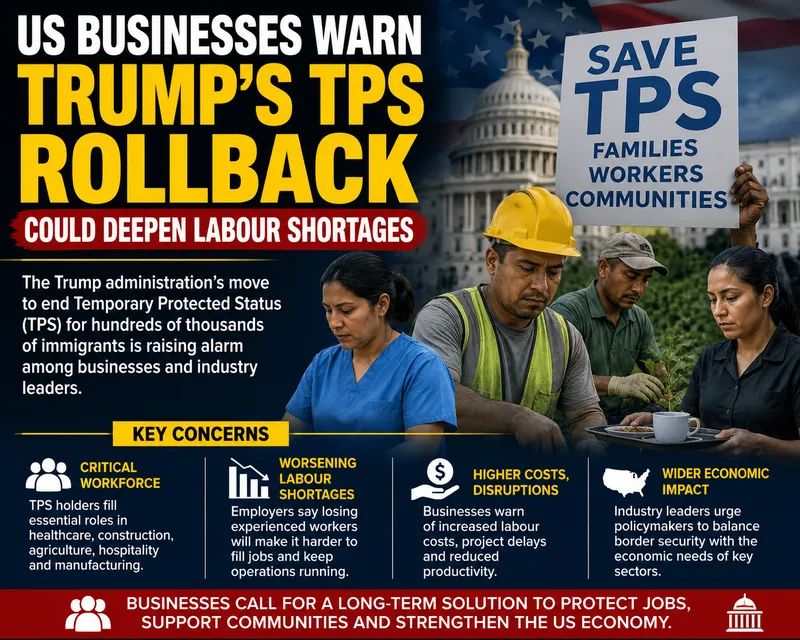
WASHINGTON (special crosspondent) – Businesses across the United States are raising significant concerns regarding the Trump administration’s proposal to terminate Temporary Protected Status (TPS) for a large number of immigrants, warning that the move could substantially exacerbate existing labour shortages across several critical economic sectors. Employers report that thousands of TPS holders have become deeply integrated into the American workforce over many years, serving as essential pillars in industries including healthcare, construction, agriculture, hospitality, and manufacturing.
Industry representatives have voiced fears that the loss of these experienced personnel would create severe operational disruptions, heighten difficulties in filling vital vacancies, and lead to an inevitable rise in labour costs. This development comes as the nation continues to navigate macroeconomic challenges and shifting policy landscapes.
Administration Stance vs. Business Requirements
The Trump administration maintains that TPS is strictly a temporary humanitarian instrument designed to safeguard individuals from nations experiencing war, natural disasters, or systemic crises. Officials argue that such status was never intended to function as a permanent residency pathway. Conversely, business advocacy groups contend that many long-term TPS beneficiaries have established profound social and professional roots in the United States, performing indispensable roles in maintaining public services and business continuity.
Sector-Specific Impacts
Healthcare providers have expressed the most acute alarm, noting that a significant cohort of TPS recipients are employed as nursing assistants, caregivers, and front-line support staff. Similarly, construction firms, agricultural enterprises, and the hospitality sector have cautioned that replacing such a specialized and reliable workforce in a historically tight labour market would present an insurmountable challenge. The broader discussion underscores the complex intersection of national immigration policy and economic stability, with business leaders urging policymakers to pursue a balanced approach that secures borders while ensuring that industries reliant on skilled labour can continue to thrive under evolving global conditions.