US Plan to Improve Marine Environment Turns into a Decades-Long Environmental Disaster
 By hanif sabir
Published: 08 Aug 2026
3 min read
By hanif sabir
Published: 08 Aug 2026
3 min read
US Plan to Improve Marine Environment Turns into a Decades-Long Environmental Disaster
Washington: A US project launched in 1970 to improve the marine environment and create an artificial habitat for marine life has instead turned into a major environmental problem, with cleanup efforts continuing more than five decades later.
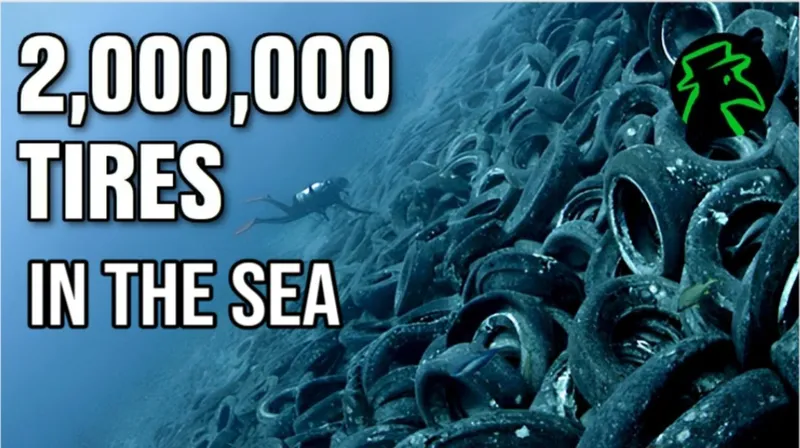
The project was launched off the coast of Fort Lauderdale, Florida, where nearly two million discarded tires were dumped into the ocean to create an artificial reef. The initiative was intended to provide a new habitat for marine organisms while also offering a way to dispose of millions of unwanted tires. The project had received official approval at the time, with more than 100 private boats taking part in transporting the tires.
Known as Osborne Reef, the artificial reef covered an area of about 36 acres on the ocean floor. The tires were bundled together using steel clips and nylon straps in an effort to create a stable underwater structure that would attract marine life.
However, the project failed to deliver the expected results. Marine organisms did not colonize the tires on the scale anticipated, while seawater gradually corroded the metal clips and weakened the nylon straps. As the bundles broke apart, large numbers of tires were carried away by ocean currents and waves.
Many of the displaced tires reached natural coral reefs, where they repeatedly struck and rubbed against the coral, damaging the fragile ecosystems and threatening marine habitats. An initiative intended to benefit the marine environment had therefore become an environmental hazard itself.
The use of discarded tires to create artificial reefs was not limited to the United States. More than 200 similar projects were launched in different parts of the world during that period, including in North America, the Caribbean, Europe, the Middle East, Asia, Australia and the Pacific. The tire industry also strongly supported the concept at the time.
A formal effort to remove the tires from Osborne Reef began in 2006, but progress has been slow. After nearly two decades of cleanup operations, only slightly more than a quarter of the tires have been removed. Environmental authorities estimate that removing at least half of the tires could take until around 2033 at the current pace.
The Osborne Reef disaster has become a major example of how an apparently simple solution to an environmental problem can create a much larger ecological threat when its long-term consequences are not adequately assessed.
Artificial reefs are still used today to support marine biodiversity and provide habitats for marine life. However, the Osborne Reef experience highlights the importance of carefully evaluating construction materials, ecological impacts and long-term sustainability before launching such projects.