Bangladesh Revolutionizes Agriculture by Cultivating Pumpkins on Sandy Riverbanks
 By hanif sabir
Published: 14 Jul 2026
2 min read
By hanif sabir
Published: 14 Jul 2026
2 min read
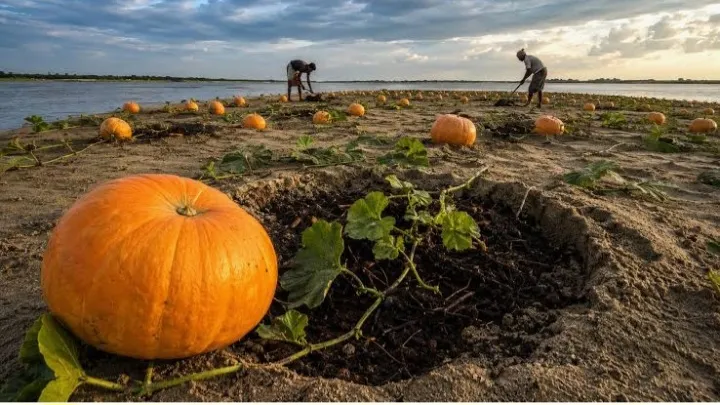
DHAKA (special crosspondent) – Bangladeshi farmers have achieved a significant agricultural breakthrough by successfully cultivating pumpkins on sandy riverbanks without the need for traditional fertile soil. This innovative approach has transformed previously barren landscapes into productive agricultural land, yielding more than 100,000 tons of produce annually.
The Methodology of Sandbar Cultivation
According to insights into modern agrarian techniques, farmers have bypassed the traditional requirement of covering sand with fertile soil. Instead, they dig thousands of pits directly into the sandbars. These pits are then enriched with a mixture of manure, compost, and pumpkin seeds. The specific nutrient density and moisture retention capacity within these prepared holes allow the pumpkin vines to thrive and spread across the vast, otherwise desolate sandy surfaces.
Economic Impact and Sustainability
This technique is specifically applied to temporary sandbars that emerge after seasonal monsoon floodwaters recede. Land that was once categorized as unusable is now being repurposed into highly productive agricultural zones, offering a sustainable livelihood for thousands of local families. Reports indicate that this initiative, which began in 2005 with strategic support from the Food and Agriculture Organization (FAO), has yielded substantial socio-economic dividends.
Scale and Future Prospects
Since its inception, more than 20,000 farming families have directly benefited from the project. Pumpkin cultivation has now expanded across over 4,000 hectares, with total production figures consistently exceeding 100,000 tons. Agricultural experts highlight that the durability of pumpkins allows for storage over several months. This capability enables farmers to time their market entry for periods when prices are most favorable, thereby significantly stabilizing household incomes. Similar to how nations seek innovative solutions for resource management, such as those discussed in reports on global market trends or economic policy reforms, experts believe this Bangladesh-led model serves as a vital template for other flood-prone regions globally. By transforming seasonal riverbed waste into a valuable agricultural resource, the model offers a replicable solution for climate-resilient farming in the face of environmental volatility.