OIC Adopts Islamabad Declaration to Advance Women’s Empowerment Globally
 By hanif sabir
Published: 13 Jul 2026
3 min read
By hanif sabir
Published: 13 Jul 2026
3 min read
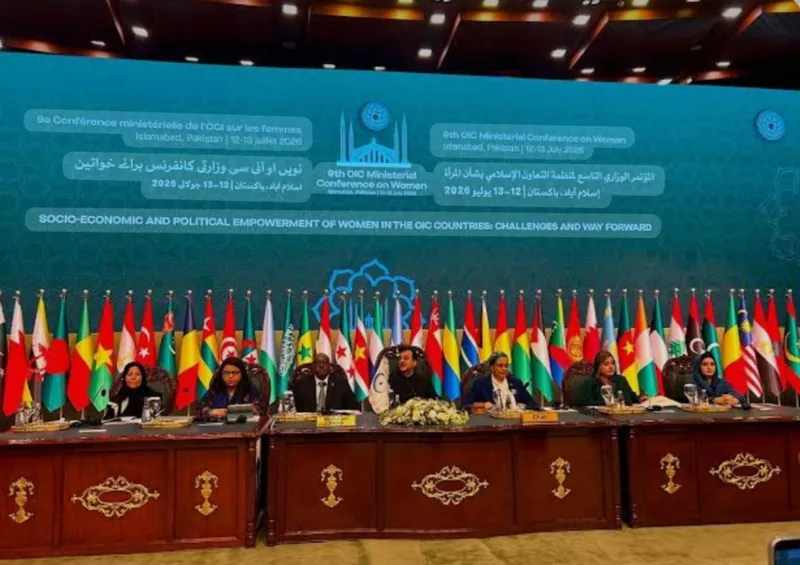
ISLAMABAD (special crosspondent) – The Ninth Ministerial Conference on Women of the Organisation of Islamic Cooperation (OIC) on Monday officially adopted the Islamabad Declaration, reaffirming member states’ commitment to advancing the socio-economic and political empowerment of women and girls. The conference also launched a pioneering initiative aimed at promoting digital inclusion for women across the Muslim world. Much like the Ahsan Iqbal Highlights Pakistan’s Economic Stability and Future Development Goals initiative, this summit focused on long-term institutional growth.
The Islamabad Declaration Framework
According to the Islamabad Declaration, which was made available on the official OIC website, participating ministers and heads of delegation pledged to strengthen policies and institutional mechanisms to ensure the meaningful participation of women in political, economic, and public life. The declaration explicitly encourages member states to eliminate systemic barriers to education and employment, while simultaneously expanding access to vocational training and leadership development programs.
The policy document emphasizes the necessity of inclusive financial systems, including Islamic finance, microfinance, and digital platforms. It further urges stakeholders to provide robust support for women-led small and medium-sized enterprises (SMEs) by improving access to capital and innovative trade opportunities. This economic focus aligns with ongoing efforts to foster regional stability, similar to how the Petroleum Pricing Committee Reviews Reforms for Enhanced Transparency and Stability seeks to standardize domestic frameworks.
Advancing Women in Technology and STEM
A significant portion of the declaration is dedicated to the integration of women into STEM fields, artificial intelligence, and emerging technologies. Member states are encouraged to bridge the digital gender divide by investing in affordable infrastructure and comprehensive digital literacy programs, particularly in rural areas. To facilitate this, the conference introduced the Islamabad Initiative on Women’s Digital Inclusion. This voluntary platform serves as a hub for digital entrepreneurship, cybersecurity awareness, and equitable access to technology, inviting development partners to contribute through mentorship and the exchange of best practices.
Addressing Social Challenges and Regional Solidarity
The declaration also mandates stronger measures against all forms of violence, including technology-facilitated threats and online harassment. It explicitly calls for unified international cooperation to combat Islamophobia, xenophobia, and hate speech. Furthermore, the OIC reaffirmed its solidarity with women and girls in Palestine and Indian Illegally Occupied Jammu and Kashmir (IIOJK), urging the global community to provide humanitarian and psychosocial support. The organization also acknowledged the Prime Minister Shehbaz Sharif administration for its patronage and host-nation efforts during the conference.
Concluding Remarks and Future Roadmap
In addition to the declaration, the conference adopted an omnibus resolution. OIC Assistant Secretary-General Ambassador Dr Tarig Ali Bakheet, in his concluding remarks, described the resolution as a crucial roadmap for the Muslim world. He emphasized that the success of these declarations rests on the collective implementation of policies. Dr. Bakheet expressed confidence in Pakistan’s leadership as the chair of the Ministerial Conference, noting that the OIC General Secretariat is prepared to work closely with national institutions to ensure these commitments lead to measurable outcomes for women and girls globally.