Maritime Minister Advocates Integrating Traditional Knowledge Into National Coastal Policy
 By hanif sabir
Published: 09 Aug 2026
3 min read
By hanif sabir
Published: 09 Aug 2026
3 min read
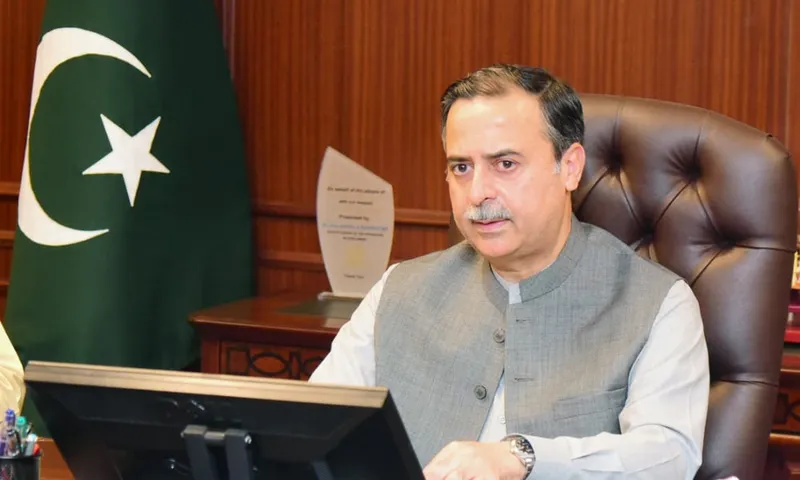
ISLAMABAD (special crosspondent) – Federal Minister for Maritime Affairs Muhammad Junaid Anwar Chaudhry has issued a formal call for the greater recognition of traditional ecological knowledge held by coastal communities, asserting that such insights are vital for strengthening climate adaptation, marine conservation, and sustainable fisheries. Speaking on the occasion of the International Day of the World’s Indigenous Peoples, observed under the United Nations’ theme, “Honouring Indigenous Midwives: Safeguarding Life and Well-being,” the minister emphasized the critical importance of traditional knowledge systems and their transmission across generations.
Minister Junaid Chaudhry noted that traditional coastal communities have developed generations of expertise regarding tides, fishing grounds, marine species, weather patterns, and the management of mangroves and coastal ecosystems. “Traditional knowledge is not merely a legacy of the past. It is a living resource that can contribute to climate resilience, sustainable fisheries, and the protection of our marine ecosystems,” he stated. Reflecting on the State Bank of Pakistan Maintains Benchmark Interest Rate Amid Stability in the broader national landscape, the minister highlighted that ecological security remains a pillar of national development.
The minister observed that communities spanning the coastline from Karachi and the Indus Delta to Gwadar and Jiwani rely heavily on fisheries, mangroves, and wetlands. He highlighted that fishing communities in Karachi’s coastal settlements are facing mounting pressures from urbanisation and pollution, while communities in the Indus Delta are battling freshwater shortages, saline intrusion, and coastal erosion. Similar challenges, he noted, are being experienced by traditional fishing communities along the Balochistan coast, including those in Sonmiani, Ormara, Pasni, Gwadar, and Jiwani.
Integrating Scientific and Traditional Frameworks
Junaid Chaudhry asserted that local fishers possess granular knowledge of tidal cycles, currents, winds, and changes in marine species. Integrating this expertise with scientific research could significantly improve fisheries management, ecosystem restoration, and disaster preparedness. “Modern science and traditional ecological knowledge should complement each other. Communities that have lived with the sea for generations understand changes in their environment in ways that can strengthen formal climate and marine policies,” he added, drawing parallels to how DPM/FM Dar reaffirms Pakistan’s support for ASEAN’s peace, prosperity efforts through collaborative diplomacy.
The minister warned that climate change is already disrupting traditional livelihood patterns through shifts in sea temperatures, fish distribution, and extreme weather events. He called for the implementation of community-based adaptation measures, robust early-warning systems, and climate-resilient coastal infrastructure. Furthermore, he emphasized that conservation policies are far more effective when local stakeholders are treated as partners in decision-making processes. Recalling the importance of shared regional interests, such as those discussed during the Pakistan, New Zealand Hold Political and Joint Trade Committee Meetings, the minister concluded that Pakistan’s blue economy depends fundamentally on healthy seas and empowered coastal communities. The government remains committed to ensuring these local insights are reflected in future national maritime and climate policies.