Astana Faces Record Breaking Heatwave Challenging World Second Coldest Capital
 By hanif sabir
Published: 23 Jul 2026
2 min read
By hanif sabir
Published: 23 Jul 2026
2 min read
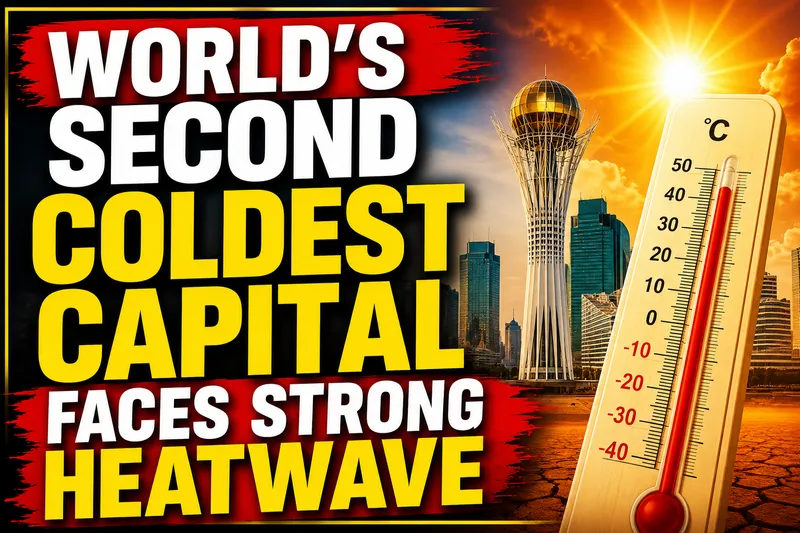
ASTANA (special crosspondent) – Astana, the capital of Kazakhstan and widely recognized as the world’s second-coldest capital city, is currently grappling with an unusually intense heatwave. Soaring temperatures are shattering seasonal records, prompting urgent discussions regarding the escalating local impacts of global climate change.
Known historically for its bitterly cold winters, where temperatures frequently plunge well below freezing, the city has experienced two exceptional heatwaves within the span of just a few weeks. Climate scientists have noted that these extreme meteorological conditions are highly atypical for the region and warn that such anomalies are likely to become more frequent as global temperatures continue to climb.
Increasing Strain on Infrastructure and Public Health
The prolonged spell of high temperatures has introduced significant health risks for the local population, placed severe strain on water resources, and heightened concerns regarding the resilience of infrastructure and agriculture across the wider region. Much like recent economic adjustments noted in other developing markets, such as when the Pakistan Government Increases Petrol and High Speed Diesel Prices Again, resource management is becoming a critical priority for administrative authorities facing unexpected budgetary and environmental pressures.
Experts observe that cities traditionally engineered to withstand harsh, sub-zero winters are now encountering an entirely new challenge: the urgent need to adapt to increasingly extreme summer temperatures. This transition requires a fundamental shift in how municipal authorities approach long-term urban planning and resource allocation.
Strategic Recommendations for Climate Adaptation
Researchers are calling upon governments to prioritize investments in climate-resilient infrastructure. This includes expanding heat protection measures and enhancing urban green spaces to mitigate the urban heat island effect. These adaptive strategies are being discussed globally, similar to how policymakers often prioritize innovation to solve structural challenges, such as the PM Shehbaz Sharif Calls for Indigenous Robotics Innovation Ecosystem to ensure national sustainability.
As the international community monitors these shifts, there is a clear consensus that adapting to extreme climate volatility will remain a defining challenge for global governance in the coming decades.