Gulf Nations Develop Strategic Pipelines to Bypass Strait of Hormuz
 By hanif sabir
Published: 25 Jul 2026
3 min read
By hanif sabir
Published: 25 Jul 2026
3 min read
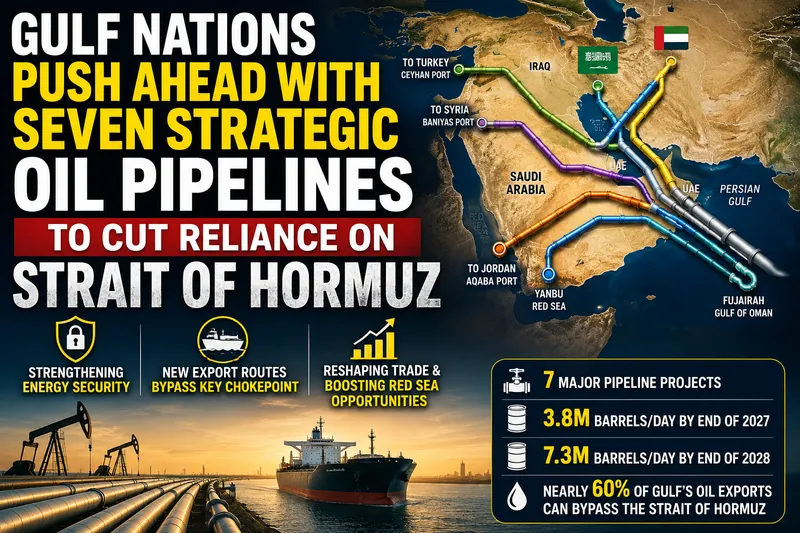
DUBAI (special crosspondent) – Gulf nations are rapidly accelerating the development of seven major oil pipeline projects designed to reduce reliance on the Strait of Hormuz. As regional governments move to insulate energy exports from mounting geopolitical instability, these infrastructure initiatives aim to ensure secure and uninterrupted supply chains for global energy markets.
Expanding Alternative Export Routes
The proposed network is projected to provide alternative transit paths for millions of barrels of crude oil daily, substantially mitigating the region’s dependence on one of the world’s most critical and sensitive maritime corridors. These strategic investments have gained significant momentum following recent security volatility that highlighted the inherent risks of relying on the Strait of Hormuz for maritime oil shipments.
Projected Capacity and Strategic Impact
Industry projections indicate that the combined capacity of these pipelines could reach 3.8 million barrels per day by the end of 2027, with figures expected to scale to 7.3 million barrels per day by late 2028. Upon completion, this infrastructure will have the capability to facilitate the transit of nearly 60 percent of the Gulf’s pre-conflict oil export volume, effectively bypassing the maritime bottleneck. This strategic shift reflects broader regional efforts, such as those recently discussed by leaders regarding regional stability and economic cooperation.
Key Regional Infrastructure Developments
Saudi Arabia is currently focused on the expansion of its East-West Pipeline, which links oil fields in the Eastern Province to the Red Sea port of Yanbu, thereby offering a reliable overland corridor. Simultaneously, the United Arab Emirates is committing substantial capital to increase the capacity of the Habshan-Fujairah pipeline, which allows for the direct movement of crude oil to the Gulf of Oman. Meanwhile, Iraq is pursuing multiple corridors intended to link southern oil production facilities with international terminals in Turkey’s Ceyhan, Syria’s Baniyas, and Jordan’s Aqaba.
Economic and Logistical Considerations
Analysts observe that this shift will likely elevate the importance of Red Sea ports, fostering economic growth across logistics and infrastructure sectors. While the strategic necessity of these projects is clear, experts maintain that the Strait of Hormuz remains an essential artery of global trade. Challenges including higher operational costs, increased shipping distances to Asian markets, and regional security concerns in the Red Sea mean these pipelines serve as a necessary complement to, rather than a total replacement for, existing maritime routes. As the region navigates these changes, it mirrors the necessity for modernization seen in other sectors, such as industrial automation and advanced data infrastructure.