New Education Policy Education 2
 By hanif sabir
Published: 17 Nov 2026
2 min read
*New Education Policy Education 2.0 to Mark Major Step Towards Ending Colonial-Era Education System and Building Modern Pakistan: Iftikhar Ali Malik*
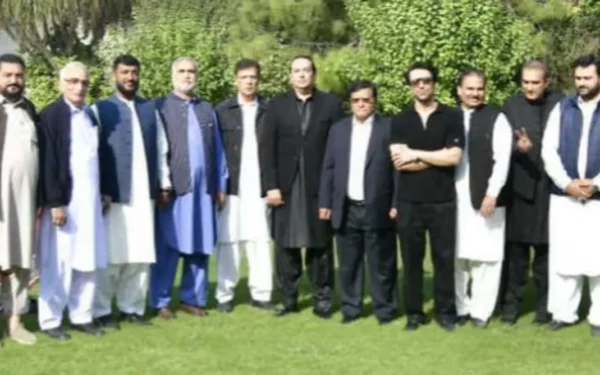
*LAHORE, November 17:* Former President of the SAARC Chamber of Commerce and Industry, Iftikhar Ali Malik, has welcomed the new long-term education policy, “Education 2.0,” saying it will mark a significant step towards replacing the outdated colonial-era education system with a modern framework aligned with the needs of a technologically advanced Pakistan.
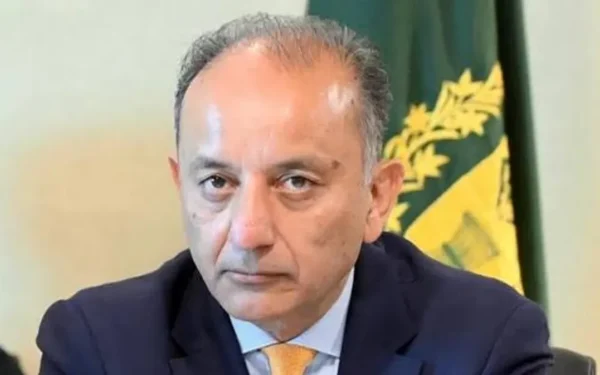
In a congratulatory letter to Federal Minister for Planning, Development and Special Initiatives Ahsan Iqbal, Malik appreciated his efforts in developing a balanced, practical and forward-looking education policy. He said the initiative would help bring Pakistan’s educational standards closer to those of developed countries and prepare the country to address future challenges arising from technological transformation.
He said the policy appropriately incorporates Artificial Intelligence (AI) and modern technology as tools to support teachers rather than replace them. It also emphasizes the development of Pakistan’s own digital and educational resources.
Malik said a key objective of Education 2.0 is to reduce administrative and structural disparities in the education system by introducing Common Learning Standards across all educational streams, including public-sector institutions, private schools, religious seminaries and international education systems.
The policy aims to develop a generation of committed, ethical and capable Pakistanis equipped with independent thinking, adaptability to technological changes and the ability to contribute meaningfully to national development.
He observed that Pakistan’s future fundamentally depends on the quality of education being provided to its children today. The proposed policy seeks to move beyond the remnants of the colonial education model associated with Lord Macaulay’s 1835 system and establish an education framework suited to an independent, modern and ethically grounded Pakistan.
According to Malik, the traditional model largely emphasized rote learning, examination performance and repetition of information, rather than independent research, critical thinking and intellectual development.
He said the challenge had become more urgent in the age of Artificial Intelligence, automation and Industry 4.0. Machines can now reproduce and process information at unprecedented speed; therefore, students must be equipped not merely to memorize facts but to understand complex problems, ask meaningful questions, evaluate evidence, think independently and take responsibility for their decisions.
Concluding his remarks, Malik said Education 2.0 also seeks to address the ethical and social implications of technological advancement and prepare Pakistan’s young generation for the emerging demands of Industry 5.0.
*3D Media*