OUP Pakistan Conference Unites School Leaders to Discuss Future of Learning
 By hanif sabir
Published: 20 Nov 2026
5 min read
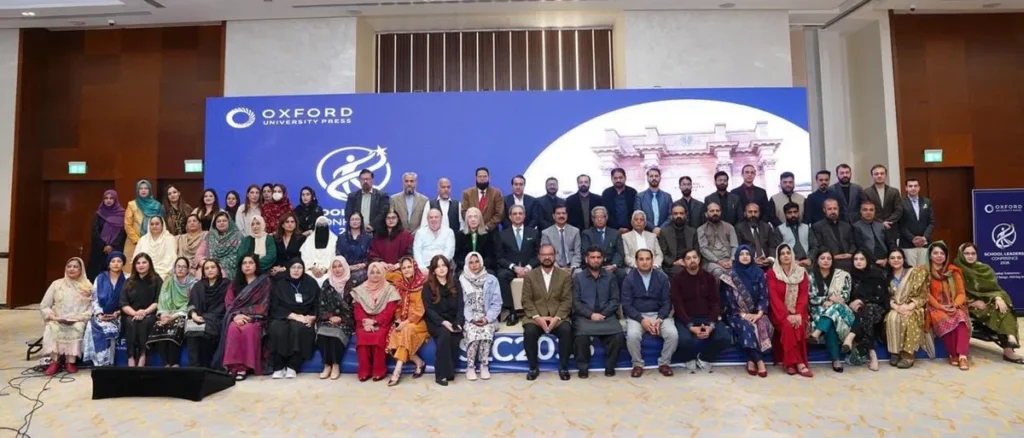
ISLAMABAD (Special Correspondent) – Oxford University Press (OUP) Pakistan successfully convened its School Leaders’ Conference 2026 in Islamabad on 20 November 2026, gathering school leaders, educationists, and practitioners to deliberate on the evolving educational landscape under the theme “Shaping Tomorrow: Navigating Change, Driving Impact.” The two-day event provided distinct platforms for educators from both local and international examination board schools to discuss crucial priorities shaping the future of learning.
Key Points
- Oxford University Press (OUP) Pakistan hosted its School Leaders’ Conference 2026 in Islamabad.
- The conference theme was “Shaping Tomorrow: Navigating Change, Driving Impact.”
- Discussions focused on leadership, technology integration, and future-focused skills in education.
- Arshad Saeed Husain and Elizabeth Munn delivered opening remarks and insights.
- Prominent educationists presented keynotes on transformative school leadership.
The conferences thoroughly explored the evolving responsibilities inherent in school leadership, the critical integration of technology within educational frameworks, and the vital development of future-focused skills. Participants also examined the imperative to strengthen teaching and learning through effective pedagogical approaches. Furthermore, discussions addressed how schools can adeptly balance innovation with sound educational practices while simultaneously preparing students for the rigorous demands of a rapidly changing global environment.
Welcoming Remarks and OUP’s Commitment
Arshad Saeed Husain, Managing Director of Oxford University Press Pakistan, extended a warm welcome to all participants. He underscored OUP Pakistan’s unwavering commitment to acting as a dedicated education partner for schools across every stage of curriculum implementation. “Our 360° learning ecosystem integrates curriculum-aligned resources, comprehensive teacher professional development, robust assessment tools, and crucial guidance for families,” Mr. Husain stated. “This holistic approach assists school leaders in meticulously tracking learner progress and empowers teachers to effectively address any identified learning gaps.”
Elizabeth Munn, Managing Director, Education, at Oxford University Press, participated in the first day’s programme, engaging in an interactive conversation about the shifting priorities in education. She particularly emphasised the critical importance of synergising educational innovation with a clear, unwavering focus on learning outcomes. Ms. Munn articulated, “As education continues its dynamic evolution, schools must remain steadfastly focused on what truly matters most: enabling every learner to cultivate the necessary knowledge, skills, and confidence to adeptly navigate an uncertain future. While technology and new methodologies can undoubtedly generate valuable opportunities, their ultimate impact is contingent upon how thoughtfully and effectively they are integrated into the processes of teaching and learning.”
Keynote Sessions on Transformative Leadership
The keynote sessions critically examined the changing demands placed upon educational institutions and their leadership. Dr. Nadeem ul Haque, former Vice-Chancellor of the Pakistan Institute of Development Economics (PIDE) and Chairperson, RAC, addressed the topic of “Transformative School Leadership in Changing Times” specifically for local board educators. Joining him on this topic for local board educators was Riffat Jabeen, Director Academics at the Ministry of Federal Education & Professional Training. For international examination board educators, Abdus Sami Khan, an Education Policy Consultant, delivered a compelling keynote address on “School Leadership in Changing Times.”
Exploring Emerging Classroom Priorities
The programme also showcased insightful presentations by Oxford University Press specialists on emerging priorities in classroom learning. Shazia Asad, Senior Product Manager Mathematics at Oxford University Press Pakistan, meticulously explored “Mathematics in the Age of AI: New Imperatives and the Way Forward.” Emma Baxter, Product Manager at Oxford University Press UK, discussed various aspects of skills development, quality educational resources, and effective pedagogical strategies aimed at aligning students with future requirements. Dr. Nicolas Brasch, an international author and educator, examined student-centred and inquiry-based approaches to science education through his session, “The Science Learning Ecosystem.”
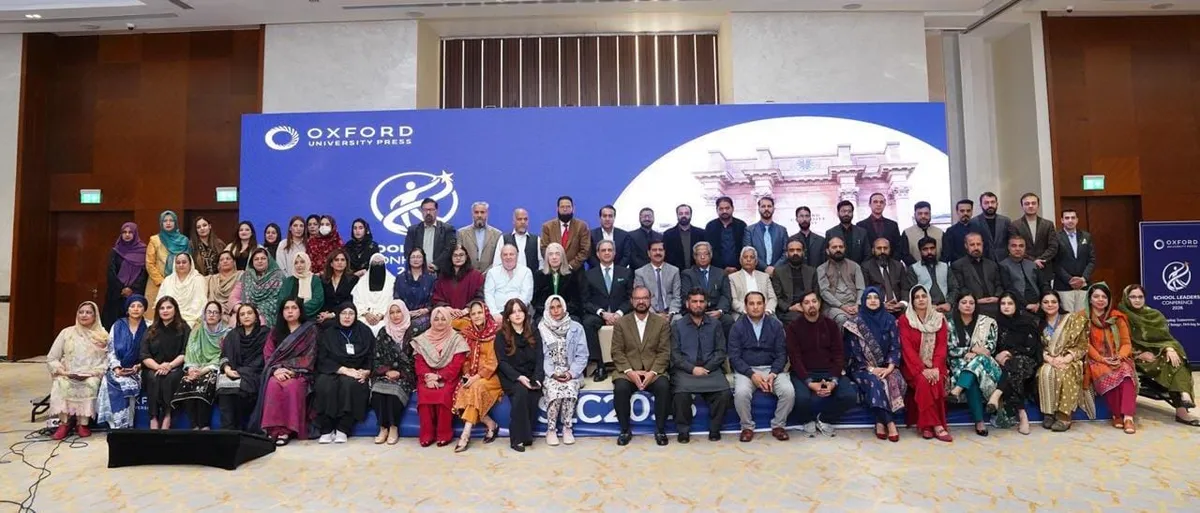
Interactive audience polls and comprehensive panel discussions, held under the overarching theme of “Shaping Tomorrow: Challenges and Opportunities,” actively encouraged participants to share their diverse perspectives. These sessions further prompted attendees to meticulously consider the practical implications of educational change for their respective institutions.
The Islamabad conferences constitute an integral part of Oxford University Press Pakistan’s broader engagement with school communities across the country. This initiative consistently reinforces the paramount importance of collaboration, professional dialogue, and forward-looking approaches to educational leadership, aiming to drive impactful education reforms.
About OUP Pakistan
Oxford University Press (OUP) Pakistan, established in 1952, currently operates as Oxford University Press Pakistan (SMC-Private) Limited. Its head office is located in Karachi, with regional offices strategically placed in Lahore, Islamabad, Multan, Peshawar, and Faisalabad. The Press maintains a primary focus on education, actively publishing school textbooks, higher education and academic books, and essential reference material. Its extensive catalogue covers a wide range of subjects, including law, economics, literature, and many more. OUP Pakistan also places significant emphasis on local content, actively supporting Pakistani authors and publications focused on Pakistan. The Press efficiently distributes its publications globally through its offices in Oxford, New York, Dubai, and Delhi. Furthermore, OUP Pakistan actively fosters a culture of book-reading within the country and is a strong advocate against piracy. The ‘Oxford’ brand is widely recognised and signifies authority and quality both in Pakistan and around the world.
Frequently Asked Questions
What was the theme of the OUP School Leaders Conference 2026?
The theme of the Oxford University Press (OUP) School Leaders’ Conference 2026 was “Shaping Tomorrow: Navigating Change, Driving Impact.”
Who were some of the key speakers at the conference?
Key speakers included Arshad Saeed Husain, Elizabeth Munn, Dr Nadeem ul Haque, Riffat Jabeen, Abdus Sami Khan, Shazia Asad, Emma Baxter, and Dr Nicolas Brasch.
What topics were discussed regarding the future of learning?
Discussions covered the evolving responsibilities of school leadership, technology integration, future-focused skills development, and strengthening teaching and learning through effective pedagogical approaches.