Pakistan and Iran Boost Agricultural Trade and Cooperation
 By hanif sabir
Published: 23 Jun 2026
Updated: 30 Jun 2026
3 min read
By hanif sabir
Published: 23 Jun 2026
Updated: 30 Jun 2026
3 min read
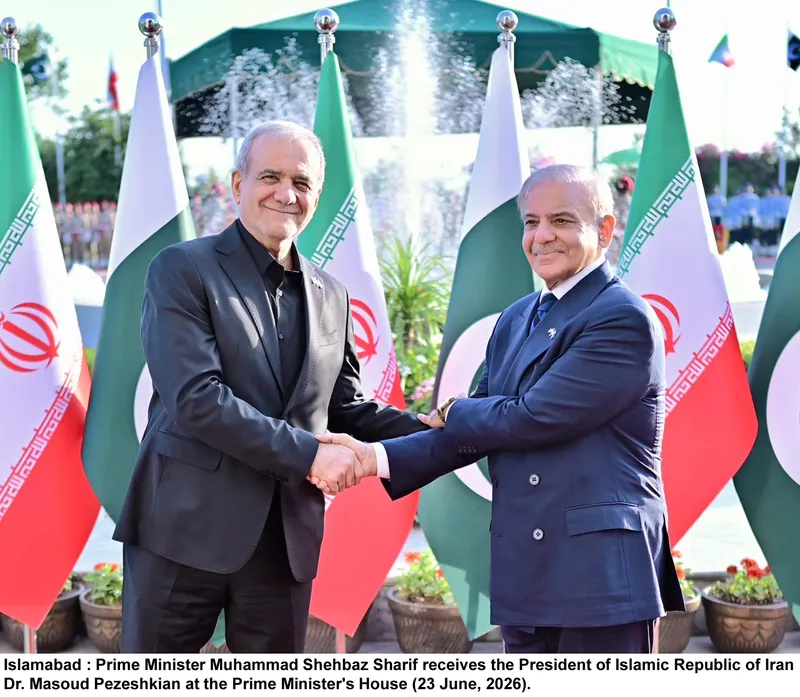
ISLAMABAD (special crosspondent) – Federal Minister for National Food Security & Research, Rana Tanveer Hussain, convened a high-level meeting with the Minister of Agriculture Jihad of the Islamic Republic of Iran, Gholamreza Nouri Ghezeljeh, to meticulously review the progress of bilateral agricultural cooperation and to proactively explore new avenues for substantially enhancing trade between the two neighboring nations. The discussions primarily centered on strengthening collaboration across critical sectors including agriculture, livestock, food security, advanced agricultural research, and streamlined trade facilitation.
Both delegations unequivocally reaffirmed their shared commitment to deepening economic ties and pledged to translate existing agreements into tangible, beneficial outcomes for the farmers, traders, and consumers residing in both Pakistan and Iran.
Rana Tanveer Hussain, reminiscing about his official visit to Iran in 2025, recalled the significant agreement reached during that period to substantially expand bilateral trade in key agricultural commodities. He highlighted Iran’s expressed interest in importing Pakistani rice, mangoes, and meat, noting these imports would help meet Iran’s growing domestic demand. The Minister emphasized Pakistan’s considerable potential in agricultural production, asserting its full capability to supply high-quality products to the Iranian market.
The Iranian Minister, Gholamreza Nouri Ghezeljeh, articulated Iran’s intention to import meat from Pakistan, stating that Pakistan possesses the capacity to fulfill up to 60 percent of Iran’s total meat import requirements. He conveyed strong confidence in the quality and standards of Pakistani livestock products and underscored the critical importance of establishing efficient trade mechanisms to ensure uninterrupted supply chains.
Bilateral Commitments and Joint Committee Progress
Both ministers undertook a thorough review of the progress achieved under the joint understandings previously established during earlier engagements. They concurred that the commitments detailed in the joint communiqué would be rigorously implemented within the forthcoming two months. To this end, they issued directives to the relevant authorities to expedite all procedural requirements and to resolutely remove existing bottlenecks that currently hinder trade growth.
The Iranian Minister extended his appreciation for Pakistan’s constructive role in fostering regional peace and stability. He conveyed gratitude to the Government of Pakistan for facilitating efforts aimed at strengthening regional understanding and cooperation, a sentiment echoed in discussions related to regional peace initiatives.
The meeting also focused on the status of the Pakistan-Iran Joint Working Committee on Agriculture. The Iranian Minister noted that the committee had already been constituted and stressed the immediate need to make it fully functional and actively engaged to ensure that agreed-upon targets are achieved within the stipulated timelines. Both sides agreed to schedule regular meetings for this committee and to establish effective coordination mechanisms between their respective technical experts and relevant institutions.
Enhanced Cooperation for Food Security and Economic Growth
Rana Tanveer Hussain emphasized that enhanced agricultural cooperation between Pakistan and Iran would significantly contribute to regional food security, stimulate increased investment, facilitate technology transfer, and promote sustainable economic growth. He reiterated Pakistan’s unwavering commitment to facilitating bilateral trade and strengthening institutional linkages within the vital agriculture and livestock sectors.
The two ministers expressed profound satisfaction with the positive trajectory of Pakistan-Iran relations. They concluded by agreeing to maintain close cooperation to fully unlock the extensive potential of agricultural trade, actively promote private-sector engagement, and enhance connectivity between the two nations, aligning with broader goals of regional economic development. This continued collaboration could bolster sectors similar to those discussed in cotton sector growth and other key areas of bilateral interest.