Pakistan Sovereign Dollar Bonds Decline Following New United States Tariffs
 By hanif sabir
Published: 25 Jul 2026
2 min read
By hanif sabir
Published: 25 Jul 2026
2 min read
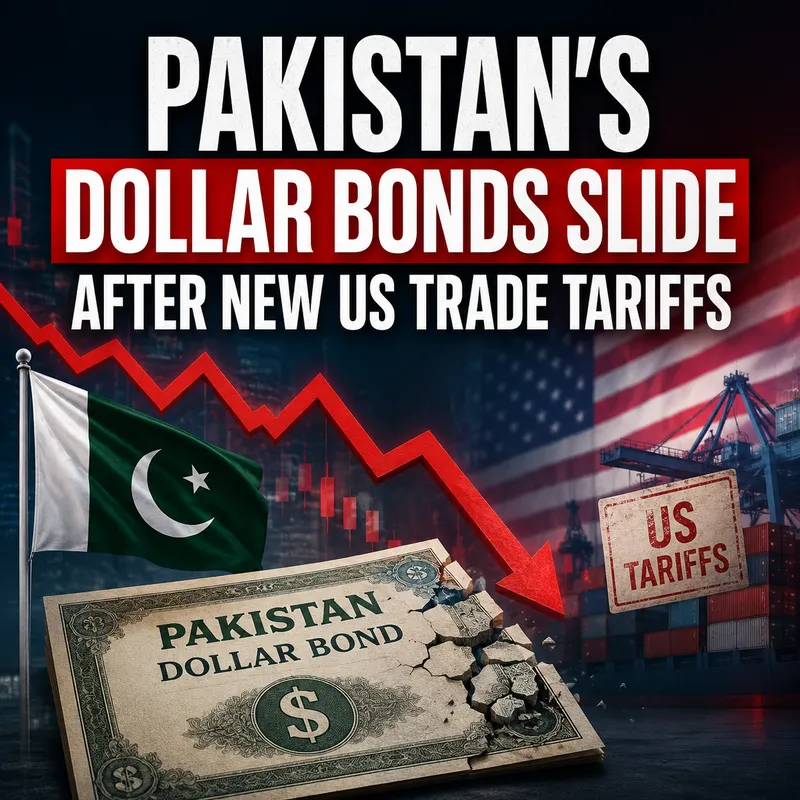
ISLAMABAD (special crosspondent) – Pakistan’s dollar-denominated sovereign bonds experienced a decline in international markets on July 25, following the announcement of a new round of trade tariffs by the United States. These measures, which affect dozens of nations globally, have triggered widespread concern regarding the potential repercussions for global trade and overall investor sentiment.
According to international market reports, the announcement of the new US tariffs initiated a broad sell-off across various emerging-market assets. Investors are increasingly gravitating toward safer havens, prompted by fears that escalating trade tensions could result in a significant slowdown of global economic growth. As a result, Pakistan’s international bonds were among those that faced immediate downward pressure as market uncertainty permeated the financial landscape.
Market Analysis and Economic Implications
Market analysts suggest that the recent dip in bond prices reflects a prevailing caution among international investors rather than any specific concerns tied to Pakistan’s domestic economic performance. The implementation of higher trade barriers is widely expected to act as a drag on global economic activity, which in turn reduces the appetite for riskier assets in developing economies and could potentially elevate borrowing costs. Just as the Pakistan Government Increases Petrol and Diesel Prices Effective From Midnight, the market remains sensitive to external inflationary and fiscal pressures.
Pakistan’s dollar bonds remain a closely monitored metric for gauging international investor confidence in the nation’s financial stability. Financial experts maintain that while global trade developments may induce short-term volatility, the long-term outlook for the country’s economy will remain contingent upon rigorous domestic economic reforms, continued fiscal discipline, and strict adherence to the milestones outlined in the country’s IMF-supported economic programme.
Looking Ahead
The situation highlights the vulnerability of developing economies to external trade policy shifts. As global financial systems remain interconnected, the focus remains on how nations like Pakistan manage these external shocks while balancing domestic industrial growth, much like the ongoing efforts in modernizing the nation’s academic and industrial infrastructure to ensure long-term sustainability.