PIDE Roundtable Advocates Export-Oriented Approach for Pakistan Trade Agreements
 By hanif sabir
Published: 14 Nov 2026
3 min read
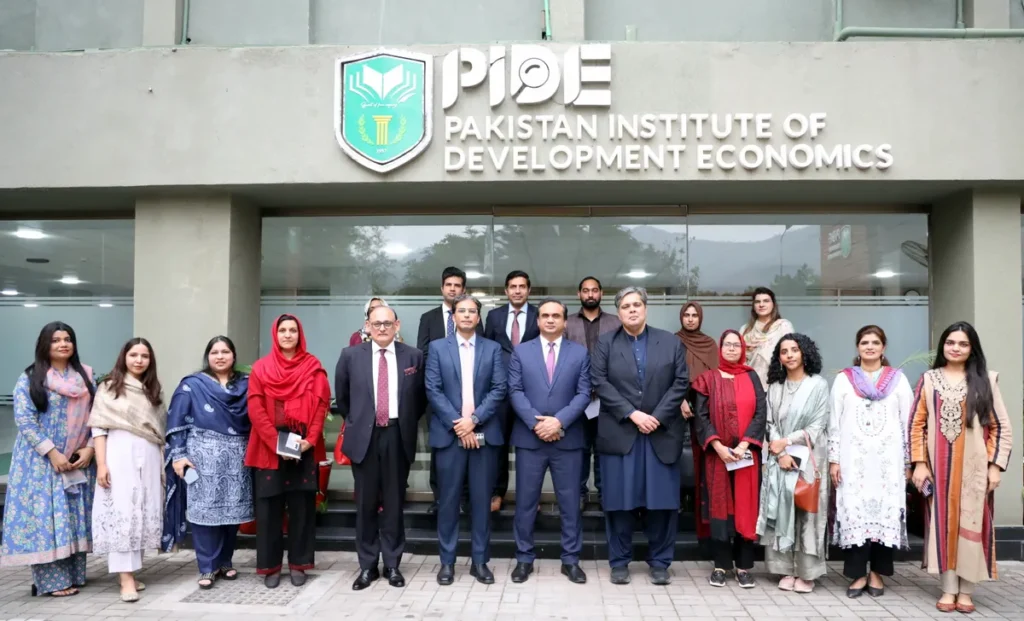
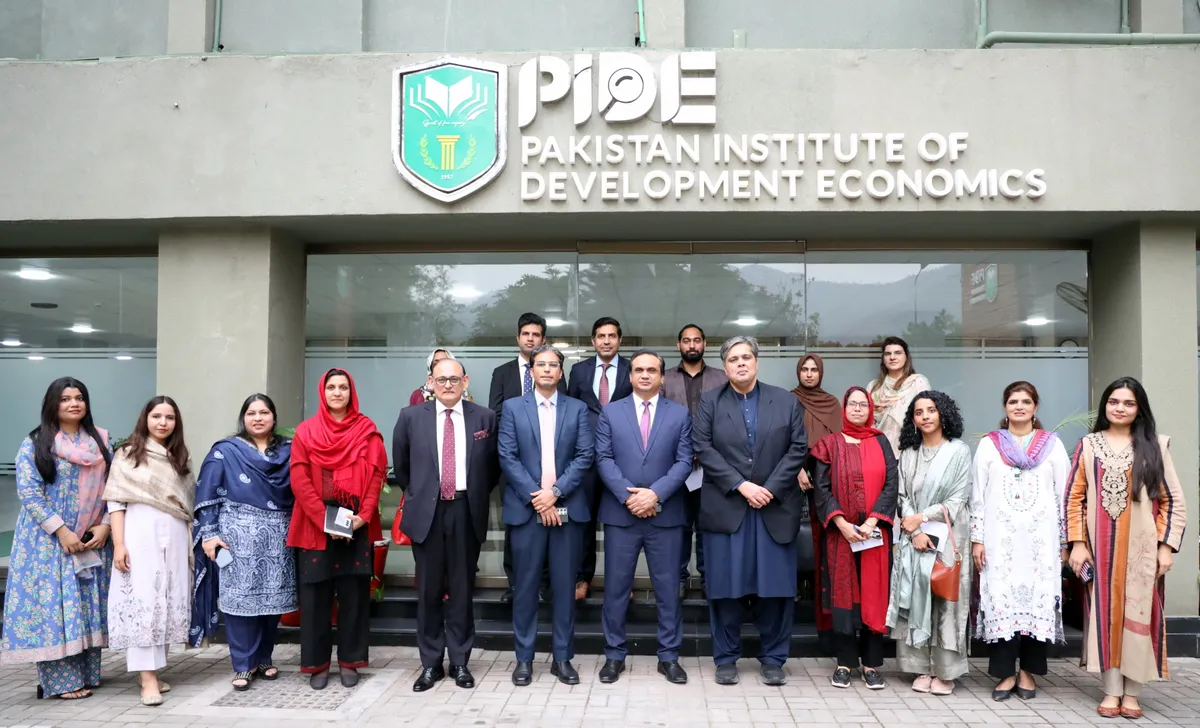
ISLAMABAD (Special Correspondent) – The Pakistan Institute of Development Economics (PIDE) hosted a high-level roundtable on 13 November 2026 to address the urgent need for an export-oriented approach to Pakistan’s trade agreements. The event, titled “From Signing to Exporting: Exploring the Export-Promoting Role of Trade Agreements,” brought together stakeholders to analyze a critical new PIDE report on the performance of Regional Trade Agreements (RTAs).
Key Points
- Since 2000, imports from RTA partners have significantly outpaced exports, resulting in a ratio where one dollar of imports is balanced by only 20 cents of exports.
- The PIDE report recommends an Export-Oriented RTA Framework focused on industrial policy alignment, demand-based partner selection, and KPI-based performance reviews.
- Experts noted that Pakistan’s trade agreement with Türkiye currently covers only 2% of its trade, highlighting the limited impact of existing frameworks.
- Panelists identified high domestic protection and a failure to utilize specific tariff lines as major barriers to achieving export competitiveness.
- The roundtable included key figures from the Ministry of Commerce, the Economic Advisory Group, and the Pakistan Business Council.
Reviewing Pakistan’s Trade Performance
Dr. Amjad Masood, Chief of Research and Director of PIDE’s Center for Trade, Logistics and Infrastructure (CTLI), presented the findings of the report, “Trade Agreements of Pakistan: A Critical Review of RTAs’ Export Performance,” co-authored with Ms. Aneela Zubair. Dr. Masood highlighted that despite the proliferation of agreements, Pakistan has struggled to translate preferential access into meaningful market gains. The proposed framework suggests that future negotiations should prioritize deeper agreements that include Sanitary and Phytosanitary (SPS) access alongside traditional tariff reductions.
Dr. Manzoor Ahmad, former Ambassador of Pakistan to the WTO, emphasized that the quality of negotiation and subsequent implementation is paramount. He noted that business interests frequently advocate for weaker agreements to maintain domestic protection, which ultimately undermines export potential. Complementing this, Dr. Vaqar Ahmed of the Economic Advisory Group argued for a shift toward unilateral liberalization and improved regional connectivity to foster long-term growth.
Addressing Structural Barriers to Exports
The discussion underscored the disconnect between negotiated access and actual trade requirements. Ms. Sarrah Javad of the All Pakistan Textile Mills Association (APTMA) pointed out that many trade concessions, such as those in Phase II of the China–Pakistan FTA, cover tariff lines for products that Pakistan does not currently produce or export. This sentiment was echoed by industry leaders who called for more rigorous, data-driven follow-up protocols.
Mr. Sarmad Pretu of the EXIM Bank of Pakistan identified the difficulty SMEs face regarding collateral requirements, which restricts their ability to leverage trade agreements. Meanwhile, Dr. Zafar Mahmood of the National University of Sciences and Technology (NUST) argued that Pakistan’s challenge lies in a systemic failure to integrate into global value chains. The session concluded with a consensus on the need for enhanced inter-ministerial coordination and active economic diplomacy to realize the nation’s export potential.
Frequently Asked Questions
What does the PIDE report suggest to improve trade performance?
The report proposes an Export-Oriented RTA Framework that includes export-focused negotiations, alignment with industrial policy, demand-based partner selection, and KPI-based performance reviews at the Ministry of Commerce.
Why have Pakistan’s existing trade agreements struggled?
Experts attributed the struggle to high domestic protection, lack of proper implementation, and the negotiation of tariff lines for products that Pakistan does not actually export.