Worlds Largest Electric Aircraft Completes Milestone Test Flight in New York
 By hanif sabir
Published: 17 Aug 2026
2 min read
By hanif sabir
Published: 17 Aug 2026
2 min read

NEW YORK (special crosspondent) – The world’s largest battery-electric aircraft has successfully completed its maiden test flight in New York, marking a pivotal development in the evolution of sustainable aviation. The massive aircraft, weighing over 11 tonnes, remained airborne for 27 minutes using battery power alone, consuming just $5 worth of electricity during the operation.
Technology Demonstrator Success
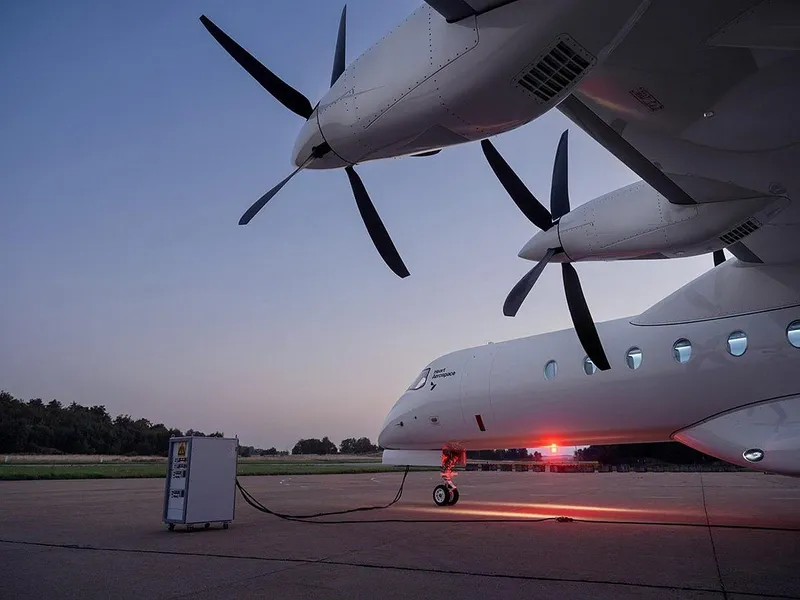
According to reports, the Swedish-American firm Heart Aerospace conducted the inaugural flight of its X1 technology demonstrator on August 12, 2026, departing from Plattsburgh International Airport. During the 27-minute sortie, the aircraft reached an altitude of 335 metres (approximately 1,100 feet). The X1 is powered by a sophisticated battery-electric propulsion system capable of generating over one megawatt of power. With a take-off weight exceeding 11,340 kilograms and a wingspan of 32 metres, the vehicle utilizes four wing-mounted electric motors.
Future Implications for Aviation
Heart Aerospace has clarified that the X1 serves exclusively as a platform to test aerodynamics, electric propulsion, and manufacturing processes, rather than for commercial passenger transport. The company’s primary focus is the upcoming development of the 30-seat ES-30 regional aircraft. While the X1 relies purely on battery power, the ES-30 will integrate a hybrid-electric system. Industry observers often compare such innovations to broader economic efficiency goals, as the aerospace sector shifts toward lower operational costs and reduced carbon emissions.
The ES-30 is projected to offer an all-electric range of 200 kilometres, which can be extended to 800 kilometres in hybrid mode, with a targeted recharge time of 30 minutes. While experts suggest that the full-scale commercialization of passenger electric aircraft remains a long-term goal, the successful performance of a vehicle of this scale demonstrates the growing viability of electric propulsion in regional travel.