Pakistan Appoints International Banking Consortiums for Global Debt Issuance Programs
 By hanif sabir
Published: 21 Jul 2026
2 min read
By hanif sabir
Published: 21 Jul 2026
2 min read
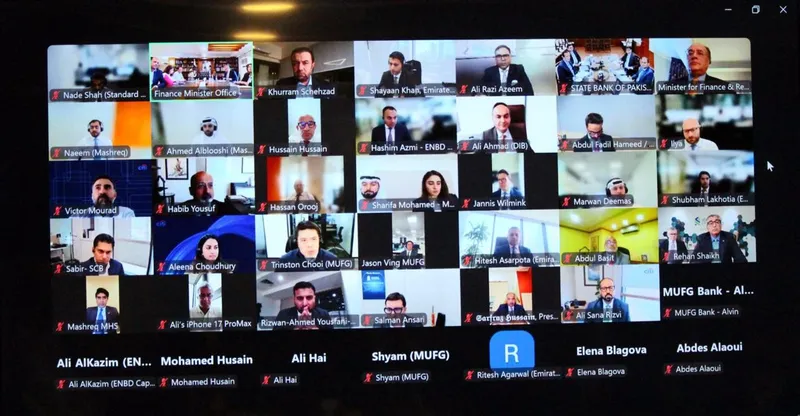
WASHINGTON, D.C. (special crosspondent) – Federal Minister for Finance and Revenue, Senator Muhammad Aurangzeb, convened a virtual meeting from Washington, D.C., with the senior leadership of newly appointed international banking consortiums, signaling the official start of Pakistan’s Global Medium-Term Note (GMTN) and International Sukuk programs. This strategic initiative, while distinct, complements ongoing efforts by the government to engage with global financial entities, much like recent discussions involving Finance Minister Aurangzeb’s exploration of Honeywell investment to modernize the refinery sector.
Consortium Appointments and Strategic Scope
Following a rigorous competitive procurement process conducted in alignment with Request for Proposals (RFP) criteria, the Government of Pakistan has finalized the selection of banking consortiums for its sovereign capital market instruments. The appointed institutions, covering Eurobonds, International Sukuks, and PKR-denominated USD-settled bonds, will serve a three-year term.
Eurobonds: Standard Chartered Bank, Citibank, N.A., Deutsche Bank AG, Emirates NBD Capital, and MUFG Securities Asia Limited.
International Sukuks: Standard Chartered Bank, Dubai Islamic Bank PJSC, Citibank, N.A., Emirates NBD Capital, and Mashreq Bank PSC.
PKR-denominated USD Settled Bonds: Standard Chartered Bank, Citibank, N.A., and Deutsche Bank AG.
Expanding Financial Market Footprint
The appointment of these consortiums is intended to support frequent sovereign issuances as required by Pakistan’s long-term financing strategy. This structured framework represents an effort to diversify the country’s external funding base. Notably, the inclusion of MUFG Securities Asia Limited and Mashreq Bank reflects an expansion of Pakistan’s engagement with global financial partners, reflecting a broader effort toward economic integration similar to recent initiatives such as the SECP approving the first Initial Public Offering for the FY2026–27 period.
Macroeconomic Recovery and Investor Confidence
The government attributes this re-engagement with capital markets to an improved macroeconomic environment characterized by fiscal consolidation and strengthened debt sustainability. These structural reforms have led to a compression in sovereign credit spreads, indicating growing investor confidence in Pakistan’s economic trajectory. As the country works toward stabilizing its external accounts, officials are emphasizing the development of a market-oriented platform designed to optimize financing costs and solidify Pakistan’s standing in international capital markets, an ambition consistent with the government’s broader legislative and diplomatic goals, including those highlighted in Chairman Gilani’s advocacy for stronger Pakistan-Canada parliamentary and economic ties. The government stated it looks forward to collaborating with these institutions to execute sovereign transactions effectively.